



Quality electric bikes last 5-10 years or 20,000-40,000 miles with proper care. Your battery (3-5 years, 500-1,000 cycles) will likely need replacement before the bike itself. Real users report 5,000+ miles with minimal degradation on quality batteries, and frames and motors often outlast multiple battery replacements. The key is choosing quality components and following proper maintenance practices.
In This Guide
What Is the Realistic Lifespan of an E-Bike?
An e-bike is not just a mode of transportation; it's a gateway to a world filled with adventure and endless possibilities. It offers the freedom to explore, the joy of pushing your limits, and the thrill of riding in nature's embrace. Whether you're zooming through busy city streets or conquering rugged trails, an e-bike becomes your trusted companion, ready to take you on exhilarating journeys.
When it comes to lifespan, quality electric bikes typically last 5-10 years or 20,000-40,000 miles depending on usage and maintenance. However, this doesn't tell the whole story. The reality is that your e-bike's lifespan is determined by its weakest link—and for most riders, that's the battery.
This highlights an important mindset shift: many riders worry excessively about battery degradation when, in reality, quality batteries from reputable manufacturers maintain excellent performance for years of regular use. The cost-per-mile value becomes exceptional when you consider the longevity of well-maintained e-bikes.
How Long Do E-Bike Batteries Really Last?
Most quality e-bike batteries last between 3 and 5 years. It will depend on how often you charge it, the conditions you ride and store it in, as well as the brand of battery. The type of battery makes a big difference. For example, lithium-ion batteries can be charged around 1,000 times, nickel batteries can be charged around 500 times, and lead batteries can be charged around 300 times.
Understanding Charge Cycles and Real-World Mileage
The concept of "charge cycles" is crucial to understanding battery lifespan. A charge cycle represents one full discharge and recharge of the battery. Here's the math that matters:
- 500 cycles × 40 miles per charge = 20,000 miles total
- 1,000 cycles × 40 miles per charge = 40,000 miles total
Quality batteries with Samsung or LG cells are typically rated for 750-1,000 charge cycles, while cheaper batteries may only deliver 350-500 cycles. This difference translates to years of additional use and thousands of extra miles.
Battery Degradation: What to Expect
Real-world experiences show that battery degradation varies significantly based on quality and care. Users report diverse outcomes:
Excellent Performance: "My Bosch battery is 10 years old with over 8,000 miles on it" — Long-term Bosch user
Typical Performance: "90% capacity after 8 years, 10,000 miles, 16,000 km" — Bosch Powerpack 500 owner
Quality Matters: "Cheap Chinese batteries: 350 cycles before serious sag. Quality builds with LG/Samsung: 450-600+ cycles" — Experienced rider
The key takeaway? Riders who invest in quality batteries with proper battery management systems (BMS) and UL2271 certification experience minimal degradation over years of use. Those who choose budget batteries often face replacement much sooner.
Storage and Care Best Practices
To ensure your battery lasts as long as possible, follow these proven strategies from experienced riders:
- Storage voltage: Keep batteries at 60-70% charge (approximately 3.85v per cell) for long-term storage
- Monthly checks: Monitor self-discharge rate every 3-6 months during storage
- Avoid full discharge: Never let your battery sit completely empty for extended periods
- Balance charging: Once monthly, charge for 12 hours to allow the BMS to balance all cells
- Temperature management: Store in moderate temperatures, avoid extreme heat or cold
One cautionary tale: "My Bosch battery tanked after 15,000 miles, about two years. I made the mistake of not riding for a few months and didn't realize I had left it unplugged." This illustrates why proper storage practices matter.
To learn more about maximizing battery life, read our battery maintenance and care guide.
Related: How Long Can the Himiway Battery Last?
Do E-Bike Motors Outlast Batteries?
One common question is, "How long does an electric bike motor last?"
Most electric bike motors last between 3 to 10 years. As you can see, the motors can vary in life span but they are regarded as one of the longest service life parts. Because they are so integral to the operation of the bike, the motor can often be the root cause of needing to upgrade to a new electric bike.
In terms of mileage, motors typically deliver 10,000-30,000 miles of reliable service. Interestingly, real-world experiences show that motors often outlast batteries, but when they do fail, it's frequently due to environmental factors rather than wear.
Hub Motors vs Mid-Drive Motors
There are two different types of motors: geared hub motors and mid-drive motors.
Geared hub motors experience a lot of friction and more wear and tear than some mid-drive motors. This is because each time the motor case rotates slowly with the wheel, the internal gear inside the motor rotates many more times at a faster speed. Therefore, geared hub motors might have to be replaced between three thousand and ten thousand miles. High quality motors may last closer to the higher end of this range. Geared hub motors are not as expensive as mid-drive motors and can more easily be replaced. If you find you have replaced your geared hub motor 3-5 times already, you should consider buying a new e-bike. At that point, the cost and hassle of replacing the motor begin to outweigh the cost of a new bike.
Mid-drive motors, on the other hand, have additional sensors, components, and a unique design. This additional complexity allows for a much longer life than gear hub motors but does come with some drawbacks. One drawback is that mid-drive motors may overheat and may rust faster when wet and not wiped off. Therefore, it is important to keep your bike and motor components dry. The second drawback is mid-drive motors are harder to replace. If you find you have replaced your mid-drive motor two to three times, you should consider upgrading to a new electric bike.
For additional information on e-bike motors, check out our motor comparison guide.
The Real Motor Killers
Based on extensive user experiences, the primary causes of motor failure are:
- Rust and moisture: The number one motor killer. Always dry your motor after wet rides
- Overheating: Continuous high-power use without cooling breaks
- Lack of maintenance: Allowing dirt and debris to accumulate
One experienced rider shares crucial advice: "Never letting go of the throttle when the battery sags is the #1 fastest way to kill a battery AND motor. When the battery sags, twisting the throttle just sends more juice that isn't converted to motion into the immobilized machine. Heat equals bad."
How Long Do E-Bike Tires Last?
Your tires will be the only contact your bike has with the ground. This fact alone makes them worth paying attention to. Most electric bicycle tires last 1-3 years. This means between about 1,000 miles and 3,000 miles of riding. Of course, with proper speed, clean terrain, and good PSI settings, your tires will last the longest.

Premium tires like the Maxxis Minion series can deliver up to 3,000 miles of service life, especially when equipped with EXO sidewall protection. These tires resist punctures better and maintain tread integrity longer than budget alternatives.
Assuming the frame of your bike is in good shape and nothing has been damaged, replacing tires can be easy. You do not need to replace the entire e-bike if just the tires are having problems. Problems might include a flat tire, a slow leak, or a worn tread pattern that doesn't grip the road anymore.
For additional information on e-bike tires, check out our tire guide.
How Long Do E-Bike Brakes Last?
One of the most important e-bike components is the brakes. Pay close attention to the performance and suitability of your brakes often. We recommend doing a thorough inspection every few months. You will find that most brakes last 2-5 years, depending on usage. Higher-quality brakes, such as disc brakes, will last upwards of 6,000 miles, while cheaper rim brakes may only last half that distance.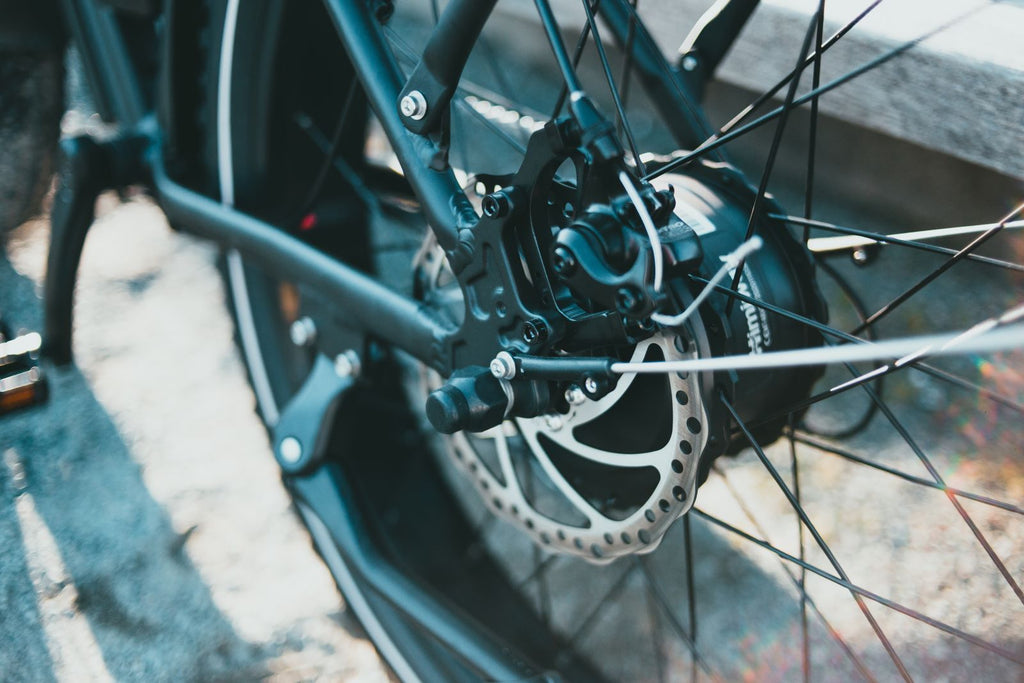
User experiences align with these estimates. Brake pads typically need replacement around the same interval as tires—approximately 1,800 miles for regular commuting use. However, this varies significantly based on:
- Riding terrain: Hilly areas require more braking, accelerating wear
- Bike weight: Heavier e-bikes (especially cargo models) stress brakes more
- Riding style: Aggressive braking shortens pad life
- Brake type: Hydraulic disc brakes generally outlast mechanical systems
An interesting fact about the design of most e-bikes is related to the brakes. Many e-bikes use integrated braking systems which connect the brakes to each other as well as the motor. This system stops the power to the motor when the brakes are applied. Because this system is interconnected, the brakes will continue working until they wear down alongside the motor. At this point, the entire system with the brakes and motor may need to be replaced which can be a difficult and expensive repair.
How Long Do E-Bike Chains Last?
Most e-bike chains will last 1-4 years. The lifespan is highly dependent on how well the chain is lubricated and taken care of. Two to three thousand miles is a common range for chains to last on an e-bike. Mid-drive motors may only get 1,000 miles before the chain needs to be replaced. This is because the wear rate of central drive motors on the chain is high. However, mid-drive motors are generally compatible with belt drives and may be able to provide up to 5,000 miles of riding without needing to be replaced.
Riders emphasize that chain longevity is "highly dependent on how well the chain is lubricated and taken care of." Regular maintenance makes the difference between 1,000 miles and 3,000+ miles from the same chain.
We've written about how to fix a skipping bike chain as well as a guide on how to lubricate your bike chain. Check both articles out to extend the life of your e-bike chain!
Belt Drives: The Long-Life Alternative
For riders seeking maximum drivetrain longevity, belt drives offer a compelling alternative to traditional chains. Belt drives can deliver 5,000+ miles without replacement and require virtually no maintenance—no lubrication, no rust, and minimal wear.
While belt drives cost more initially and are primarily available on mid-drive systems, the long-term value and reduced maintenance make them attractive for serious commuters and touring riders.
What Factors Affect E-Bike Lifespan?
Understanding what influences your e-bike's longevity helps you make informed decisions about purchase, use, and maintenance. Based on extensive user experiences, these are the critical factors:
1. Battery Management (Biggest Factor)
Battery care determines whether you get 3 years or 8+ years from your e-bike. Key considerations:
- Charge cycles and depth of discharge: Partial charges are gentler than full 0-100% cycles
- Storage conditions: Store at 60-70% charge in moderate temperatures
- Temperature extremes: Both extreme heat and cold accelerate degradation
- Charge timing: Charge after the battery has cooled down from riding
One rider's experience illustrates the importance: "Left battery over winter in heated garage at 50%, now battery reads 33v and won't charge—is it junk?" The answer: possibly. Batteries left at low charge for extended periods can enter deep discharge states that damage cells permanently.
2. Component Quality
The quality of your e-bike's components directly impacts longevity:
- Battery cells: Samsung/LG cells (750-1,000 cycles) vs generic cells (350-500 cycles)
- Motor brand: Reputable brands like Bosch, Bafang, Shimano offer better longevity
- Frame construction: Quality aluminum alloy frames last decades
- Safety certifications: UL2271 certification indicates rigorous safety and quality testing
Quality Investment Pays Off: Riders consistently report that spending extra on quality batteries provides "relief from fear of fire" with Korean Samsung/LG cells and results in significantly longer service life. The initial cost difference becomes negligible when spread across thousands of additional miles.
3. Riding Conditions
How and where you ride significantly impacts component wear:
- Terrain: Smooth pavement is gentler than rough trails
- Weather exposure: Rain, snow, and salt accelerate corrosion
- Load weight: Heavier loads stress all components
- Riding style: Aggressive acceleration and braking increase wear
4. Maintenance Quality
Regular maintenance extends every component's life:
- Cleaning: Remove dirt and grime that cause premature wear
- Lubrication: Properly lubed chains last 2-3x longer
- Timely replacement: Replacing worn parts prevents cascade failures
- Professional servicing: Annual tune-ups catch problems early
How to Maximize Your E-Bike's Lifespan
Based on thousands of hours of collective rider experience, these practices deliver the longest e-bike lifespan:
Battery Care Best Practices
- Charge after cooling: Wait 30-60 minutes after riding before charging
- Store at 60-70%: For storage longer than a week, maintain this charge level
- Avoid full discharge: Recharge when you reach 20-30% remaining
- Monthly balance charging: Once per month, charge for 12 hours to allow BMS balancing
- Temperature awareness: Don't charge or store in extreme temperatures

However, it's worth noting a counterpoint from experienced riders: "People bend over backwards babying their batteries when the reality is they won't typically use it long enough for it to matter." Some riders charge to 100% after every ride with excellent results. Modern battery management systems (BMS) provide significant protection.
Motor Maintenance
- Keep dry and clean: Wipe down after wet rides to prevent rust
- Avoid overheating: Let go of throttle when battery sags; take cooling breaks on long climbs
- Regular inspection: Check for unusual noises or performance changes
- Proper storage: Store in dry, moderate-temperature environments
General Maintenance Schedule
| Frequency | Maintenance Task | Why It Matters |
|---|---|---|
| After every ride | Wipe down bike, especially after wet/muddy rides | Prevents rust and corrosion |
| Weekly | Check tire pressure | Proper PSI extends tire life and improves efficiency |
| Every 100-200 miles | Lubricate chain | Reduces wear, prevents rust, improves shifting |
| Monthly | Inspect brakes and brake pads | Ensures safety and prevents rotor damage |
| Monthly | 12-hour balance charge | Allows BMS to balance cells for optimal battery health |
| Every 3-6 months | Check battery storage voltage | Prevents deep discharge damage during storage |
| Annually | Professional tune-up | Catches problems early, adjusts components |
Is It Worth Buying a Higher-End E-Bike Battery?
This is one of the most common questions from prospective e-bike buyers, and the answer from experienced riders is overwhelmingly clear: Yes, quality batteries are worth the investment.
The Quality Difference in Numbers
Riders with technical knowledge break down the difference:
- Quality batteries (Samsung/LG cells): 750-1,000 charge cycles
- Cheap batteries (generic cells): 350-500 charge cycles
This translates to real-world mileage differences of 10,000-20,000 miles over the battery's lifetime. One experienced rider notes: "Most batteries with quality cells in them will be rated to ~750-1000 recharge cycles. It is 100% worth it to spend extra on a quality battery."
Safety Considerations
Beyond longevity, quality batteries offer crucial safety advantages:
UL2271 Certification: Quality batteries undergo rigorous safety testing for thermal runaway, overcharge protection, and cell stability. As one rider put it: "Relief from fear of fire—Korean Samsung/LG cells. There are no guarantees, but quality matters."
Cheap batteries often lack proper battery management systems (BMS), increasing risks of:
- Thermal runaway and fire
- Cell imbalance leading to premature failure
- Overcharge or over-discharge damage
- Inconsistent performance and sudden capacity loss
Warranty and Support
Quality battery manufacturers typically offer:
- 2-year warranties (like Himiway's battery warranty)
- Customer support for troubleshooting
- Replacement programs for defective units
Cheap batteries often come with minimal or no warranty, leaving you without recourse if problems arise.
Cost-Per-Mile Analysis
While a quality battery might cost more upfront, the cost-per-mile tells the real story:
- Cheap battery: 350 cycles × 40 miles = 14,000 miles
- Quality battery: 900 cycles × 40 miles = 36,000 miles
Over the battery's lifetime, the quality battery delivers more than double the mileage, making it the better value despite the higher initial cost.
When Should You Replace Your E-Bike vs Replace Components?
This decision point arrives for every e-bike owner eventually. Here's a practical framework based on real rider experiences:
Battery Replacement: Usually Worth It
Battery replacement is typically worthwhile for the first 1-2 replacements if:
- The frame is in good condition
- The motor still performs well
- You're satisfied with the bike's features
- Replacement batteries are readily available
Many riders adopt a "second battery for extended range" strategy rather than waiting for the first to fail. This provides backup and eliminates range anxiety.
Motor Replacement: Consider Carefully
Motor replacement becomes questionable after 2-3 replacements:
- Hub motors: If you've replaced 3-5 times, consider a new bike
- Mid-drive motors: If you've replaced 2-3 times, consider upgrading
At this point, the cumulative cost and hassle of replacement often exceed the value of buying a newer model with improved technology.
Frame Damage: Usually Means New Bike
Frame damage, especially to aluminum frames, typically signals it's time for a new bike. Aluminum doesn't weld reliably, and frame integrity is crucial for safety.
Multiple Component Failures: Time to Upgrade
When multiple major components need replacement simultaneously (battery + motor, or battery + brakes + tires + chain), the math often favors buying new:
- New bikes come with warranties
- Technology improves year over year
- You get fresh components across the board
- Total replacement cost may approach new bike pricing
The "Already Got My Money's Worth" Mindset
One rider's perspective captures the practical approach: "I'm getting 100% of the original range after 175 cycles and 5k miles over two years. Already got my money's worth and might still be a few more years before it even matters. When range does drop my plan is to just buy a second charger for the office."
This mindset—focusing on value delivered rather than absolute longevity—helps riders make rational decisions about repair versus replacement.

The E-Bike Display: Your Window Into Bike Health
The final component to discuss is the e-bike display. This is your view into the health of the bike. As an information console, the display will show you the speed you are traveling, the life of the battery remaining, the distance you've traveled, and other important metrics. The best tricks to keeping the display in working order are to keep it clean, dry, and free of physical damage such as dropping the bike.
Modern displays provide valuable diagnostic information that helps you monitor component health and plan maintenance. Pay attention to error codes, battery capacity indicators, and performance metrics to catch problems early.
Conclusion
By understanding the lifespan of different e-bike components and properly maintaining them, you can ensure that you get the most out of your investment. While higher-quality e-bikes may seem like a bigger upfront investment, they often offer longer-lasting parts, reducing the need for frequent replacements.
The key insights from thousands of riders' experiences:
- Quality matters: Invest in Samsung/LG battery cells and UL-certified systems
- Batteries are the limiting factor: Plan for replacement every 3-5 years
- Frames and motors outlast batteries: With care, they can serve 10+ years
- Maintenance extends life: Regular care doubles component longevity
- Cost-per-mile is exceptional: E-bikes deliver tremendous value over their lifespan
Remember to store your e-bike in a clean and dry environment to maximize its lifespan and the lifespan of its components. With proper care, your high-quality e-bike will provide years of reliable, enjoyable riding. Happy riding!


