



Best Ebikes for Hilly Commutes


Himiway D5 2.0 Camo eBike Blend In, Ride Out: The Top Choice for Hunting
-
Full Suspension
Travel F:100mm R:130mm
-
Torque / Cadence
2 Riding Experiences
-
750W 90Nm
Geared Hub Motor
-
Smart Auto
5 Assist System


Himiway D5 2.0 20" eBike Easy to Maneuver. Built for Power.
-
Full Suspension
Travel F:90mm R:100mm
-
Torque / Cadence
2 Riding Experiences
-
750W 90Nm
Geared Hub Motor
-
440 lb.
Payload Capacity


Himiway D5 2.0 eBike Endless Comfort: Turning Rough Roads into Silk.
-
Full Suspension
Travel F:100mm R:130mm
-
Torque / Cadence
2 Riding Experiences
-
750W 90Nm
Geared Hub Motor
-
Smart Auto
5 Assist System


Himiway D5 2.0 ST eBike Endless Comfort: Turning Rough Roads into Silk.
-
Full Suspension
Travel F:100mm R:130mm
-
Torque / Cadence
2 Riding Experiences
-
750W 90Nm
Geared Hub Motor
-
Smart Auto
5 Assist System


D5(Zebra) / All-terrain Electric Fat Bike
-
Torque
Sensor
-
960 Wh
Samsung/LG Battery
-
80 Miles
Max Range
-
750W
Motor


D5 ST(Zebra ST) / All-terrain Electric Fat Bike
-
Torque
Sensor
-
80 Miles
Max Range
-
400 lb.
Max Playload
-
Hydraulic
Brakes


Himiway A7 Commuter eBike Full Suspension, Pure Comfort.
-
Full Suspension
Travel F:120mm R:90mm
-
Torque / Cadence
2 Riding Experiences
-
Smart Auto
5 Assist System
-
70 Miles
Per Charge


Himiway A7 Pro Commuter eBike Full Suspension, Mid-Drive Power.
-
Full Suspension
Travel F:120mm R:90mm
-
500 W
Mid-Drive Motor
-
Torque
Sensor
-
Hydraulic
Brakes

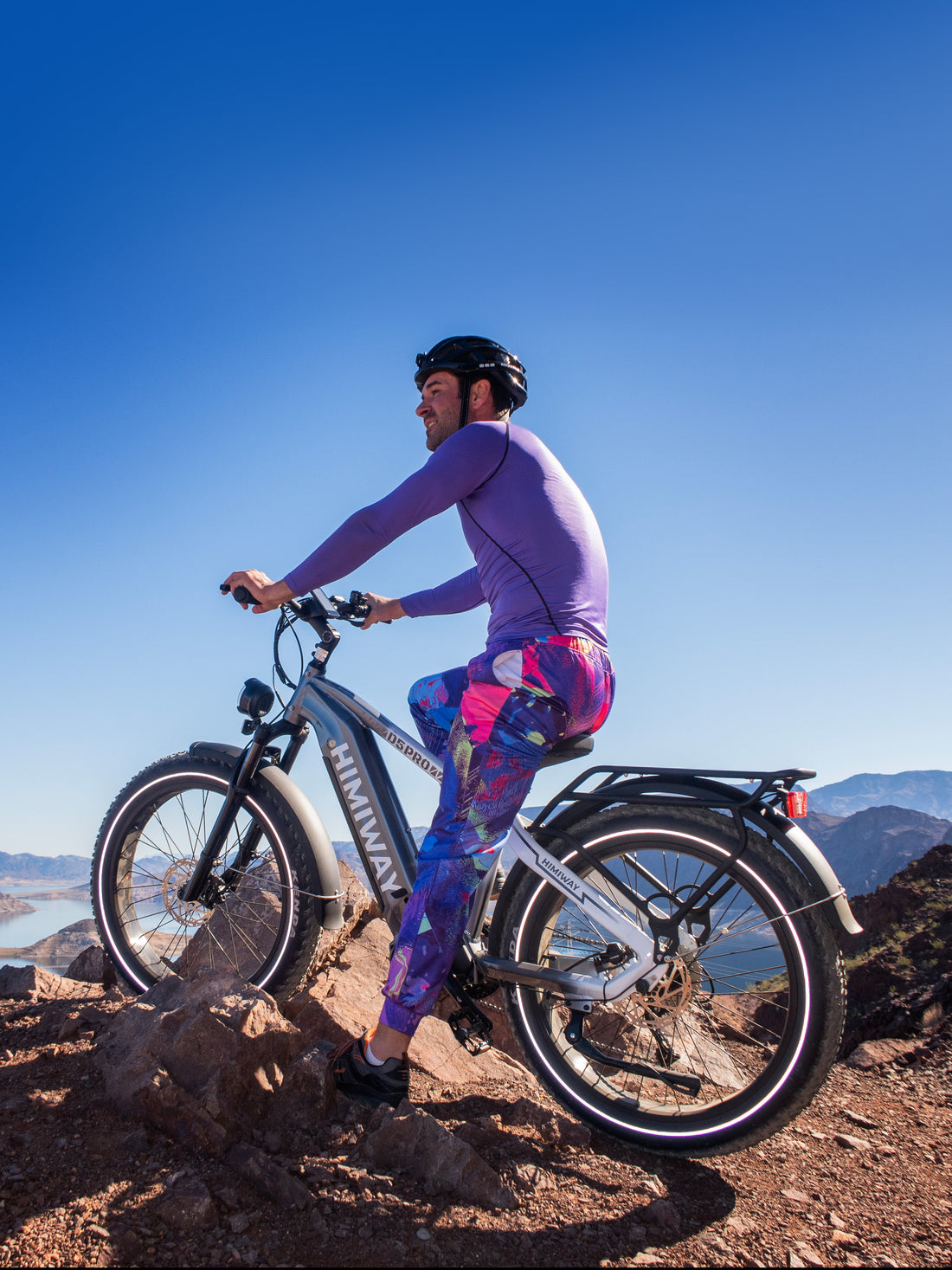
D5 Pro / All-terrain Electric Fat Bike Mid-Drive Power.
-
960 Wh
Samsung/LG Battery
-
80 Miles
Max Range
-
500 W
Mid-Drive Motor
-
20+ Mph
Top Speed
- Featured
- Most relevant
- Best selling
- Alphabetically, A-Z
- Alphabetically, Z-A
- Price, low to high
- Price, high to low
- Date, old to new
- Date, new to old
Best E-Bikes for Hilly Commutes: Conquer Climbs Without the Strain
Finding the best ebike for hilly commutes means solving daily challenges that traditional bikes can't address: climbing repeated steep grades without arriving exhausted and sweaty, maintaining consistent power on 12-15% inclines, protecting your knees from repetitive stress, and ensuring your battery lasts despite hills consuming 2-3x more power than flat terrain. Whether you face San Francisco-level elevation or modest suburban hills, the right electric bike transforms your morning struggle into an effortless glide.
Arrive Fresh, Not Drenched in Sweat
Climbing hills generates excessive heat and sweat—unprofessional when arriving at 9am meetings. High pedal-assist levels (4-5) minimize your exertion while the motor handles 70-80% of climbing work. You control effort level precisely: use maximum assist for zero-sweat arrival, or lower levels when you want exercise. Throttle capability provides complete rest on particularly steep sections. Combined with panniers instead of backpacks to prevent back sweat, modern commuter ebikes make arriving fresh a realistic daily expectation rather than an impossible goal.
Powerful Motors That Don't Struggle Mid-Hill
Weak motors slow to a crawl or overheat on sustained 12-15% grades, leaving you stranded mid-climb. Look for 80Nm+ torque for moderate hills, or 130Nm+ for steep sustained climbs typical of hilly cities. Mid-drive motors work through your bike's gears to multiply torque effectively, while maintaining efficiency on long ascents. Hub motors with high torque (90Nm) handle most urban hills adequately. Understanding motor types helps match power to your specific terrain challenges.
Battery Capacity for Hill-Heavy Routes
Hills drain batteries 2-3x faster than flat terrain—a 40-mile flat range becomes 15-20 miles on constant climbing. For hilly commutes, 720Wh batteries provide adequate margin for 10-15 mile routes, while 960Wh batteries handle longer or very steep commutes confidently. Removable battery design allows charging at both home and work, effectively doubling your available range. For guidance on extending range despite hill consumption, review our battery optimization strategies.
Protect Your Knees and Joints
Daily hill grinding on traditional bikes causes cumulative knee pain and joint strain that worsens over months. Motor assist reduces your joint stress dramatically—you provide only 20-30% of climbing effort versus 100% on regular bikes. Torque sensors respond to how hard you push, providing smooth natural assistance that prevents jerky starts straining knees. Full suspension absorbs road impacts that compound joint fatigue on rough uphill pavement. Step-through frames eliminate difficult leg-over motions when starting from stops on inclines.
Hill-Conquering Commuter E-Bikes
- 500W mid-drive motor delivers 130Nm torque for maximum hill power
- Works through 9-speed Shimano gears to multiply torque on climbs
- 960Wh battery handles power-hungry hills with 60-80 mile range
- Torque sensor provides smooth natural hill climbing feel
- 400 lb payload capacity for rider plus commute gear on steep grades
- 750W hub motor with 90Nm torque handles most urban hills confidently
- Full suspension (100mm front, 130mm rear) protects joints on rough climbs
- Switchable torque/cadence sensors adapt to your riding preference
- Maxxis tires rated for 3,000 miles reduce maintenance frequency
- MIK rack system carries laptop, lunch, and work essentials securely
- Step-through frame allows easy starts/stops at traffic lights on hills
- 750W motor with 70Nm torque provides adequate power for moderate grades
- Torque sensor delivers natural climbing feel reducing knee strain
- Full suspension (120mm front, 90mm rear) absorbs impact for joint comfort
- 220mm extra-wide saddle maximizes comfort on longer commutes
Common Questions About E-Bikes for Hilly Commutes
Will an electric bike actually help me climb steep hills without exhausting effort?
Yes—electric bike motors do the majority of climbing work, though the degree of assistance depends heavily on motor torque rather than just wattage alone. Motor torque (measured in Newton-meters or Nm) determines hill-climbing capability. For comfortable climbing on moderate 10-12% grades, look for motors delivering 70-90Nm. Steeper 12-15% grades require 80-100Nm, while sustained climbs exceeding 15% benefit from 130Nm or higher.
Pedal assist levels control your personal effort investment. Level 1-2 provides light assistance where you still work moderately—good for exercise on easier sections. Level 4-5 delivers maximum motor power where the motor handles 70-80% of climbing work and you contribute minimal effort. Even on 20%+ grades, high-torque motors (130Nm+) make climbs manageable where traditional bikes require walking.
Understanding motor type differences helps set realistic expectations—mid-drive motors multiply your pedaling force through the bike's gears, while hub motors provide direct wheel power.
How do I avoid arriving sweaty at work when my commute has big hills?
Electric bikes reduce sweat by 70-80% compared to traditional bikes on hilly routes, though completely sweat-free arrival requires strategic riding. Use maximum pedal assist (level 4-5) on all climbs—the motor handles 75-80% of work at these settings, minimizing your heat generation. Many riders mistakenly use lower assist to "get exercise," then arrive drenched—save the workout for evening rides.
Practical sweat-reduction strategies: Start your ride 10 minutes earlier than necessary, arriving with a brief cooldown period before entering the office. Use throttle capability (if equipped) to rest completely on particularly steep sections. Switch from backpack to panniers—back sweat from shouldering bags compounds uphill heat. Wear moisture-wicking base layers that you can remove, keeping a fresh shirt at work.
Realistic expectation: Hills will generate some perspiration on warm days regardless of motor power. Many commuters simply keep a change of clothes and deodorant wipes at work, refreshing upon arrival during summer months.
What motor power and torque do I actually need for hilly commutes?
Torque matters more than wattage for climbing hills. Motor wattage (measured in W) indicates sustained power output, while torque (measured in Nm) determines rotational force—the actual ability to push you up inclines. A 500W mid-drive motor with 130Nm torque outperforms a 750W hub motor with 70Nm on steep climbs.
Torque requirements by grade steepness: 10-12% grades (moderate hills): 70-90Nm handles these comfortably—most quality hub motors suffice. 12-15% grades (steep hills): 80-100Nm recommended for consistent power without motor strain. 15-20%+ grades (very steep): 130Nm+ ideal, where mid-drive motors excel due to gear multiplication. Most riders significantly overestimate hill steepness—use a phone inclinometer app to measure your actual commute grades before assuming you need maximum power.
Mid-drive vs hub motor trade-offs: Mid-drive motors (80-160Nm typical) work through your bike's gears to multiply torque, manage heat better on long climbs, and cost more. Hub motors (70-90Nm typical) provide simpler direct-drive power, cost less, and handle most urban hills (10-12%) adequately. For detailed comparison, read our comprehensive motor guide. Also explore specialized hill-climbing models.
Do I need full suspension for a hilly commute, or is that overkill?
Full suspension benefits depend on road surface quality and commute length rather than hills alone. When full suspension justifies the added cost and weight: Rough pavement on climbs (potholes, cracks, broken asphalt) compounds with impact from pushing hard uphill. Commutes exceeding 15 miles where accumulated vibration causes noticeable fatigue. Existing joint or back issues that worsen from sustained climbing vibration. Older riders who benefit from impact reduction.
When front suspension suffices: Well-maintained paved roads with minimal surface defects. Shorter commutes under 10 miles where fatigue doesn't accumulate significantly. Budget constraints where the cost difference buys other valuable features. Routes primarily on smooth bike paths or protected lanes.
Full suspension adds 10-15 lbs to bike weight but provides measurable comfort increase on longer hilly commutes—the rear shock absorbs road impacts that front-only suspension misses. For detailed suspension comparison, consult our hardtail versus full suspension guide.
Will my battery die halfway through a hilly commute?
Hills consume 2-3x more battery power than equivalent flat distances, making battery capacity critical for range security on hilly routes. Battery sizing guidelines for hilly commutes: 10-mile hilly route requires 720Wh minimum (models rated 50-65 miles flat provide 20-25 hilly miles realistically). 15-20 mile hilly route needs 960Wh for adequate margin (60-80 mile flat rating translates to 25-35 hilly miles). Very steep or long climbs benefit from spare battery capacity or workplace charging access.
Factors increasing battery consumption on hills: Steep grade percentage (15% drains faster than 10%), total rider plus cargo weight (heavier loads require more motor power), assist level usage (level 5 consumes 2x power versus level 3), cold weather operation (batteries lose 20-30% capacity below freezing).
Range-extending strategies: Use eco mode (level 1-2) on flat approach sections before hills, then increase to level 4-5 only on actual climbs. Coast downhills completely with motor off—most ebikes lack regenerative braking so coasting saves more power than attempting motor recovery. Charge at work if available, effectively doubling your range. For comprehensive battery management, review our battery optimization guide. Also consider maximum range models for peace of mind.
Can electric bikes handle hills if I'm a heavier rider or carry work gear?
Yes, but additional weight increases motor torque requirements approximately 15-20Nm per additional 50 lbs of combined rider and cargo weight. Weight-adjusted torque recommendations: 200 lb rider with 30 lb commute gear (230 total): 80Nm handles moderate 10-12% hills adequately, while 130Nm conquers steep 15% grades comfortably. 250+ lb rider with gear: Prioritize high-torque motors (90Nm+ hub motor or 130Nm+ mid-drive) to maintain hill performance without motor strain. 300+ lb combined weight: Mid-drive motors essential—their gear multiplication prevents motor overheating on sustained climbs.
Payload capacity specifications indicate safe structural limits—look for 400 lb rated models to accommodate heavier riders plus laptop, lunch, change of clothes, and lock. Mid-drive systems allow shifting to lower gears under load, multiplying available torque effectively. Hill climbing while carrying significant weight demands this gear advantage that hub motors can't replicate.
For specialized recommendations, explore our heavy rider collection featuring models engineered for higher weight capacities on challenging terrain.
What's the difference between mid-drive and hub motors for climbing hills?
Mid-drive motors mount at the bike's bottom bracket, powering the chain to work through your bike's gear system. This design multiplies torque effectively—shifting to lower gears increases available climbing force substantially. Mid-drives typically deliver 80-160Nm torque, manage sustained climb heat better through superior airflow, provide more natural pedaling feel, but cost more and require more maintenance (chain wear). Best for: Daily routes featuring sustained 15%+ grades, very hilly cities (San Francisco-level), long climbing sections exceeding 1 mile, heavier riders needing maximum torque multiplication.
Hub motors integrate directly into the front or rear wheel hub, providing direct drive power independent of gears. They deliver 70-90Nm typical torque, offer simpler mechanically-reliable design with less maintenance, cost less, but can overheat on very long steep climbs and lack gear multiplication advantage. Best for: Most urban/suburban hills in 10-12% range, moderate climb distances under 1 mile, budget-conscious commuters, riders wanting minimal maintenance.
Reality check: Most riders overestimate their hill steepness significantly—what feels like 20% is typically 8-12%. Use a phone inclinometer app to measure your actual commute grades. Most hub motors with 80-90Nm handle these real-world grades perfectly well, making mid-drive unnecessary unless you genuinely face San Francisco-level sustained climbs. Read our detailed motor comparison guide for technical specifications.
How do I protect my knees and joints when commuting up hills daily?
Motor assist dramatically reduces joint stress compared to traditional bikes—you provide only 20-30% of climbing effort at high assist levels versus 100% on regular bikes. Torque sensor advantage for joint protection: Torque sensors measure how hard you push the pedals, responding proportionally with motor assistance. This creates smooth natural power delivery that prevents jerky starts and variable resistance—both major causes of knee strain. Cadence sensors simply detect pedal rotation, providing less nuanced assistance but still effective joint stress reduction compared to no motor.
Additional joint-protection features: Full suspension absorbs road impacts from rough uphill pavement that compound joint fatigue over time—rear suspension reduces impact force reaching your knees and hips significantly. Step-through frames eliminate difficult leg-over motions when starting from stop lights mid-hill—this mounting strain accumulates daily on traditional frames. Proper bike fit matters critically: incorrect saddle height or handlebar position creates poor knee angles that cause pain even with motor assist.
Riding technique for joint health: Use lower mechanical gears combined with higher assist levels rather than higher gears with low assist—this maintains comfortable cadence while motor handles resistance. Shift to easier gears before steepest sections to prevent grinding at low cadence. Warm up on flat sections before hitting major climbs when possible. Learn more about frame style differences, and explore senior-friendly models emphasizing joint comfort features.
What is the best motor size for daily uphill commuting?
How does an e-bike handle stop-and-go traffic on hills?
Are there specific gears or drivetrains that help with hill commutes?
What safety features matter most for hilly commutes?
Which e-bike types are best for hilly commutes—commuter, fat tire, or hybrid?
Ride Further Together
Himi Riders
Recognition from knights around the world
5-Star Reviews
The knights give an honest opinion
Professional Review
What the professional media really thinks of us

1000+Shop

2-Year Warranty

15-Day Trial

Free Shipping
Find a Local Himiway Shop Near You
Looking for a hands-on experience?
Find a Himiway electric bike shop near you and schedule a test ride today.
Bikes for Every Ride


