



best ebike for camping


Himiway D5 2.0 eBike Endless Comfort: Turning Rough Roads into Silk.
-
Full Suspension
Travel F:100mm R:130mm
-
Torque / Cadence
2 Riding Experiences
-
750W 90Nm
Geared Hub Motor
-
Smart Auto
5 Assist System


Himiway D5 2.0 20" eBike Easy to Maneuver. Built for Power.
-
Full Suspension
Travel F:90mm R:100mm
-
Torque / Cadence
2 Riding Experiences
-
750W 90Nm
Geared Hub Motor
-
440 lb.
Payload Capacity


Himiway D5 2.0 Camo eBike Blend In, Ride Out: The Top Choice for Hunting
-
Full Suspension
Travel F:100mm R:130mm
-
Torque / Cadence
2 Riding Experiences
-
750W 90Nm
Geared Hub Motor
-
Smart Auto
5 Assist System


Himiway D5 2.0 ST eBike Endless Comfort: Turning Rough Roads into Silk.
-
Full Suspension
Travel F:100mm R:130mm
-
Torque / Cadence
2 Riding Experiences
-
750W 90Nm
Geared Hub Motor
-
Smart Auto
5 Assist System


Himiway D7 Pro Mountain eBike Unstoppable mountain performance
-
1000 W
Mid-drive Motor
-
28 Mph
Top Speed
-
960 Wh
Samsung/LG Battery
-
80 Miles
Max Range

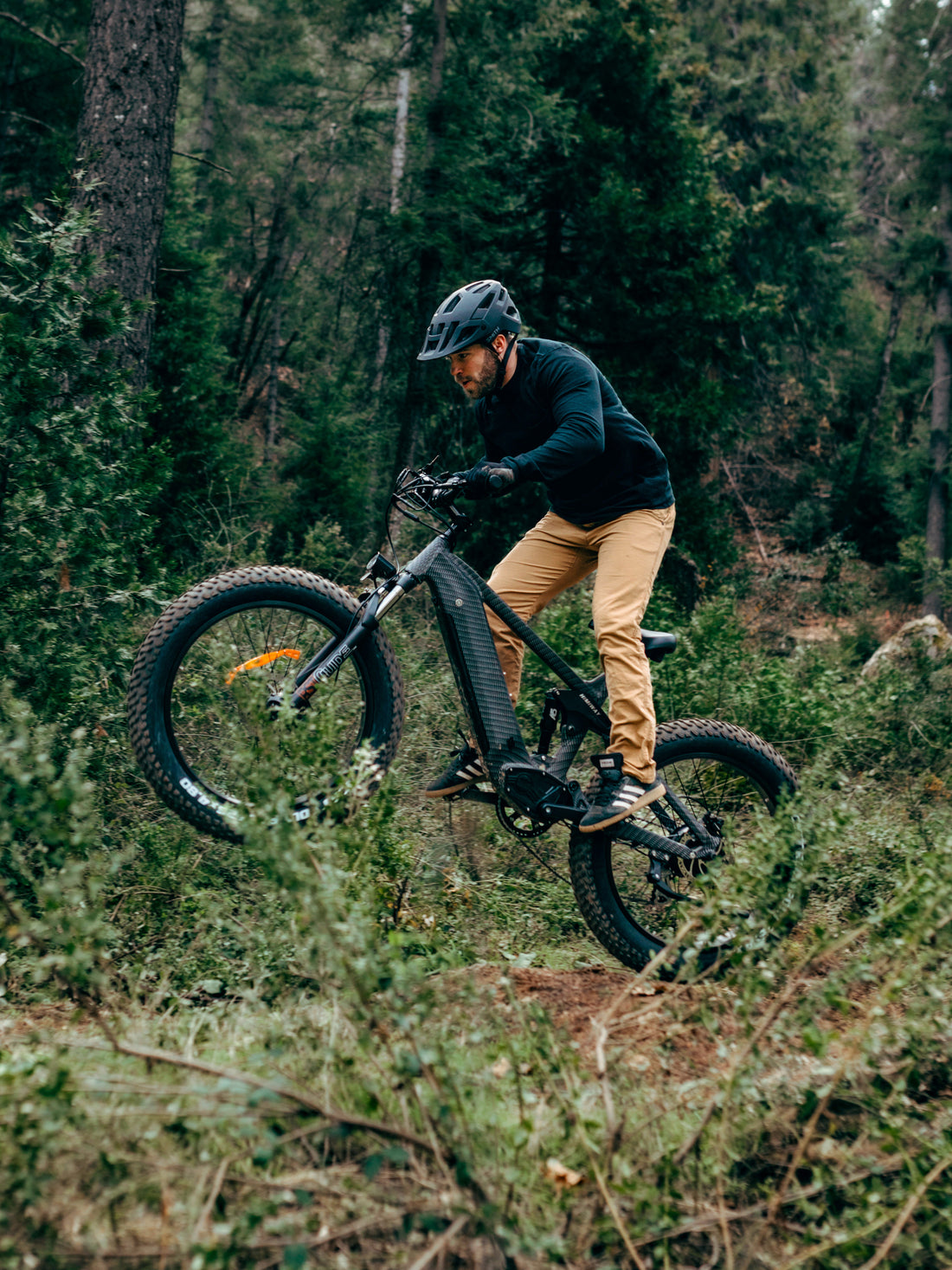
D7 / Full Suspension Electric Hunting Bike
-
80 Miles
Max Range
-
26x4.5
Super Fat Tire
-
Torque
Sensor
-
Hydraulic
Brakes

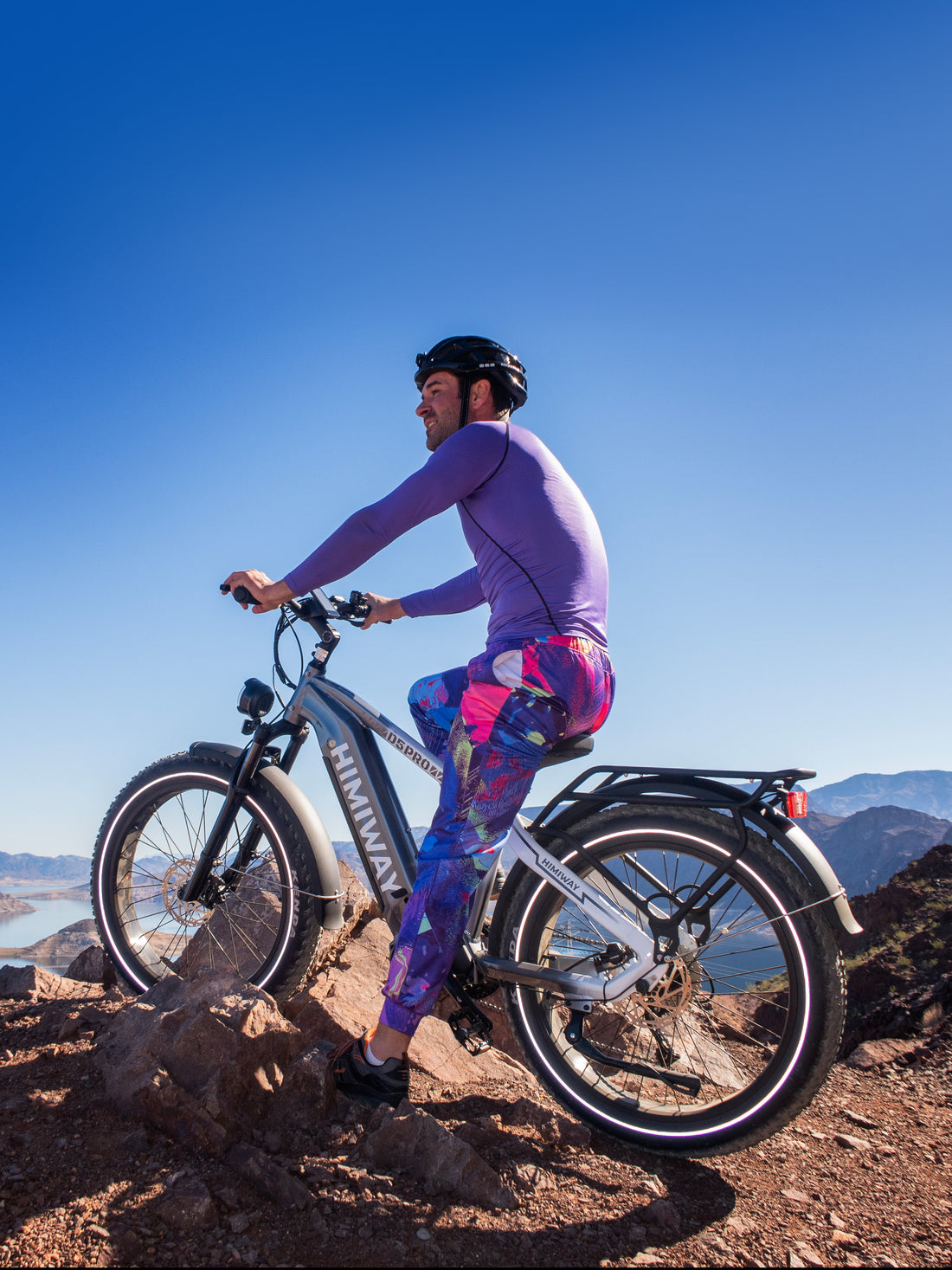
D5 Pro / All-terrain Electric Fat Bike Mid-Drive Power.
-
960 Wh
Samsung/LG Battery
-
80 Miles
Max Range
-
500 W
Mid-Drive Motor
-
20+ Mph
Top Speed


D5 ST(Zebra ST) / All-terrain Electric Fat Bike
-
Torque
Sensor
-
80 Miles
Max Range
-
400 lb.
Max Playload
-
Hydraulic
Brakes


D5(Zebra) / All-terrain Electric Fat Bike
-
Torque
Sensor
-
960 Wh
Samsung/LG Battery
-
80 Miles
Max Range
-
750W
Motor
- Featured
- Most relevant
- Best selling
- Alphabetically, A-Z
- Alphabetically, Z-A
- Price, low to high
- Price, high to low
- Date, old to new
- Date, new to old
Himiway RV Camping Electric Bike for Sale — Adventure Starts Here
If your idea of a perfect trip involves dirt roads, open skies, and a campsite far from the crowd, the Himiway Camping Electric Bike was made for you. Purpose-built for outdoor adventurers, this eBike turns every camping trip into an experience worth repeating.
Ride Further Into the Wild
Forget the trailhead parking lot. With a long-range battery and powerful motor, the Himiway camping eBike lets you ride deep into nature — carrying your gear — without worrying about running out of juice. More range means more freedom to explore off the beaten path.
Carry Everything You Need
Camping demands cargo capacity, and this eBike delivers. A heavy-duty frame and generous payload capacity mean you can load up with a tent, sleeping bag, cooking gear, and supplies without sacrificing stability or control. It's your two-wheeled base camp companion.
Fat Tires That Go Anywhere
Rocky fire roads, muddy forest trails, sandy lakeside paths — the fat tires grip and roll through it all. No terrain is off-limits, and no surface will catch you off guard. Rain or shine, the Himiway camping eBike keeps moving.
Built Tough for the Outdoors
Every component is engineered to withstand the elements. Durable construction, reliable braking, and all-weather performance mean you can focus on the adventure — not the bike.
Ready to Buy?
The Himiway RV Camping Electric Bike is available now. Whether you're a weekend warrior or a long-distance bikepacker, this is the eBike that earns its place on every trip. Explore the trail. Make camp. Ride on.
Best Camping Survival Electric Bike for Adults: Himiway D5 2.0 Camo
For adults who live for the outdoors, the Himiway D5 2.0 Camo isn't just an electric bike — it's a statement. Dressed in rugged camo styling and engineered for serious adventure, this is the camping survival eBike that looks as capable as it rides.
Made for the Campsite and Beyond
The D5 2.0 Camo is designed with the outdoor adult rider in mind. Its step-thru frame offers easy mounting with a full load of gear, while the upright riding position keeps you comfortable on long hauls to remote campsites. Whether you're navigating forest trails or cruising a lakeside path at dusk, this bike fits the moment perfectly.
Fat Tires That Conquer Any Terrain
The 20" fat tires are your all-terrain passport. Loose gravel, wet roots, sandy paths, packed dirt — the D5 2.0 Camo rolls through it all with confidence and control. No need to scout the trail ahead; just ride.
Power to Carry Your Camp
A robust motor and long-range battery mean you can load up your rack with camping essentials and still tackle elevation changes without breaking a sweat. Pedal assist gives you full control — push hard when you want the workout, or let the motor do the heavy lifting when the trail gets tough.
The Camo Edition — Built for Those Who Belong Outside
The camo colorway isn't just aesthetic — it signals intent. This is a bike for adults who take their outdoor time seriously, who camp further out, stay longer, and ride harder. The D5 2.0 Camo blends into the wild while standing out from every other eBike on the market.
If you're looking for the best camping electric bike for campers, the Himiway D5 2.0 Camo delivers the perfect combination of rugged style, all-terrain capability, and practical power. Pack your gear, hit the trail, and make camp wherever the ride takes you.
Camping Mountain eBike: Himiway D7 Pro
Some bikes are built for the road. Some are built for the trail. The Himiway D7 Pro is built for both — and everything in between. When your camping adventure demands a mountain-ready eBike that can haul gear, climb hard, and keep going long after the pavement ends, the D7 Pro is the answer.
Mountain-Grade Power, All Day Long
The D7 Pro's 1000W motor doesn't just assist your ride — it transforms it. Steep mountain ascents, technical switchbacks, and loaded climbs become manageable, even enjoyable. Whether you're riding into a backcountry campsite or exploring ridge trails at altitude, the D7 Pro delivers the torque to get you there without burning out your legs.
Fat Tires Built for Mountain Terrain
Wide, aggressive fat tires grip loose rock, rooted singletrack, muddy descents, and everything the mountain throws at you. The added tire volume also absorbs trail chatter and rough terrain, keeping your ride smooth and controlled even when the trail gets rowdy.
Carry Your Camp, Conquer the Mountain
The D7 Pro's reinforced frame and generous payload capacity make it a true bikepacking machine. Strap on your panniers, load the rear rack, and ride fully equipped into the wilderness. The bike handles the weight — you handle the adventure.
Long-Range Battery for Remote Destinations
Mountain campsites don't come with charging stations. The D7 Pro's high-capacity battery is engineered for extended range, so you can ride deep into the backcountry and still have power for the return trip. Plan bigger. Ride further. Camp wilder.
Premium Components for Demanding Conditions
Hydraulic disc brakes deliver confident stopping power on steep descents. Durable construction stands up to repeated exposure to mud, moisture, and rough handling. The D7 Pro is spec'd for riders who push hard and expect their gear to keep up.
For adults who want a camping mountain eBike that handles serious terrain without compromise, the Himiway D7 Pro is the definitive choice. Power, range, cargo capacity, and mountain-ready performance — all in one unstoppable package.
The mountain is calling. The D7 Pro is ready.
Best E-Bikes for Camping: Hauling Gear to Your Next Adventure
Finding the best ebike for RV camping means solving real challenges: transporting yourself and 40-80 lbs of camping gear across varied terrain, maintaining reliable power for multi-day trips without charging access, and keeping your equipment secure on rough forest trails. Whether you're bikepacking through backcountry or heading to established campgrounds, the right electric bike transforms camping logistics from a burden into part of the adventure itself.
Haul Heavy Camping Gear Without Strain
Tent, sleeping bag, food supplies, water, cooking equipment—complete camping loads add 40-80 lbs to your ride. Models with 400lb payload capacity handle both rider and full camping gear comfortably, while 4-inch fat tires distribute weight evenly for stability. High-capacity rear racks (120lb+) and MIK-compatible mounting systems accommodate panniers, waterproof bags, and essential accessories. For extended camping with bulkier items, trailer-compatible models let you distribute loads beyond the bike itself.
Extended Range for Multi-Day Campers
Remote campsites rarely offer charging access, making battery capacity critical for multi-day trips. Larger 960Wh batteries deliver 60-80 mile range—enough for a full day's travel plus margin for unexpected detours. Removable battery design allows carrying a spare to effectively double your range (adding only ~6 lbs), while efficient torque sensors maximize every watt. For guidance on extending battery life during longer trips, check our battery maintenance guide.
Conquer Off-Road Trails and Dirt Roads
The best campsites aren't reached by paved roads. Fat tires (4+ inches) grip loose dirt, sand, and gravel that would challenge standard tires, while full suspension systems absorb trail impacts that would otherwise damage fragile camping gear. High-torque motors (80Nm+) maintain power on steep forest service roads even when fully loaded. Understanding motor types helps match capability to your specific terrain challenges.
Secure Mounting for All Your Equipment
Where do you actually attach tent, water bottles, tool kit, and extra clothing? MIK rear rack systems accept over 1000 accessory options including panniers, dry bags, and cargo platforms. Multiple frame mounting points accommodate water bottle cages, frame bags for batteries and tools, and handlebar bags for quick-access items. Step-through frames simplify mounting and dismounting when wearing loaded backpacks or navigating around attached gear.
Camping-Ready E-Bikes Built for Campers
- 960Wh battery delivers 60-80 mile range for multi-day trips
- 400 lb payload handles rider plus extensive camping gear
- 26x4.0" fat tires grip dirt roads and loose trail surfaces
- Torque sensor optimizes battery efficiency for extended rides
- Removable battery design allows carrying spare for doubled range
- Full suspension (100mm front, 130mm rear) protects gear from trail impacts
- Switchable torque/cadence sensors let you choose efficiency vs simplicity
- Maxxis tires rated for 3,000 miles reduce maintenance on extended trips
- MIK rack system compatible with 1000+ camping accessories
- 400 lb capacity with reinforced 6061 aluminum frame
- 1,000 lb towing capacity pulls camping trailers for bulkier gear
- 120 lb rear rack accommodates extra water, coolers, firewood
- Camo finish blends into natural camping environments
- Step-through frame simplifies mounting with heavy backpacks
- Quiet motor operation preserves wilderness experience
Common Questions About E-Bikes for Camping
How much camping gear weight can an electric bike actually carry?
Payload capacity means the total combined weight of rider, gear, and accessories—not just cargo alone. For typical camping, 400 lb payload capacity provides adequate margin: a 200 lb rider plus 80 lbs of camping gear (tent, sleeping bag, cookware, food, water) plus 12 lbs of bike accessories (panniers, racks, locks) totals 292 lbs, leaving safety buffer for unexpected additions.
Weight distribution matters as much as total capacity: Keep heavier items (water, food supplies) low and centered near the bottom bracket. Mounting a heavy tent high on a rear rack raises center of gravity and affects handling. For loads exceeding comfortable bike capacity, camping trailers distribute weight more effectively than overloading the bike itself.
Models rated for 400-440 lb payload typically use reinforced frames, stronger wheels, and robust rack systems. For specialized heavy-duty applications, explore heavy-duty ebike options.
Will the battery last for multi-day camping trips without charging?
A 960Wh battery provides 60-80 miles per charge under moderate pedal assist with typical loads. However, actual range depends heavily on terrain elevation, total weight, wind conditions, and assist level selection. Camping scenarios often involve more variables than commuting.
Realistic multi-day strategy: For a two-day trip covering 100 miles total, carry a spare battery (adds ~6 lbs, doubles range). Charge opportunistically—many campers stop at cafes, visitor centers, or campground facilities during daylight riding hours. Even 1-2 hours of charging while eating lunch significantly extends range.
Use lower assist levels (1-2) on flat terrain and save higher assist (4-5) for steep climbs or when fatigued. This riding strategy can extend a 960Wh battery to 80+ miles even when fully loaded. Our battery optimization guide details techniques for maximizing range during extended trips.
Can electric bikes handle dirt roads and forest trails to campsites?
Yes, but terrain capability varies significantly between models. The three critical factors are tire width, suspension travel, and motor torque delivery.
Tire characteristics: Fat tires (4+ inches wide) provide substantially better traction on loose dirt, gravel, and sand compared to narrower tires. They also run at lower pressures (10-15 psi vs 30+ psi), which improves shock absorption and grip on uneven surfaces. Aggressive tread patterns help on muddy or rocky trails.
Suspension needs: For maintained dirt roads and groomed trails, front suspension alone handles most impacts. Technical forest trails with roots, rocks, and significant elevation changes benefit from full suspension—the rear shock absorbs impacts that would otherwise jostle your cargo and cause fatigue over long distances.
Motor considerations: When climbing steep forest service roads with 80 lbs of camping gear, high torque (80Nm+) maintains consistent power. Compare off-road capabilities in our off-road ebike collection.
What's the best way to carry camping equipment on an ebike?
Effective gear distribution uses multiple attachment points rather than overloading one area. Strategic packing improves handling and protects equipment.
Optimal cargo placement: Rear rack-mounted panniers hold clothing, food supplies, and cookware (keep weight balanced left-right). Frame bags store tools, spare tubes, first aid kit. Seat packs secure sleeping bags (compress well to minimize wind resistance). Handlebar bags provide quick access to maps, phone, snacks. Front basket or rack adds capacity for lightweight bulky items like tent stuff sack.
MIK-compatible rack systems accept over 1000 accessory options including waterproof panniers, cargo platforms, and specialized mounts. For very bulky items (full-size cooler, firewood, large tent) or total loads exceeding comfortable bike capacity, a single-wheel camping trailer offers more stability than loading everything on the bike.
Keep cargo center of gravity low—mounting heavy water containers high on rear rack creates handling problems, especially on technical terrain.
Can I tow a camping trailer with an electric bike?
Yes, many electric bikes handle camping trailers effectively, though motor type and towing capacity specifications matter for safety and performance.
Towing capacity varies widely: Purpose-built models offer 1,000 lb towing capacity, while standard ebikes may not specify towing ratings at all. Always verify manufacturer specifications before attaching a trailer—exceeding limits risks frame damage and void warranties.
Trailer benefits for camping: Distribute weight more effectively than fully loading the bike (trailer wheels carry load independently), transport bulky items that won't fit in panniers (tent, sleeping pads, cooler), maintain better bike handling compared to heavily loaded rear rack, easier loading/unloading at campsite.
Motor considerations: Mid-drive motors work through your bike's gears, maintaining efficiency when pulling heavy trailers up hills. Hub motors provide adequate power on flat terrain but may struggle on steep grades with trailer attached. For sustained hilly terrain with trailer, mid-drive systems perform better—learn more about motor type differences.
What range should I expect when fully loaded with camping gear?
Fully loaded camping configuration reduces range by approximately 20-30% compared to unloaded riding. Understanding realistic expectations helps route planning.
Expected loaded range: A 960Wh battery that delivers 60-80 miles unloaded typically provides 45-60 miles when carrying full camping load (rider + 70-80 lbs gear). A 720Wh battery drops from 50-65 miles unloaded to 35-50 miles loaded. These estimates assume moderate pedal assist on mixed terrain.
Range-extending strategies: Use eco mode (assist level 1-2) on flat sections and coast downhills whenever safe. Maintain steady cadence rather than accelerating/decelerating frequently. Plan routes with 30-40% range buffer to account for unexpected hills, headwinds, or route changes. Charge opportunistically at any available outlet even for short periods—one hour of charging can add 15-20 miles range.
For serious multi-day bikepacking, consider maximum range models or carrying a spare battery.
Do I need full suspension for camping trips?
Full suspension benefits depend on trip duration, terrain roughness, and cargo fragility. The trade-offs involve added weight and cost versus comfort and cargo protection.
When full suspension helps: Multi-day trips where accumulated fatigue from trail vibration compounds over time. Rough forest trails with significant roots, rocks, or washboard surfaces. Carrying fragile equipment (camera gear, electronics, glass containers) that benefits from impact isolation. Existing back or joint issues that worsen with prolonged vibration exposure.
When you can skip it: Established campgrounds accessed via maintained gravel roads. Short overnight trips (fatigue accumulation less significant). Budget-focused setup where money saved on suspension upgrades other camping gear. Primarily paved or smooth dirt road routes.
Full suspension adds 10-15 lbs to bike weight but reduces energy lost to bouncing and minimizes fatigue on extended rough terrain. For detailed comparison, read our suspension guide.
How do I keep my gear stable and secure while riding off-road?
Proper load securing prevents shifting cargo that creates handling problems and potential falls. Strategic packing techniques matter as much as quality attachment systems.
Weight distribution principles: Pack heaviest items (water, canned food) low and centered near bottom bracket. Lighter bulky items (sleeping bag, clothing) go higher. Balance left-right weight equally—uneven loading causes bike to pull one direction. Test bike fully loaded before departure—wobbling while standing still indicates poor balance requiring repacking.
Securing connections: Use bungee cords with rubber coating (prevents scratching) or cam-strap systems (more secure than bungees for heavy loads). Check all attachment points after first 30 minutes of riding—initial movement often loosens connections. Waterproof dry bags protect gear from rain and dust while keeping contents from shifting internally. Compression straps on panniers prevent items from bouncing within bags.
Multiple smaller bags distribute weight better than one large bag. Panniers with lower mounting points (closer to axle) handle better than high-mounted cargo.
What's the difference between cargo ebikes and regular ebikes for camping?
Cargo bikes and standard fat tire ebikes serve different camping applications. Understanding the trade-offs helps match bike type to your specific camping style.
Cargo bike advantages: Higher payload capacity (440+ lbs vs 400 lbs), longer wheelbase provides stability when heavily loaded, dedicated cargo areas simplify packing, step-through access makes loading/unloading easier. Better suited for car camping with lots of gear, basecamp setups requiring frequent heavy hauling, or family camping with kids' equipment.
Regular fat tire ebike advantages: Lighter weight (typically 15-20 lbs less), more agile handling on singletrack trails, easier to control on steep technical terrain, simpler to transport when not riding. Better for bikepacking on mixed terrain, solo trips with moderate gear, routes involving technical trails.
For most camping scenarios, a 400 lb capacity fat tire ebike plus trailer attachment option provides better versatility than a dedicated cargo bike. Explore options in our camping ebike collection.
Can older adults or beginners safely camp with electric bikes?
Electric bikes make camping accessible to riders who might struggle with traditional bike camping. Motor assist reduces physical barriers while adding safety considerations to address.
Accessibility features that help: Step-through frames eliminate difficult leg swings over loaded bikes. Motor assist reduces physical strain—arrive at campsite less fatigued. Throttle capability allows brief rests without stopping (helpful when balancing loaded bike). Lower standover heights improve control when mounting/dismounting with gear attached. Learn more about frame style differences.
Smart starting approach: Begin with established campgrounds featuring shorter access rides (10-15 miles) and amenities. Build confidence with supported tours where groups ride together. Start with lighter gear loads—test with 40 lbs before attempting full 80 lb camping setup. Choose routes with road access rather than technical trails initially.
Safety essentials: Learn basic repairs (fixing flat tire, adjusting brakes). Carry comprehensive tool kit including spare tube, tire levers, multi-tool. Inform someone of route and expected return. Consider senior-friendly models with enhanced stability features.
Are folding ebikes a good choice for camping trips?
Folding ebikes offer genuine advantages for specific camping scenarios—primarily when storage space before reaching the campsite is the main constraint.
When folding makes sense: RV and van camping where interior storage is tight, truck bed transport alongside other gear, campgrounds with strict bike storage rules, or multi-modal trips where you combine driving with cycling at the destination. A folding ebike can collapse to roughly half its size, fitting in spaces where full-size bikes simply won't go.
The honest trade-offs: Most folding ebikes use 20" wheels rather than 26" or 27.5"—smaller wheels are less capable on rough dirt trails and loose gravel. Payload capacity tends to be lower (typically 250–300 lb vs 400 lb on full-size fat tire models), limiting how much camping gear you can carry directly on the bike. Battery capacity is also usually smaller, reducing range on loaded multi-day trips.
Our recommendation: If your camping style involves driving to a base location and using the bike for day rides and camp errands, a folding model is a smart, space-efficient choice. If you're doing true bikepacking—riding loaded directly to remote campsites on dirt trails—a full-size fat tire ebike like the Himiway D5 2.0 will handle the terrain and payload demands more reliably.
What gear do I need for an e-bike camping trip?
A well-planned electric bike camping gear list balances weight, weather readiness, and self-sufficiency. Ebike camping differs from traditional bike touring mainly because of the charging and mechanical requirements specific to electric drivetrains.
Bike-specific essentials:
- Charger + adapter: Never leave without it. Confirm campsite has power access in advance, or plan café/visitor center stops for opportunistic charging.
- Spare tube + tire levers + mini pump: Fat tires are puncture-resistant but not puncture-proof. A 4" fat tube weighs ~600g—worth the weight.
- Multi-tool with chain breaker: Covers most trailside mechanical fixes.
- Spare brake pads: Hydraulic brakes wear faster when heavily loaded on long descents.
Cargo and shelter setup: Pack heaviest items (water, canned food) in low-mounted rear panniers close to the wheel axle. Sleeping bag and clothing compress into a rear seat bag. Tent and sleeping pad roll onto the rear rack horizontally with cam-straps. Keep a small handlebar bag for phone, snacks, and quick-access items. Aim to stay under 40 lbs total cargo for comfortable handling on technical terrain.
Power and navigation: A 10,000–20,000 mAh USB power bank keeps phone and GPS charged between stops without relying on the ebike's battery. Download offline maps before departure—cell coverage near remote campsites is unreliable. Carry a printed route card as backup.
For gear attachment systems compatible with Himiway bikes, the MIK rack standard accepts over 1,000 pannier and cargo options. See our battery maintenance guide for range-maximizing strategies specific to loaded e-bike camping trips.
HIMIWAY D5 ZEBRA

AFFORDABLE Full Suspension Step-Thru E-Bike // FULL REVIEW - HIMIWAY Escape Pro

FULL SUSPENSION E-BIKE THAT CAN HANDLE ANY TERRAIN *HIMIWAY COBRA*

What makes an ebike suitable for camping trips?
Which Himiway ebikes are best for camping?
Can I carry camping gear on a Himiway ebike?
How far can I go on a single charge during a camping trip?
Are Himiway ebikes suitable for off-road or forest trails?
How much weight can a camping ebike carry?
Can I attach a trailer or pet carrier for camping?
Do I need a special license to ride an ebike while camping?
Ride Further Together
Himi Riders
Recognition from knights around the world
5-Star Reviews
The knights give an honest opinion
Professional Review
What the professional media really thinks of us

1000+Shop

2-Year Warranty

15-Day Trial

Free Shipping
Find a Local Himiway Shop Near You
Looking for a hands-on experience?
Find a Himiway electric bike shop near you and schedule a test ride today.
Bikes for Every Ride


