Best Fat Tire Electric Bikes for Adults: Himiway D5 2.0 Series
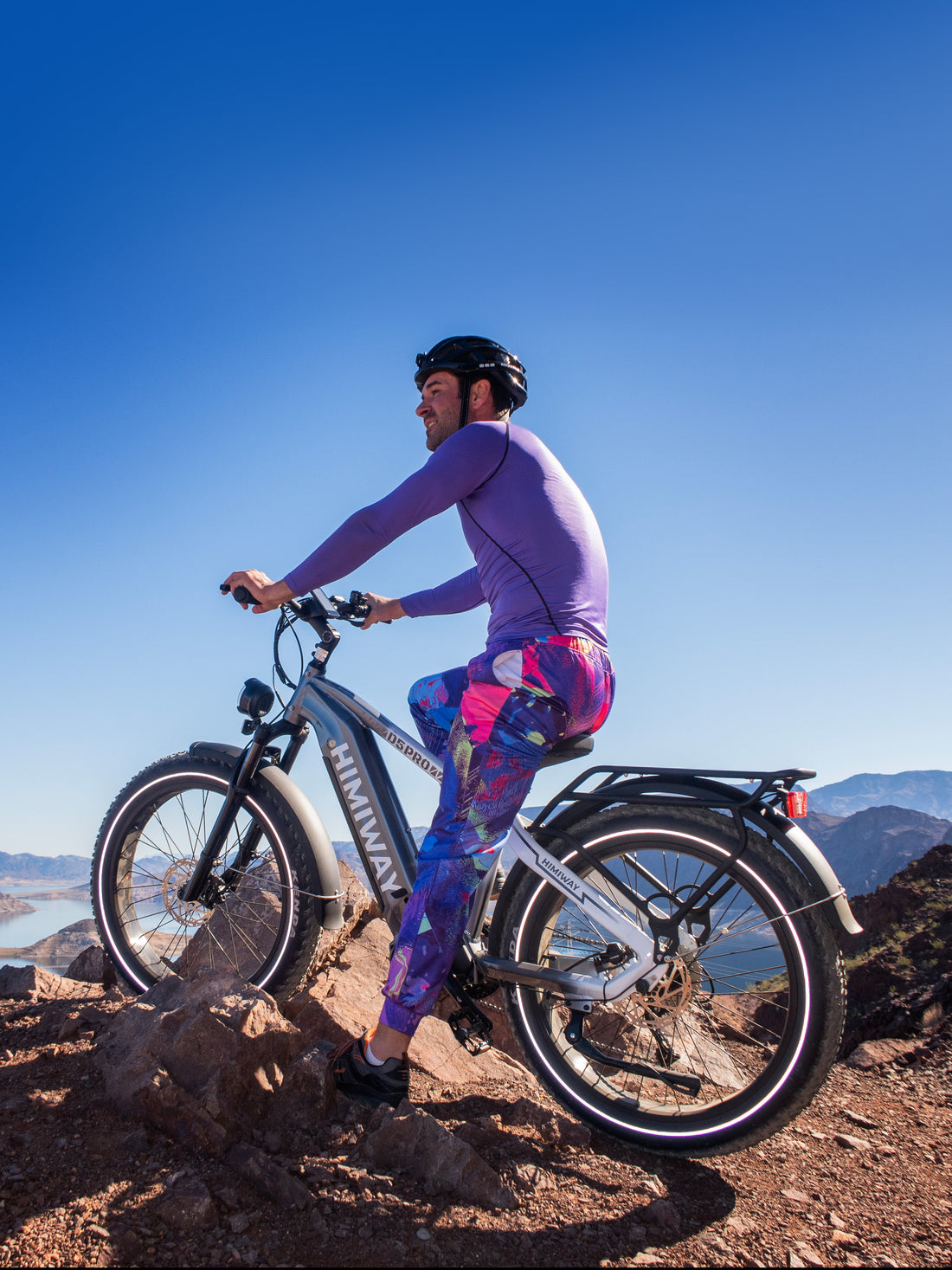
Searching for the best fat tire ebike engineered for commuting on rough terrain and weekend backcountry exploration? The Himiway D5 2.0 series provides the ultimate combination of high-torque climbing power, all-terrain plush suspension, and long-range battery performance — making it the top-value fat tire electric bike for adults available today.
Engineered for Commuting on Rough Terrain & All-Weather Trails
Equipped with wide, puncture-resistant 26" x 4.0" (as well as agile 20-inch configurations) all-terrain tires, this fat tire ebike glides seamlessly over city potholes, cracked asphalt, gravel paths, and slick tram tracks. Its ergonomic step-thru frame provides an accessible standover height, making it an ideal fat tire ebike for short riders and adults seeking quick, confident dismounts.
Powerful 750 Watt Motor & Reliable Long-Range Battery
At the heart of the D5 2.0 is a robust fat tire electric bike 750 watt motor (peaking over 1000W) designed to crush 15°+ inclines without breaking a sweat. Backed by high-capacity Samsung/LG battery cells and intuitive torque sensing, enjoy an effortless range of 60 to 80 miles per charge with zero range anxiety.
Heavy-Duty Stability with 400 lb Payload Capacity
Unlike ordinary commuter electric bicycles, this all-terrain fat tire electric bike features a durable 6061 aluminum alloy frame with a 400 lb payload rating and four-piston hydraulic disc brakes for maximum stopping power in mud, rain, or snow. Discover why riders rank the D5 2.0 as the most capable fat tire ebike for sale under $2,000.
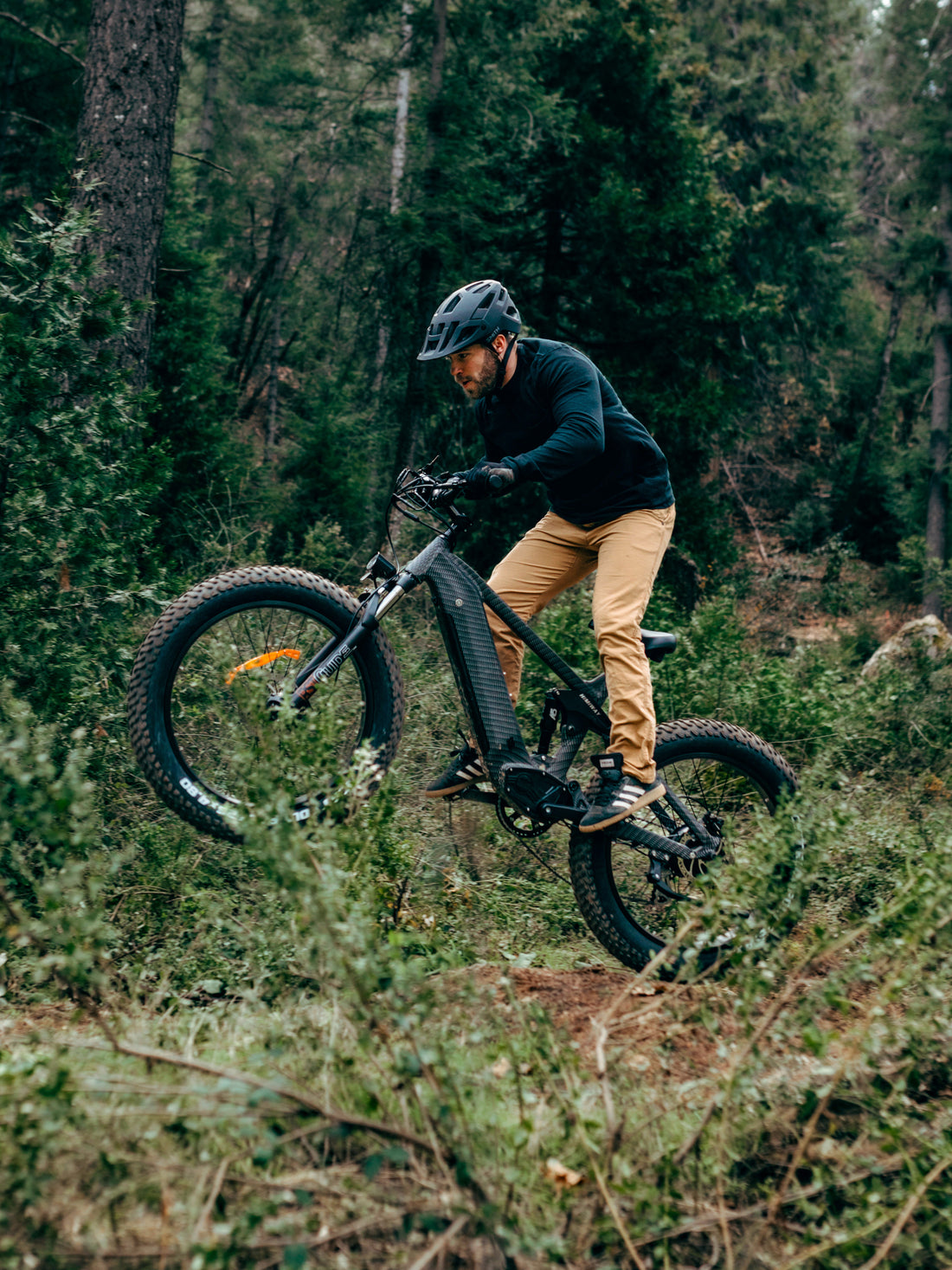
Best 1000W Fat Tire Electric Bike for Off-Road & Hunting: Himiway D7 Pro
When steep backcountry ridges, deep mud, and heavy equipment require uncompromising muscle, the Himiway D7 Pro sets the standard as the best fat tire electric bike 1000W for extreme off-road terrain and hunting expeditions.
Unrivaled 1000W Mid-Drive Power & 160Nm Hill-Climbing Torque
Engineered for hunters and wilderness adventurers, the D7 Pro features a monster 1000W electric bike motor delivering an industry-leading 160Nm of instant torque. Whether hauling hunting gear up steep mountain trails, towing a game cart, or slicing through thick wilderness, this powerhouse moves heavy loads with silent authority.
4.8-Inch Ultra-Wide Fat Tires for Snow, Sand & Wilderness Trails
Fitted with massive 26" x 4.8" all-terrain tires, the D7 Pro achieves true off-road flotation. Dropping tire pressure down to 5–8 PSI creates an ultra-wide contact patch that grips deep snow, beach sand, and slick forest loam where narrow-tire electric bikes lose traction and sink.
Enduro Full Suspension & Quiet Electric Hunting Performance
Equipped with an inverted front air suspension fork and a four-bar linkage rear shock, the D7 Pro dampens heavy trail impacts with ease. For silent scouting deep into big game territory without gasoline odors or engine roar, it is the premier fat tire electric bike for hunting.
Fat Tire eBike Pros and Cons: What Are the Disadvantages of a Fat Bike?
Fat tire electric bikes — with tires ranging from 4.0 to 4.8 inches wide — provide unparalleled traction and pneumatic cushioning. Before choosing your next ebike fat tire setup, explore the key advantages and practical trade-offs below:
The Pros
-
Unbeatable All-Terrain Traction: Oversized tires grip loose gravel, slippery mud, beach sand, and winter snowpack with supreme stability.
-
Natural Pneumatic Cushioning: Running low tire pressure (10–20 PSI) turns wide rubber into shock-absorbing air cushions that smooth out rough roads.
-
Confidence for Adults & Beginners: Wide tire contact patches deliver stable low-speed balancing, making them the safest fat tire ebike for adults and seniors.
-
True 4-Season Commuting: Ride through winter slush and heavy rain where thin commuter tires slide and lose traction.
-
Heavy-Duty Payload Ratings: Reinforced frames comfortably support rider weights up to 400 lbs, plus heavy hunting gear and cargo panniers.
The Disadvantages & Cons
-
Heavier Overall Bike Weight: Beefy frames and wide wheels bring total weight to 70–85 lbs; using walk-assist mode is recommended on steep ramps.
-
Specialized Transport Racks Required: Standard car bike racks cannot fit 4-inch tires; a dedicated heavy-duty ebike hitch rack is required.
-
Slightly Higher Rolling Resistance: Wider tire contact patches require more energy, though high-torque 750W–1000W motors easily offset pedaling drag.
-
Broader Turning Radius: Higher front-wheel rotational mass makes high-speed hairpins slightly slower than a lightweight road bicycle.
Comparison at a Glance: Fat Tire vs. Traditional Commuter eBikes
| Feature |
Fat Tire Electric Bike (4.0"–4.8") |
Traditional Commuter eBike (1.75"–2.4") |
| Best For |
Rough terrain, snow, beach sand, potholes & trails |
Paved city streets & smooth paved bike paths |
| Ride Comfort |
Maximum comfort via natural air suspension |
Firm; reliant solely on mechanical fork suspension |
| Payload & Stability |
High (up to 400 lbs payload), rock-solid stability |
Standard (250–300 lbs), agile and lightweight |
| Battery Range Efficiency |
Balanced with large 720Wh–960Wh high-capacity batteries |
Slightly higher watt-hour efficiency on flat pavement |
| All-Weather Riding |
Year-round safety on rain, mud, slush, and snow |
Higher slip risk on wet road paint, gravel, and leaves |
Rider Recommendation
"If you commute over broken pavement, gravel detours, or ride in snowy winter conditions, a fat tire electric bike delivers unmatched confidence, balance, and all-weather comfort."
20-Inch vs. 26-Inch Fat Tires: Which Setup Fits Your Needs?
Choosing between an electric bike 20 inches fat tire and a full-sized 26-inch fat tire depends on your height, storage space, and primary riding terrain. While 20-inch fat tires provide unmatched low standover clearance and agile urban steering for short riders, full-size 26-inch fat tires deliver superior obstacle rollover, higher ground clearance, and high-speed stability on rugged off-road trails.
20-Inch Fat Tires (Best for Short Riders & Compact Storage)
-
Compact & Convenient: Perfect for compact folding frames (like the Himiway D5 2.0 20"), ideal for apartment storage, camper vans, and RV trips.
-
Nimble Stop-and-Go Steering: Smaller wheel diameters require less initial torque to get up to cruising speed in dense city traffic.
-
Best for Short Riders: Low standover heights provide effortless mounting and flat-foot ground contact for riders between 5'0" and 5'6".
-
Lower Rollover Angle: Smaller wheel circumference feels deeper dips when tackling large backcountry tree roots and deep ruts.
26-Inch Fat Tires (Best for All-Terrain, Tall Riders & Trails)
-
Effortless Rollover: Large wheel diameter glides over rocks, tree limbs, curbs, and deep snow without losing forward momentum.
-
High-Speed Cruising Stability: Enhanced gyroscopic balance keeps your ride steady at top speeds of 20–28 mph.
-
Generous Ground Clearance: Elevates the crankset to protect against pedal strikes on steep, rocky trails.
-
Larger Overall Footprint: Requires more dedicated storage space and a heavy-duty e-bike hitch rack for car transport.
The Verdict
Choose an electric bike 20 inches fat tire model if you need compact storage, ride in tight urban spaces, or want an accessible fat tire ebike for short riders.
Choose a 26-inch fat tire electric bike if you prioritize rough terrain rollover, winter snow riding, backcountry hunting, or carry heavy cargo payloads.
750W vs. 1000W Motors: How Much Power Do You Really Need?
Motor wattage defines hill-climbing acceleration and payload performance. When shopping for the best fat tire electric bike for adults, a fat tire electric bike 750 watt model is the road-legal standard for everyday commuting, while a fat tire electric bike 1000W motor unlocks maximum torque for steep mountains and extreme backcountry hunting.
750W Motors: The Legal Street & Commuter Standard
-
100% US Class 2 & 3 Compliant: Meets the legal 750W limit for public city streets, paved bike paths, and state parks across the United States.
-
Optimal Energy Efficiency: Balanced power consumption delivers an extended 60–80 miles per single battery charge.
-
Dependable Climbing Torque: Easily conquers 10°–15° road grades and strong headwinds with responsive pedal assistance.
-
Speed Reduction on Extreme Slopes: May experience reduced acceleration on 20%+ grades when loaded with 300+ lbs of payload.
1000W Motors: Maximum Off-Road & Hunting Performance
-
Conquer 25°+ Steep Mountains: Pours out up to 160Nm of instant torque to power up rugged ascents without motor strain.
-
Heavy-Duty Towing & Payload: Perfect for heavier adults (250+ lbs) or riders towing game trailers and heavy hunting gear.
-
Relentless Traction in Sand & Mud: Powers through deep sand and thick mud where lower-wattage motors struggle.
-
Trail Regulation Checks: Some public urban trails limit motors to 750W; primarily engineered for private land, OHV areas, and rugged backcountry trails.
Which Motor Size Should You Choose?
Opt for a 750W fat tire ebike (such as the Himiway D5 2.0) for compliant daily commuting on rough terrain, extended battery life, and mixed-trail cruising.
Select a 1000W fat tire electric bike (such as the Himiway D7 Pro) if you navigate extreme mountain terrain, weigh over 250 lbs, or demand the ultimate hunting e-bike.