



Pedal Assist Electric Bike


Himiway D5 2.0 20" eBike Easy to Maneuver. Built for Power.
-
Full Suspension
Travel F:90mm R:100mm
-
Torque / Cadence
2 Riding Experiences
-
750W 90Nm
Geared Hub Motor
-
440 lb.
Payload Capacity


Himiway D5 2.0 Camo eBike Blend In, Ride Out: The Top Choice for Hunting
-
Full Suspension
Travel F:100mm R:130mm
-
Torque / Cadence
2 Riding Experiences
-
750W 90Nm
Geared Hub Motor
-
Smart Auto
5 Assist System


Himiway D5 2.0 eBike Endless Comfort: Turning Rough Roads into Silk.
-
Full Suspension
Travel F:100mm R:130mm
-
Torque / Cadence
2 Riding Experiences
-
750W 90Nm
Geared Hub Motor
-
Smart Auto
5 Assist System


Himiway D5 2.0 ST eBike Endless Comfort: Turning Rough Roads into Silk.
-
Full Suspension
Travel F:100mm R:130mm
-
Torque / Cadence
2 Riding Experiences
-
750W 90Nm
Geared Hub Motor
-
Smart Auto
5 Assist System

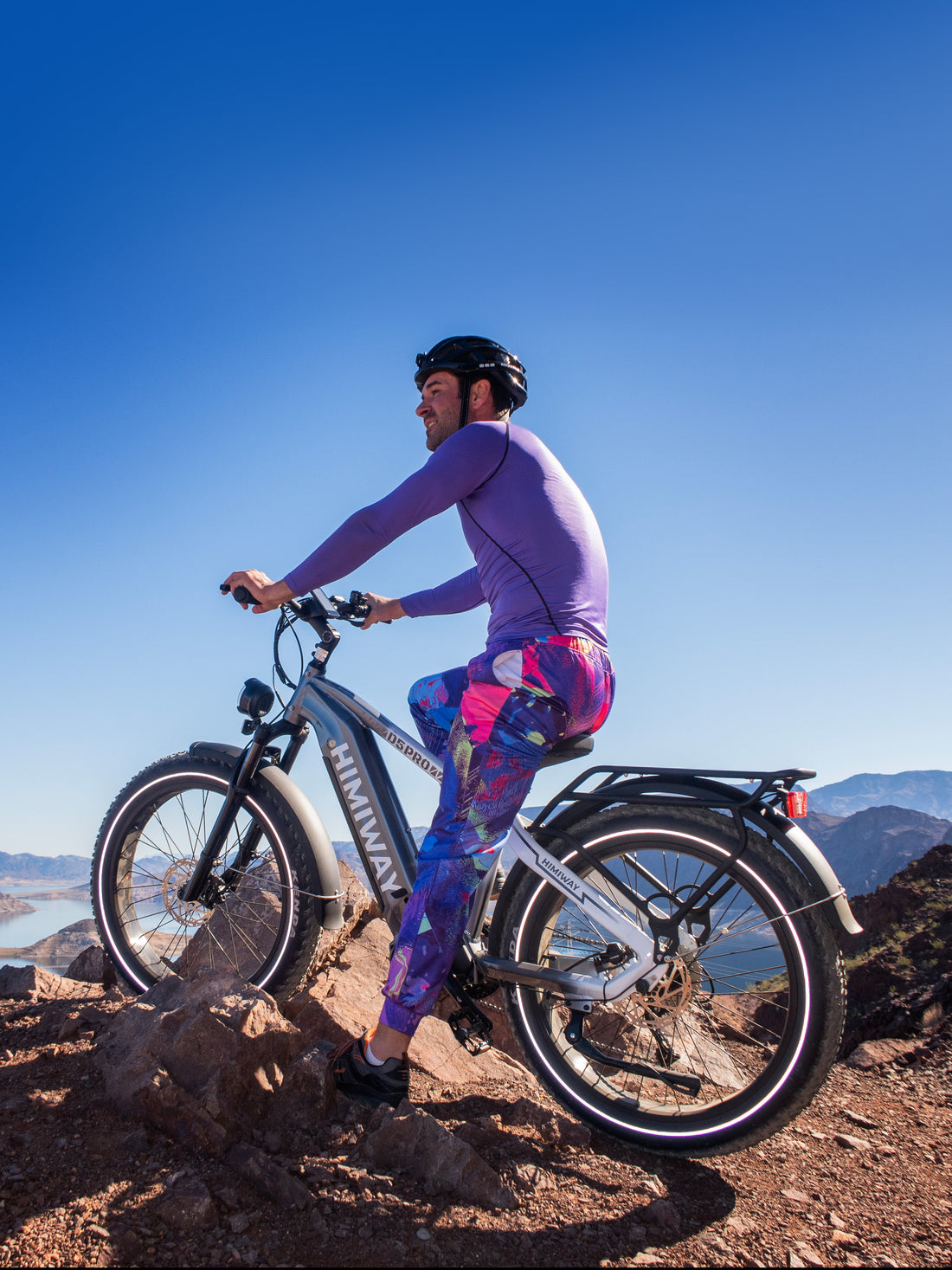
D5 Pro / All-terrain Electric Fat Bike Mid-Drive Power.
-
960 Wh
Samsung/LG Battery
-
80 Miles
Max Range
-
500 W
Mid-Drive Motor
-
20+ Mph
Top Speed


Himiway A7 Pro Commuter eBike Full Suspension, Mid-Drive Power.
-
Full Suspension
Travel F:120mm R:90mm
-
500 W
Mid-Drive Motor
-
Torque
Sensor
-
Hydraulic
Brakes


Himiway A7 Commuter eBike Full Suspension, Pure Comfort.
-
Full Suspension
Travel F:120mm R:90mm
-
Torque / Cadence
2 Riding Experiences
-
Smart Auto
5 Assist System
-
70 Miles
Per Charge


D5(Zebra) / All-terrain Electric Fat Bike
-
Torque
Sensor
-
960 Wh
Samsung/LG Battery
-
80 Miles
Max Range
-
750W
Motor


D5 ST(Zebra ST) / All-terrain Electric Fat Bike
-
Torque
Sensor
-
80 Miles
Max Range
-
400 lb.
Max Playload
-
Hydraulic
Brakes
- Featured
- Most relevant
- Best selling
- Alphabetically, A-Z
- Alphabetically, Z-A
- Price, low to high
- Price, high to low
- Date, old to new
- Date, new to old
If you've been searching for the best pedal assist electric bike — one that actually makes riding easier, not more complicated — the Himiway D5 2.0 is worth your full attention. Designed from the ground up for real-world riding comfort, it pairs a responsive pedal assist system with full suspension, a powerful 750W motor, and a price under $2,000. Whether you're commuting, exploring trails, or just getting back into riding, the D5 2.0 is built to make every pedal stroke count.
What Is a Pedal Assist Electric Bike?
A pedal assist electric bike (also called a pedelec or PAS e-bike) is one where the motor only activates when you're pedaling. The harder or faster you pedal, the more assistance you receive — up to a set speed limit (typically 20 mph for Class 1, or 28 mph for Class 3). Unlike a throttle-only e-bike, pedal assist bikes feel like a natural extension of your own effort.
The benefits for everyday riders are significant:
- Extended range — the motor conserves battery by working with you, not instead of you
- Better fitness — you still get a real workout, just with less strain
- More natural feel — especially with a torque sensor, the assist responds to how hard you push
- Longer battery life — pedal assist draws less power than full throttle modes
The D5 2.0 takes all of this and layers in full suspension, a fat tire build, and dual sensor options — making it one of the most capable and comfortable pedal assist e-bikes available under $2,000.
Himiway D5 2.0 – Pedal Assist Designed for Adults
Dual Sensor Modes: Torque + Cadence
The D5 2.0 is one of the few e-bikes under $2,000 that gives you both a torque sensor and a cadence sensor — and lets you switch between them based on how you want to ride.
- Torque sensor mode — the motor reads how hard you're pushing on the pedals and amplifies your effort in real time. It feels natural, responsive, and workout-friendly. Great for hills, trails, and riders who want the assist to match their body.
- Cadence sensor mode — the motor activates at a steady level whenever the pedals are turning. Ideal for flat terrain, long-distance cruising, and riders who want effortless, consistent assist without working hard.
Most e-bikes in this price range give you one or the other. The D5 2.0 gives you both.
750W Motor — 90Nm Torque
The D5 2.0's 750W hub motor produces 90Nm of torque — enough to climb hills confidently, accelerate smoothly from a stop, and maintain speed on uneven terrain. It handles whatever the pedal assist calls for without strain. Whether you're using torque sensor mode for reactive hill climbing or cadence mode for effortless cruising, the motor responds with consistent, predictable power.
Full Suspension — Smooth Over Any Surface
The D5 2.0 is a full-suspension e-bike, meaning it has both a front suspension fork and a rear suspension system. This matters enormously for pedal assist riding because it keeps the tires in contact with the ground, improves traction, and dramatically reduces fatigue over longer distances.
On rough roads, gravel paths, packed trails, or uneven terrain, full suspension means the bike absorbs the impact — not your body. Less vibration through the handlebars and saddle translates directly to more comfortable, longer rides.
For adults who ride regularly — especially commuters, recreational cyclists, and older adults — this is one of the most practical upgrades a bike can have.
Himiway D5 2.0 vs D5 2.0 20": Which Is Right for You?
Himiway offers two versions of the D5 2.0, both under $2,000, both with full suspension and dual sensor modes. The right choice depends on your height and riding style.
Himiway D5 2.0 (26" Wheels) — $1,999
Best for: Tall riders, heavy riders, trail and gravel riding
- Rider fit: 5'1" to 6'5"
- Payload: 400 lbs
- Wheels: 26" fat tire
- Motor: 750W / 90Nm
- Price: $1,999 (compare at $2,698)
The standard D5 2.0 is built for taller adults and heavier riders who want a full-size, full-suspension fat tire e-bike with premium pedal assist. It excels on gravel roads, dirt paths, camping terrain, and mixed-surface daily riding. The longer wheelbase and larger wheels provide extra stability at speed.
Himiway D5 2.0 20" — $1,999 ⭐ 4.9 stars (161 reviews, 99% recommended)
Best for: Shorter riders, women, seniors, urban riding, easy mounting
- Rider fit: 4'11" to 6'3"
- Payload: 440 lbs
- Wheels: 20" compact fat tire
- Motor: 750W / 90Nm
- Price: $1,999 (compare at $2,698)
- Colors: Sage, Nebula Mist, Midnight Blue, Space Grey
The D5 2.0 20" is the standout option for women, shorter adults, seniors, and riders who prioritize ease of mounting and low-speed maneuverability. Its lower standover height and compact frame make it significantly easier to get on and off — especially important for urban riders who stop frequently, older adults, or anyone with limited mobility. Despite the smaller wheels, it carries a higher 440 lb payload and fits the same rider range, with one critical extension at the bottom: starting at 4'11" instead of 5'1".
With 161 reviews averaging 4.9 stars and 99% of riders recommending it, this is one of the most rider-validated e-bikes in the Himiway lineup.
Why the D5 2.0 Is the Best Pedal Assist E-Bike Under $2,000
When you compare the D5 2.0 to other pedal assist e-bikes in this price range, a few things stand out:
- Dual sensor system (torque + cadence) — most competitors offer only one
- True full suspension — front and rear, not just a suspension fork
- Fat tires — 4.0" + width for stability, traction, and comfort on any surface
- 750W motor with 90Nm torque — strong enough to handle hills and heavy riders
- 400–440 lb payload — one of the highest in the under-$2,000 category
- Free shipping + 2-year warranty — included on all D5 2.0 models
- Proven reviews — 4.9 stars from real riders
At $1,999 (originally $2,698), the D5 2.0 delivers a spec sheet that most e-bikes charge $2,500–$3,500 to match.
Best Pedal Assist E-Bike for Women
The D5 2.0 20" is a standout choice for women riders specifically because:
- 4'11" minimum rider height — accommodates a wider range of women's heights than most fat tire e-bikes
- Lower standover height — easier to mount and dismount, especially in daily stop-and-start riding
- Lower center of gravity — the 20" wheel format creates a more planted, stable feel
- Upright riding position — reduces strain on the neck, back, and wrists
- Lifestyle colorways — Sage, Nebula Mist, Midnight Blue, and Space Grey
The combination of full suspension, pedal assist flexibility, and a body-forward ergonomic design makes this one of the best women's e-bikes currently available at any price point, let alone under $2,000.
Best Pedal Assist E-Bike for Seniors and Older Adults
Full suspension + pedal assist is the ideal combination for older adults because it reduces both physical effort and physical impact simultaneously. The D5 2.0 20" adds:
- Easy mounting from its low standover height
- Torque sensor mode for natural, joint-friendly assist
- Upright geometry to reduce spinal and wrist compression
- Wide saddle for seated comfort on longer rides
- 440 lb payload that handles a range of body types confidently
Specs at a Glance
| Specifications | D5 2.0 (26") | D5 2.0 20" |
|---|---|---|
| Price | $1,999 | $1,999 |
| Motor | 750W / 90Nm | 750W / 90Nm |
| Suspension | Full suspension | Full suspension |
| Rider Height | 5'1"–6'5" | 4'11"–6'3" |
| Payload | 400 lbs | 440 lbs |
| Sensors | Torque + Cadence | Torque + Cadence |
| Wheels | 26" fat tire | 20" fat tire |
| Rating | — | 4.9 ★ (161 reviews) |
Budget Pedal Assist E-Bikes
Quick Summary: The best budget pedal assist e-bikes, like the Himiway D5 Zebra and A3 Urban Commuter, combine high-torque motors for steep hills and reinforced frames supporting 300-400 lb payloads without the premium price tag.
🏋️ High-Capacity Durability
Many cheap e-bikes use thin frames that crack under pressure. We focus on heavy-duty construction supporting 300-400 lb payload capacities for heavier and taller riders.
⚡ Effortless Hill Climbing
Tackle 45-degree campus hills and steep commutes without arriving sweaty. Reliable 500W-750W motors deliver the sustained torque needed for challenging inclines.
🛡️ Long-Term Reliability
Late-night commutes require trust. Stop worrying about breakdowns or battery fires with UL-certified electrical systems built for years of daily use, not just a single season.
Top Picks by User Type
- Benefit: A massive 960Wh battery and 400 lb payload capacity deliver incredible range-per-dollar, especially for heavy riders.
- Range: 60-80 miles
- Payload: 400 lb
- Benefit: A lightweight unibody frame makes this perfect for city riding, storing in apartments, and easy handling.
- Range: 70 miles
- Weight: 68.3 lb
- Benefit: A mid-drive motor with 130Nm torque easily conquers steep campus inclines, even for heavier riders.
- Range: 60-80 miles
- Payload: 400 lb
Frequently Asked Questions
Will a Budget E-Bike Work for Me?
I weigh over 300 lbs. Are there budget e-bikes that can safely support me?
Yes, but you must be incredibly selective. Riders weighing 300-380 lbs often find that ultra-cheap e-bikes from Amazon or TikTok use weak frames and single-wall rims that fail quickly under heavy loads. To ride safely, you need a bike explicitly rated for your weight.
The electric bikes for heavy riders feature reinforced frames, thicker spokes, and hydraulic brakes to handle the momentum safely. The Himiway D5 Zebra is a favorite in this category, offering a true 400 lb payload capacity and an oversized 6061 aluminum frame that won't flex, making it a reliable, long-term investment rather than a disposable purchase.
Can a budget pedal assist bike handle steep campus hills?
Yes, provided you choose a motor with adequate torque. If you're tackling steep inclines—such as 45-degree campus hills—a generic 250W or 350W hub motor will struggle, forcing you to step off and walk. For effective hill climbing, you need either a high-wattage hub motor or a torque-heavy mid-drive system.
Mid-drive motors leverage the bike's gears to provide superior climbing power. For conquering steep campus commutes, the Himiway D5 Pro with its 130Nm mid-drive motor delivers unmatched climbing ability, ensuring you can scale steep paths effortlessly.
Will an e-bike keep me from arriving to class or work sweaty?
Absolutely. The primary reason commuters switch to e-bikes is to eliminate the sweat factor on their 5-10 mile daily rides. Pedal assist systems allow you to choose how much effort you exert. On hot days or when wearing work clothes, you can rely heavily on the higher assist levels or the throttle to do the work for you.
For urban and campus riders, an entry level ebike like the Himiway A3 provides a torque sensor that delivers smooth, natural power assistance, making a 9-mile commute feel effortless and keeping you fresh for your day.
I am very tall (6'4"). Will I fit on a budget electric bike?
Yes, but you need to check the standover height and frame geometry carefully. Many budget e-bikes use compact 'one-size-fits-all' frames that leave riders over 6'2" feeling cramped, causing knee pain and poor pedaling efficiency on a long commute.
Look for full-sized frames with adjustable stems that allow you to raise the handlebars for an upright posture. Models like the Himiway D5 Zebra are designed to comfortably accommodate riders up to 6'5", offering proper leg extension and a sturdy build for taller individuals.
Safety, Security, & Reliability
How do I prevent my e-bike from getting stolen on a college campus?
Theft is a valid concern on college campuses, but proper locking strategies can protect your investment. The key is making your bike harder to steal than the one next to it. Never rely on cheap cable locks or rusted chains. Instead, use a heavy-duty U-lock combined with a chain to secure both the frame and wheels.
Additionally, choosing e-bikes with removable batteries allows you to take the most valuable component inside with you to class or your dorm. Removing the battery from models like the Himiway A3 instantly makes the bike less appealing to thieves and significantly reduces its overall value to them.
Is it safe to rely on a budget e-bike for late-night commutes?
It is safe, but only if you avoid the bottom-tier 'white label' brands. If you're riding 45-60 minutes home after a late shift, a breakdown in the dark is a serious safety hazard. The cheapest e-bikes often cut corners on wiring, battery cells, and lighting systems.
You should prioritize UL certified e-bikes which ensure the battery won't pose a fire risk while charging at work or in your apartment. To review essential safety practices for night riding, refer to our e-bike safety checklist. A reliable model includes an integrated 48V high-brightness front light and an auto-illuminating brake light, giving you confidence and visibility during those 1 AM rides home.
What happens if it rains during my daily commute?
Most reputable e-bikes are built to handle light rain and wet conditions, but this is an area where ultra-cheap brands cut corners on weather sealing. If you're commuting daily, getting caught in a downpour is inevitable. You need an e-bike with properly sealed electrical connections and water-resistant components.
Ensure the battery and display have an IPX5 or higher water resistance rating. The Himiway A3 features an IP65 waterproof battery and built-in wiring hidden inside the unibody frame, protecting vital electronics from the elements during unexpected rainstorms.
Are cheap Amazon or TikTok e-bikes worth the lower price?
Generally, no. While a rock-bottom price tag is tempting, these bikes often feature non-certified batteries (a serious fire hazard), weak single-wall rims that bend easily, and mechanical brakes that struggle to stop heavy e-bikes at high speeds.
These cost-cutting measures compromise your safety, especially on busy campus roads or steep downhills. It's much safer to invest in budget fat tire ebikes from established brands that use name-brand cells (like Samsung or LG) and hydraulic disc brakes for reliable stopping power.
Making the Financial Decision
Should I use a conversion kit on my old mountain bike to save money?
A conversion kit can be a viable option if you have a strict budget and an exceptionally sturdy, large-frame mountain bike, but it comes with distinct trade-offs. While kits allow you to electrify a bike you already own, they require significant mechanical skill to install safely, and traditional bike frames aren't designed for the sustained torque and weight of electric motors.
If you can stretch your budget slightly, investing in an affordable electric bike provides a reinforced frame, integrated wiring, and a reliable warranty. For riders who need guaranteed reliability without the DIY hassle, purpose-built commuter bikes offer a fully engineered, ready-to-ride solution at an exceptional value.
What are the hidden maintenance costs of buying an ultra-cheap e-bike?
While an ultra-cheap e-bike might seem like a great deal, the true cost of ownership is often much higher. These models frequently use proprietary, low-quality components that cannot be serviced at local bike shops. When a battery fails or a controller burns out—often within the first 6-12 months—replacement parts are typically impossible to find, turning the bike into expensive junk.
By choosing a reputable brand, you gain access to standardized parts and a reliable warranty. Check out our comparison guide to understand the long-term value of investing in high-quality components. Spending a bit more upfront on a durable model saves you hundreds in repair and replacement costs over the years.
Is an e-scooter a better budget option than an e-bike?
If your commute is very short (1-2 miles) and perfectly flat, an e-scooter can be a cheap alternative. However, for a 9-mile commute or heavy riders, e-scooters fall short. E-scooters typically have strict weight limits, small wheels that are dangerous on potholes, and no ability to pedal if the battery dies.
For taller or heavier riders facing campus hills, an e-bike offers vastly superior stability, comfort, and hill-climbing power. The Himiway B3 gives you the compact, easy-to-store benefits of a scooter but with the safety and 300 lb payload capacity of a true electric bike.
Ride Further Together
Himi Riders
Recognition from knights around the world
5-Star Reviews
The knights give an honest opinion
Professional Review
What the professional media really thinks of us

1000+Shop

2-Year Warranty

15-Day Trial

Free Shipping
Find a Local Himiway Shop Near You
Looking for a hands-on experience?
Find a Himiway electric bike shop near you and schedule a test ride today.
Bikes for Every Ride


