Best Fat Tire eBikes for Adults for Sale: Himiway D5 2.0 Electric Bike 20 Inches
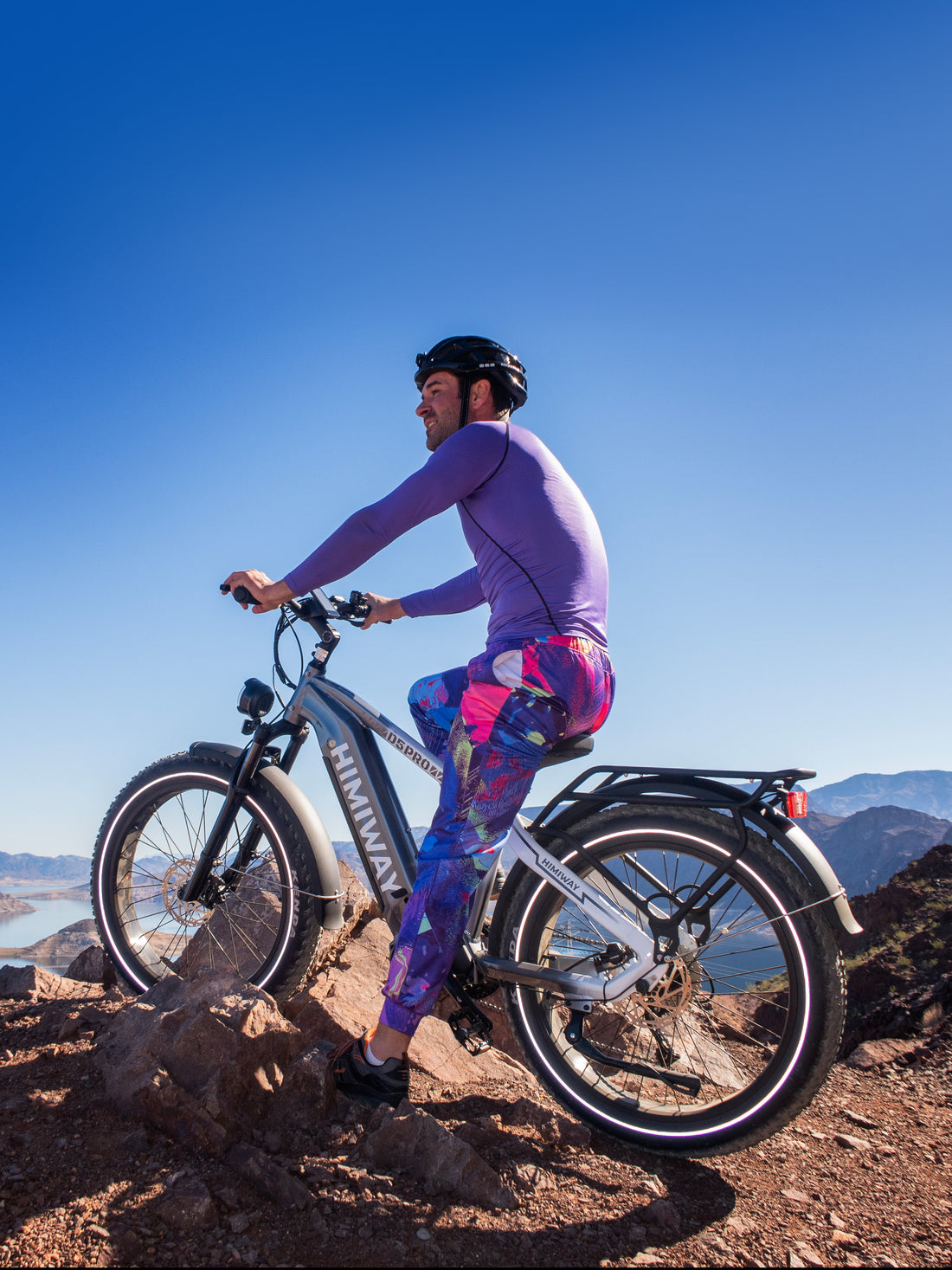
Looking for a budget & fast full suspension fat tire eBike that handles everything from city streets to rugged trails? The Himiway D5 2.0 20" is built for adults who demand power, comfort, and versatility in one capable package.
Why It's a Top Pick
The D5 2.0 delivers a confident, stable ride thanks to its oversized 20" inches fat tires, which absorb bumps and grip loose terrain with ease — whether you're commuting on wet pavement or exploring gravel paths. The step-thru frame design makes it accessible for a wide range of riders, while the robust build handles heavier loads without compromise.
Power When You Need It
Equipped with a high-torque motor and long-range battery, the D5 2.0 keeps up with your ambitions. Tackle hills, headwinds, and longer distances without breaking a sweat — the pedal assist system gives you full control over how hard you work.
Built for Real Adults
Unlike lightweight commuter bikes, the D5 2.0 is engineered for durability and real-world use. The wide saddle, upright riding position, and responsive hydraulic brakes make every ride comfortable and safe — even on longer adventures.
If you're an adult rider searching for a fat tire eBike that blends urban practicality with off-road capability, the Himiway D5 2.0 20" is a standout choice. It's not just a bike — it's your ticket to riding more, worrying less.
Best Fat Tire Electric Bike 1000W: Himiway D7 Pro
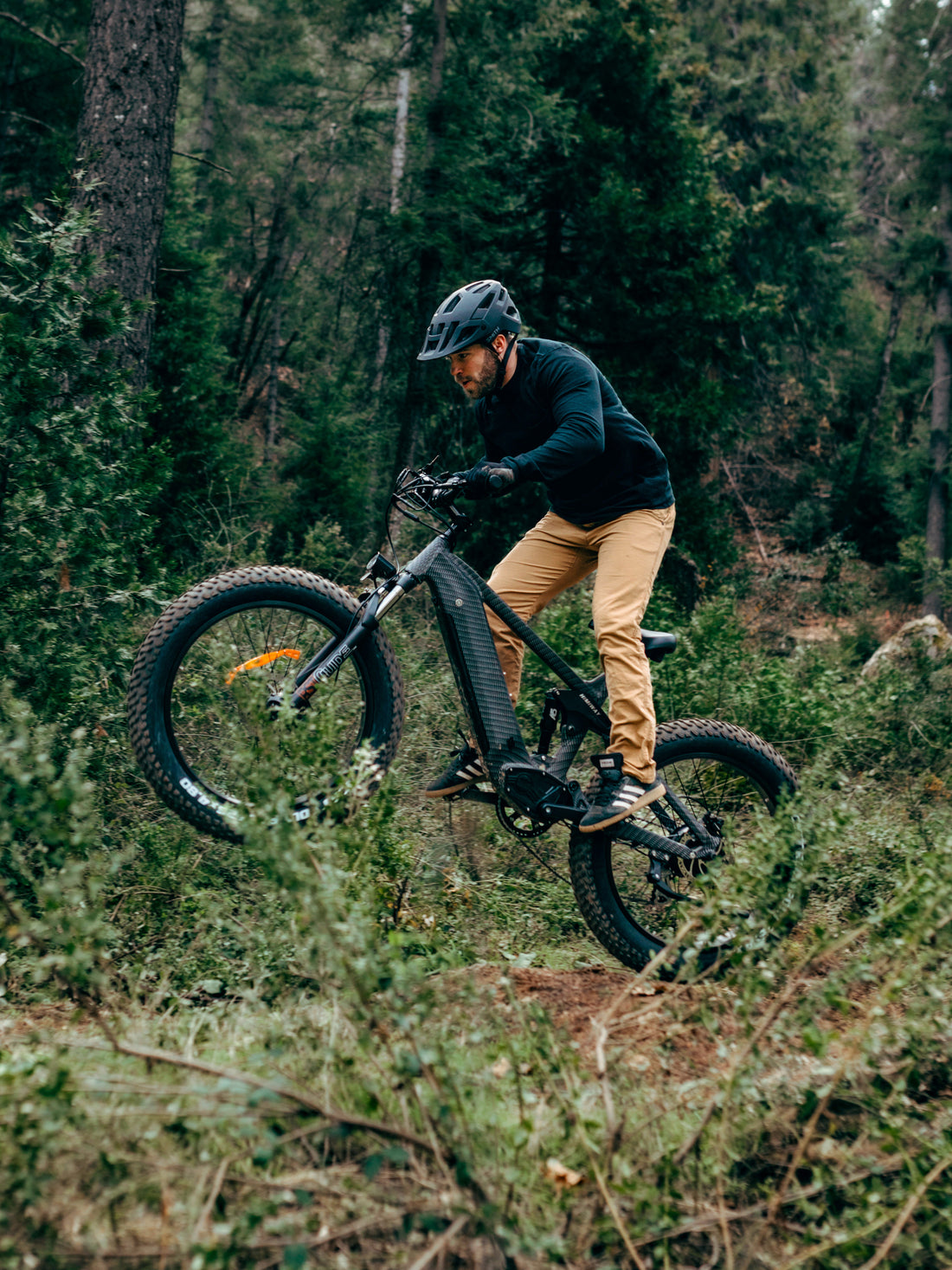
When raw power meets all-terrain capability, you get the Himiway D7 Pro — the ultimate 1000W fat tire electric bike for riders who refuse to be slowed down by any terrain, weather, or distance.
Unmatched 1000W Power
At the heart of the D7 Pro is a brawny 1000W rear hub motor that delivers serious torque from the moment you twist the throttle or engage pedal assist. Hills that would stop other eBikes in their tracks are simply non-events. Whether you're hauling cargo, climbing steep inclines, or pushing through headwinds, the D7 Pro handles it without hesitation.
Fat Tires Built for Any Surface
The oversized fat tires provide exceptional traction and shock absorption across every surface — sand, snow, mud, gravel, or city streets. You're not limited to one type of ride; the D7 Pro is equally at home on a beach path as it is on a mountain trail or urban commute.
Long-Range, All-Day Performance
Paired with a high-capacity battery, the D7 Pro is engineered for riders who go the distance. Fewer charging stops, more miles covered — it's the kind of range that makes spontaneous adventures actually possible.
Premium Build, Serious Specs
From the reinforced frame to the hydraulic disc brakes and integrated lighting, every component on the D7 Pro is spec'd for performance and longevity. This isn't an entry-level eBike — it's a machine built to last and perform ride after ride.
If you're searching for the best 1000W fat tire electric bike on the market, the Himiway D7 Pro sets the benchmark. Powerful, versatile, and built tough — it's the eBike for adults who want more from every ride.
Fat Tire eBike Pros and Cons
Fat tire ebikes — which generally feature tires between 3.5 to 5 inches wide — excel at comfort, traction, and off-road versatility, but they trade off efficiency, weight, and portability. Because the electric motor mitigates the extra physical effort required to turn massive tires, fat tire models have exploded in popularity. However, they are not ideal for every rider or terrain.
The Pros
-
Superior Traction: The wide surface area provides an expanded contact patch, delivering maximum grip on loose or slippery surfaces like sand, snow, mud, and loose gravel.
-
Enhanced Comfort: The large air volume allows you to run lower tire pressures, turning the tires into natural shock absorbers that effortlessly soak up potholes, cracks, and bumps.
-
All-Weather Versatility: They allow for confident, year-round riding in weather conditions that would leave thin-tired bikes slipping or sinking.
-
Beginner-Friendly Stability: The wide footprint makes the bike feel highly planted and balanced, reducing the psychological fear of wiping out for newer riders.
-
Heavy Cargo Capacity: The robust tires and frames are well-suited to support heavy loads, making them excellent for utility or cargo hauling.
The Cons
-
Reduced Battery Range: Increased rolling resistance and drag mean the motor has to work much harder, draining the battery faster than a standard ebike would.
-
Heavier Weight: Fat tire ebikes often weigh between 60 to 80+ pounds. This makes them very difficult to pedaling manually if the battery dies, and cumbersome to lift.
-
Portability Challenges: Their sheer bulk makes them incredibly difficult to store in tight spaces, fit inside cars, or load onto standard bike racks.
-
Higher Costs: The specialized wide rims, heavy-duty frames, and oversized tires command a premium price tag upfront, and replacement parts cost significantly more.
-
Sluggish Handling: The heavy rotating mass of the front wheel reduces agility, making the bike feel less nimble and slower to respond when maneuvering tight city streets or sharp turns.
Comparison at a Glance
| Feature |
Fat Tire Ebike |
Regular Tire Ebike |
| Best Terrain |
Sand, snow, mud, unpaved trails |
Pavement, city streets, smooth bike paths |
| Ride Quality |
Cushioned, stable, plush |
Agile, efficient, fast-rolling |
| Battery Efficiency |
Lower (high rolling resistance) |
Higher (longer range per charge) |
| Component Costs |
Higher for proprietary tires/rims |
Lower, standard bicycle sizing |
The Verdict: Which should you choose?
You should look into a fat tire ebike if your regular routes include unpaved trails, beaches, or winter snow, or if you strictly prioritize a plush, stable ride over speed and agility.
Conversely, stick with a conventional tire ebike if you primarily commute on paved city roads, need to carry your bike up stairs, or want to squeeze the absolute maximum range out of your battery charge.
What People Are Saying
"Ebike owners and reviewers emphasize that while fat tires offer incredible stability and pothole-smoothing comfort, their severe impact on battery life and heavy frame weight make them highly impractical for strict pavement commuting."
20-Inch Vs. 26-Inch Fat Tires: Which Is Better?
20-inch fat tires are better for portability, quick acceleration, and tight maneuvering, while 26-inch fat tires are superior for high-speed stability, obstacle rolling, and maintaining momentum. The choice between them depends heavily on whether you value a compact bike footprint or a traditional, full-sized ride quality.
20-Inch Fat Tires
-
High Portability: Most 20-inch fat tire ebikes feature folding frames, making them easy to fit into car trunks, closets, or public transit.
-
Snappy Acceleration: The smaller wheel diameter requires less torque to spin, allowing the motor to zip up to speed quickly from a dead stop.
-
Agile Steering: A smaller wheel has less rotating mass, offering nimbler handling in tight urban spaces or crowded paths.
-
Low Standover Height: The compact frame design makes it incredibly easy for shorter riders to mount and dismount.
-
Harsh Attack Angle: Smaller wheels fall deeper into potholes and hit bumps at a steeper angle, resulting in a rougher ride on uneven terrain.
26-Inch Fat Tires
-
Superior Rollover Capacity: The massive outer diameter effortlessly rolls over large rocks, tree roots, and deep potholes without losing momentum.
-
High-Speed Stability: The increased gyroscopic effect keeps the bike incredibly stable and planted when traveling at speeds over 20 mph.
-
Natural Ride Feel: They replicate the geometry and riding dynamics of a traditional mountain bike, offering a familiar experience for long-distance cruising.
-
Better Frame Clearance: The larger wheels raise the bike's bottom bracket, reducing the risk of striking your pedals on rocks or curbs.
-
Bulky and Heavy: These bikes are massive, heavily taxing your storage space and requiring heavy-duty, motorcycle-grade vehicle racks to transport.
Comparison Matrix
| Feature |
20-Inch Fat Tires |
26-Inch Fat Tires |
| Primary Advantage |
Storage & portability |
Off-road capability & comfort |
| Acceleration |
Faster and snappier |
Slower to wind up |
| Top Speed Stability |
Twitchier at high speeds |
Smooth and highly stable |
| Rider Height Fit |
Very versatile (compact geometry) |
Best for average to taller riders |
| Terrain Performance |
Pavement, packed gravel, light sand |
Deep sand, thick snow, rugged singletrack |
Summary
Choose 20-inch fat tires if you live in an apartment, need to commute on public transit, or want a nimble urban cruiser that is easy to store.
Choose 26-inch fat tires if you plan to tackle rugged off-road trails, ride frequently through deep snow or sand, or prioritize maximum comfort over portability.
750W Vs. 1000W: How Much Power Do I Need?
750W motors are best for legal compliance, balanced battery range, and standard commuting, while 1000W motors are superior for steep hill climbing, heavy loads, and higher top speeds. For most riders, 750W is the sweet spot because it provides more than enough power while safely adhering to ebike speed laws in most regions.
750W Motors: The Legal Sweet Spot
-
Legal Compliance: A 750W motor is the maximum power limit allowed for Class 1, 2, and 3 ebikes in the United States, meaning you can legally ride on most bike paths and city streets.
-
Better Battery Range: Lower power draw means your battery lasts longer, giving you more miles per charge compared to a 1000W motor using the same battery capacity.
-
Sufficient for Moderate Hills: It provides ample torque to conquer standard city inclines and flyovers without breaking a sweat.
-
Lighter Overall Weight: The motor itself is lighter, which helps keep the total weight of the bike slightly more manageable.
-
Underpowered for Extreme Terrain: It may struggle or bog down if you attempt to climb exceptionally steep, loose off-road terrain or try to push through deep, wet snow.
1000W Motors: Maximum Performance
-
Unstoppable Hill Climbing: The extra wattage delivers massive torque, allowing you to maintain high speeds up incredibly steep inclines without losing momentum.
-
Heavy Payload Handling: If you are a heavier rider, pulling a cargo trailer, or hauling heavy gear, 1000W ensures the bike won't feel sluggish.
-
Higher Top Speeds: These motors can easily push heavy fat-tire bikes past 28 mph on flat ground when unlocked or configured for private property use.
-
Rapid Battery Drain: The high power output pulls massive current from the battery, significantly reducing your total riding range.
-
Legal Restrictions: Many jurisdictions classify 1000W ebikes as mopeds or motor vehicles, which may ban them from local bike paths and trail systems.
Power Comparison
| Feature |
750W Motor |
Fat tire Ebike 1000W |
| Street Legality |
Widely legal on US bike paths |
Often restricted to private land or roads |
| Battery Efficiency |
Balanced and efficient |
High consumption (fast drain) |
| Steep Hills (>15% Grade) |
May slow down |
Accelerates smoothly |
| Ideal Rider Weight |
Up to 220 lbs |
250+ lbs or heavy cargo |
How Much Do You Need?
Choose a 750W motor if you plan to commute on public bike paths, want to maximize your battery range, and need a reliable, fully legal daily driver.
Choose a 1000W motor if you live in an exceptionally hilly area, weigh over 250 lbs, plan to haul heavy cargo, or primarily ride off-road on private property where speed and power limits do not apply.