


Long Range Ebike 750W


D5(Zebra) / All-terrain Electric Fat Bike
-
Torque
Sensor
-
960 Wh
Samsung/LG Battery
-
80 Miles
Max Range
-
750W
Motor

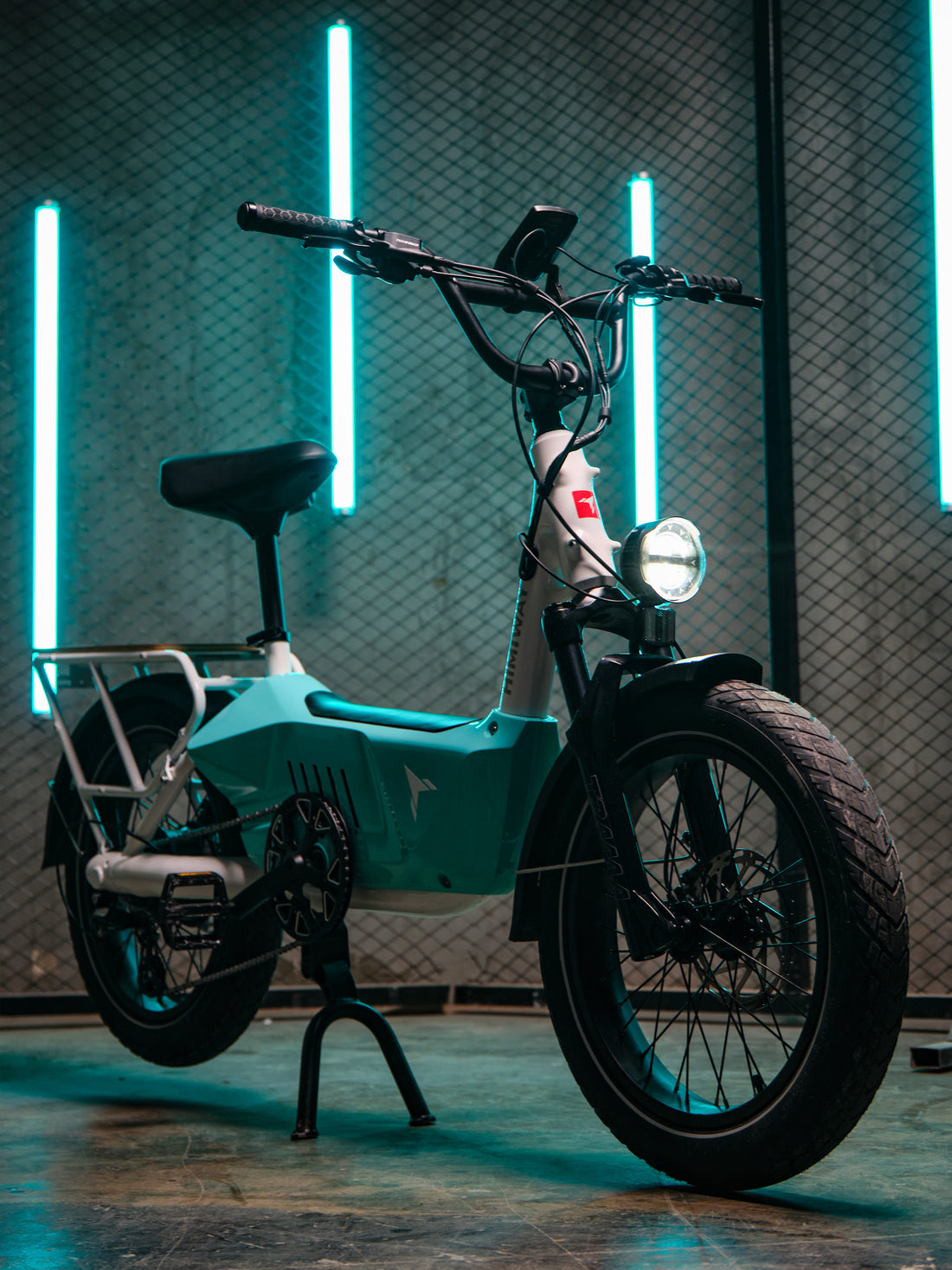

C3 / Cargo Ebike
-
80 Miles
Max Range
-
750W
Motor
-
960 Wh
Samsung/LG Battery
-
7-Speed
Shimano Altus M310


Himiway D5 2.0 20" eBike Easy to Maneuver. Built for Power.
-
Full Suspension
Travel F:90mm R:100mm
-
Torque / Cadence
2 Riding Experiences
-
750W 90Nm
Geared Hub Motor
-
440 lb.
Payload Capacity


Himiway D5 2.0 ST eBike Endless Comfort: Turning Rough Roads into Silk.
-
Full Suspension
Travel F:100mm R:130mm
-
Torque / Cadence
2 Riding Experiences
-
750W 90Nm
Geared Hub Motor
-
Smart Auto
5 Assist System


Himiway D5 2.0 eBike Endless Comfort: Turning Rough Roads into Silk.
-
Full Suspension
Travel F:100mm R:130mm
-
Torque / Cadence
2 Riding Experiences
-
750W 90Nm
Geared Hub Motor
-
Smart Auto
5 Assist System


Himiway D5 2.0 Camo eBike Blend In, Ride Out: The Top Choice for Hunting
-
Full Suspension
Travel F:100mm R:130mm
-
Torque / Cadence
2 Riding Experiences
-
750W 90Nm
Geared Hub Motor
-
Smart Auto
5 Assist System
- Featured
- Most relevant
- Best selling
- Alphabetically, A-Z
- Alphabetically, Z-A
- Price, low to high
- Price, high to low
- Date, old to new
- Date, new to old
What Is a Long-Range 750W Electric Bike?
A long-range 750W electric bike is an e-bike equipped with a 750-watt motor and a high-capacity battery designed to support extended rides on a single charge. It combines strong motor performance with sufficient battery energy for commuting, recreational riding, hill climbing, and longer-distance adventures.

When choosing a long-range 750W e-bike, consider more than motor wattage. Battery capacity, measured in watt-hours (Wh), is one of the most important factors affecting riding distance. Motor efficiency, riding speed, pedal-assist level, rider weight, and terrain also influence overall range.
For example, the Himiway D5 2.0 20" features a 750W motor, 90Nm of torque, and a 48V 15Ah (720Wh) battery. It offers an advertised range of up to 70 miles in pedal-assist mode, making it a practical option for riders who want power, comfort, and extended riding capability.
How Far Can a 750W Electric Bike Go on a Single Charge?
A 750W electric bike can typically offer a manufacturer-claimed range of approximately 40–80 miles per charge, depending on its battery capacity, motor efficiency, and riding conditions. Models with larger batteries generally have more energy available for longer rides.
For example, the Himiway D5 2.0 20" offers:
- Pedal-Assist Range: Up to 70 miles.
- Throttle Range: Up to 40 miles.
- Battery Capacity: 720Wh (48V 15Ah).
Actual riding distance may be lower than the advertised maximum. Several factors affect battery consumption:
- Riding Speed: Higher speeds require more energy, particularly because aerodynamic resistance increases rapidly.
- Pedal-Assist Level: Higher PAS settings consume more battery power, while lower assistance levels help extend range.
- Rider and Cargo Weight: Heavier loads require more motor assistance, especially when accelerating or climbing hills.
- Terrain: Steep hills, sand, gravel, and uneven surfaces generally consume more energy than flat pavement.
- Weather: Cold temperatures and strong headwinds can reduce battery performance and riding distance.
- Tire Pressure: Properly inflated tires help reduce rolling resistance and improve efficiency.
For longer rides, use moderate pedal assistance, maintain appropriate tire pressure, and plan a battery reserve rather than relying entirely on the maximum advertised range.
What Is the Best Long-Range 750W Electric Bike in 2026?
The best long-range 750W electric bike depends on your riding priorities. Some models emphasize larger batteries and maximum advertised range, while others offer better suspension, higher payload capacity, or convenient folding designs.
Here are five 750W electric bikes worth comparing in 2026:
| Electric Bike | Motor & Torque | Battery Capacity | Advertised Maximum Range | Key Features |
|---|---|---|---|---|
| Himiway D5 2.0 20" | 750W / 90Nm | 48V 15Ah (720Wh) | 70 miles PAS / 40 miles throttle | Full suspension, 440-lb payload, 20×4.0 fat tires |
| Velotric Nomad 2 | 750W / 90Nm | 48V 14.7Ah (705.6Wh) | 65 miles PAS / 45 miles throttle | 505-lb payload, 26×4.0 tires |
| Aventon Aventure 3 | 750W / 80Nm | 36V 20Ah (733Wh) | Up to 65 miles | Torque sensor, 26×4.0 tires, 400-lb payload |
| Lectric XPeak 2.0 Long-Range | 750W / 85Nm | 48V 20Ah (960Wh) | Up to 80 miles | 1310W peak power, torque sensor, 26×4.0 tires |
| Heybike Ranger S 2.0 | 750W / 80Nm | 48V 14.4Ah (692Wh) | Up to 55 miles | Folding step-through frame, 20×4.0 tires, hydraulic brakes |
Note: These are manufacturer-published specifications and maximum range estimates, not results from a standardized comparative riding test. Actual range varies by riding conditions.
Why Choose the Himiway D5 2.0 20"?
The Himiway D5 2.0 20" is a strong all-around option for riders who prioritize riding comfort, motor torque, and load capacity alongside long battery range.
Its key advantages include:
- Strong Motor Performance: The 750W geared hub motor delivers 90Nm of torque for responsive acceleration and climbing assistance.
- Extended Riding Range: The 720Wh battery supports up to 70 miles of pedal-assist riding or 40 miles using throttle-only power, according to Himiway.
- Full Suspension: A 90mm hydraulic front fork and 100mm rear suspension travel help absorb bumps on uneven roads and trails.
- High Payload Capacity: Its 440-lb payload capacity accommodates a wide range of riders and additional cargo.
- Fat Tire Stability: The 20×4.0-inch Kenda tires provide traction and cushioning across pavement, gravel, and other mixed surfaces.
If maximum advertised range and battery capacity are your priorities, the Lectric XPeak 2.0 Long-Range is worth considering with its 960Wh battery and 80-mile range claim. However, riders looking for a combination of full suspension, 90Nm torque, a 440-lb payload capacity, and a more compact 20-inch wheel platform should consider the Himiway D5 2.0 20".

What Battery Capacity Is Best for a Long-Range 750W E-Bike?
For a long-range 750W electric bike, a battery capacity of approximately 700–900Wh is a useful starting point. Riders planning longer journeys, frequent hill climbing, or carrying heavier loads may benefit from a 900Wh or larger battery.
Battery capacity is calculated using the following formula:
Battery Capacity (Wh) = Voltage (V) × Amp-hours (Ah)
For example:
- 48V × 15Ah = 720Wh.
- 48V × 20Ah = 960Wh.
- 52V × 15Ah = 780Wh.
- 52V × 20Ah = 1,040Wh.
A larger Wh rating generally means more stored energy and greater potential riding range. However, battery capacity alone does not determine how far an e-bike can travel.
When comparing batteries, consider:
- Capacity: Higher Wh ratings are generally better for longer rides.
- Battery Quality: Look for reliable battery cells and appropriate safety certifications.
- Removability: Removable batteries make charging and replacement more convenient.
- Charging Time: Consider how long the battery takes to recharge between rides.
- Replacement Availability: Check whether compatible replacement batteries are available.
The Himiway D5 2.0 20" uses a 48V 15Ah (720Wh) battery with Samsung/LG 21700 cells, providing a balance of battery capacity and everyday riding practicality.
48V vs. 52V Battery: Which Is Better for Long-Range Riding?
Both 48V and 52V batteries can power long-range electric bikes. However, voltage alone does not determine battery range. You should compare total battery capacity in watt-hours (Wh), not just voltage or amp-hours.
| Comparison | 48V Battery | 52V Battery |
|---|---|---|
| Common Applications | Everyday commuting and recreational e-bikes | Performance-oriented e-bikes |
| Energy at 15Ah | 720Wh | 780Wh |
| Power Delivery | Strong performance for most everyday riding | Can support higher voltage and power delivery when the system is compatible |
| Range Potential | Depends on total Wh and efficiency | Depends on total Wh and efficiency |
| Compatibility | Requires a compatible 48V system | Requires a compatible 52V system |
For example, a 52V 15Ah battery stores approximately 8.3% more energy than a 48V 15Ah battery.
However, a 48V 20Ah battery (960Wh) stores more energy than a 52V 15Ah battery (780Wh).
Which Should You Choose?
Choose a 48V battery if you want a widely used configuration for everyday commuting and recreational riding. A 52V battery can be a good option if you want higher voltage performance and your motor and controller are specifically designed for it.
For long-distance riding, prioritize total watt-hours, battery quality, and motor efficiency over voltage alone.
How Does Riding Speed Affect E-Bike Battery Range?
Riding speed has a significant effect on electric bike battery consumption. The faster you ride, the more energy your motor generally needs to maintain that speed.
One important reason is aerodynamic resistance. As speed increases, air resistance rises rapidly, requiring additional motor power to overcome it.
For example, consistently riding at high speeds or using maximum throttle can drain the battery much faster than maintaining a moderate cruising speed with pedal assistance.
To maximize your 750W e-bike's range:
- Maintain a Moderate Speed: Avoid unnecessary high-speed riding, especially on longer routes.
- Use Lower PAS Settings: Select an appropriate pedal-assist level instead of constantly using maximum assistance.
- Pedal Consistently: Contributing your own pedaling power reduces the energy demanded from the motor.
- Avoid Frequent Hard Acceleration: Smooth acceleration helps reduce unnecessary battery consumption.
- Choose the Right Gear: Use lower gears when climbing and maintain an efficient pedaling cadence.
- Maintain Tire Pressure: Proper inflation reduces rolling resistance and improves riding efficiency.
If your priority is covering more miles per charge, a steady riding style with moderate pedal assistance is generally more efficient than relying heavily on throttle power.
750W vs. 1000W Electric Bikes: Which Is Better for Long-Distance Riding?
Both 750W and 1000W electric bikes can be suitable for long-distance riding, but they offer different performance characteristics.
| Comparison | 750W E-Bike | 1000W E-Bike |
|---|---|---|
| Motor Power | 750 watts | 1,000 watts |
| Acceleration | Strong acceleration for everyday riding | Greater potential acceleration |
| Hill Climbing | Suitable for many moderate and challenging hills, depending on torque and load | More power potential for steep climbs and heavier loads |
| Energy Consumption | Depends on riding conditions and efficiency | Can consume more energy when operated at higher power |
| Battery Requirements | A 700–900Wh battery is a useful long-range starting point | Larger batteries may be preferable for extended high-power riding |
| Best Use | Commuting, recreational riding, and mixed terrain | More demanding riding and heavier loads |
Which Is Better for Long-Distance Riding?
A 750W electric bike is a practical choice for most commuters and recreational riders who want a balance of power, battery efficiency, and riding distance.
A 1000W motor may be preferable for riders who frequently encounter steep hills, carry heavy cargo, or need stronger acceleration. However, higher motor wattage does not automatically provide a longer riding range.
For long-distance performance, battery capacity and overall system efficiency matter more than motor wattage alone.
The Himiway D5 2.0 20" combines a 750W motor with 90Nm of torque and a 720Wh battery, making it a balanced option for riders who want dependable power without necessarily moving to a higher-wattage motor.
Always check applicable state and local e-bike regulations before choosing a higher-powered model.
Can a 750W E-Bike Handle Hills and Long-Distance Commuting?
Yes. A well-designed 750W electric bike can handle many hills and long-distance commuting routes. However, climbing performance depends on more than motor wattage.
Important factors include:
- Motor Torque: Higher torque helps the motor deliver stronger assistance when climbing hills. A 750W motor with 90Nm of torque can provide substantial climbing support.
- Battery Capacity: A larger battery helps maintain sufficient energy for longer routes and repeated climbs.
- Gearing: Multiple gears allow riders to maintain a comfortable pedaling cadence on different gradients.
- Suspension: Front and rear suspension improve comfort when riding over rough pavement, gravel, and uneven trails.
- Tire Design: Fat tires provide additional traction and cushioning on loose or uneven surfaces.
The Himiway D5 2.0 20" combines a 750W motor with 90Nm of torque, Shimano 8-speed gearing, full suspension, and 20×4.0-inch fat tires.
For daily commuting, its 720Wh battery and advertised 70-mile pedal-assist range provide considerable riding potential. Its 440-lb payload capacity also makes it suitable for riders who need additional carrying capacity.
For the best experience on longer routes, use appropriate gears when climbing, avoid unnecessary maximum assistance, and plan your journey around realistic battery range.
Overall, a 750W e-bike with a well-matched battery, sufficient torque, and comfortable suspension can be an excellent choice for both daily commuting and extended recreational rides.
Frequently Asked Questions About Long-Range 750W Electric Bikes
Can I Charge the Himiway D5 2.0 20" Battery Without Removing It?
Yes. The Himiway D5 2.0 20" battery can be charged either while installed on the bike or after removal. This gives riders flexibility when charging at home or in the office. Always use the approved charger designed for your specific e-bike, and disconnect it once charging is complete. For safety, remain present while charging and never leave the battery charging while sleeping.
How Should I Store a 750W E-Bike Battery When Not in Use?
Proper storage helps preserve battery capacity and extend its service life. If you will not ride for an extended period, remove the battery from the bike and store it in a clean, dry, well-ventilated location. For the Himiway D5 2.0, the owner's manual recommends maintaining approximately 60%–80% charge during long-term storage and recharging when the level drops below 60%. Keep the battery away from direct sunlight, water, and excessive heat.
Can I Ride a Long-Range 750W Electric Bike in the Rain?
Most weather-resistant e-bikes can handle light rain, but they are not designed for submersion or severe flooding. The Himiway D5 2.0 features an IPX5-rated bike system and an IPX6-rated battery. According to its owner's manual, riding in light rain is acceptable, but heavy downpours and flooded streets should be avoided. Wet surfaces can also reduce tire traction and braking performance, so slow down and brake earlier when riding in rainy conditions.
How Long Does a 750W E-Bike Battery Last Before It Needs Replacement?
An e-bike battery's lifespan depends on its cell quality, charging habits, storage conditions, and frequency of use. Many lithium-ion e-bike batteries begin showing noticeable capacity loss after approximately 500–1,000 full charge cycles, although actual results vary. Gradual reductions in riding range are normal as a battery ages. If you notice unusual overheating, smoke, liquid leakage, or abnormal charging behavior, stop using the battery and contact the manufacturer for assistance.
What Should I Check Before a Long-Distance E-Bike Ride?
Before starting a long ride, perform a quick safety inspection to reduce the risk of mechanical problems along the way. Check the following components:
- Brakes: Test the front and rear brakes to ensure they respond properly.
- Tires: Check tire pressure and inspect for cracks, punctures, or excessive wear.
- Wheels: Make sure the wheels are properly secured and the spokes are in good condition.
- Battery: Confirm that the battery is securely locked into position and has sufficient charge.
- Chain and Gears: Check chain lubrication and ensure the drivetrain shifts smoothly.
- Lights and Electrical Connections: Test the front and rear lights and inspect visible electrical connections.
Regular inspections help maintain riding safety, prevent unexpected breakdowns, and make longer journeys more enjoyable.
What Should I Do If My E-Bike Battery Overheats or Charges Abnormally?
If your battery or charger becomes unusually hot, produces a strange smell, releases smoke or liquid, or takes significantly longer than expected to charge, stop charging immediately and contact the manufacturer. Never open, modify, or attempt to repair a lithium-ion battery yourself. Use only manufacturer-approved replacement batteries and chargers to reduce electrical and fire risks.
Ride Further Together
Himi Riders
Recognition from knights around the world
5-Star Reviews
The knights give an honest opinion
Professional Review
What the professional media really thinks of us

1000+Shop

2-Year Warranty

15-Day Trial

Free Shipping
Find a Local Himiway Shop Near You
Looking for a hands-on experience?
Find a Himiway electric bike shop near you and schedule a test ride today.
Bikes for Every Ride


