Best Hardtail eBikes

Best Hardtail eBikes

1000+Shop

2-Year Warranty

15-Day Trial

Free Shipping

The best hardtail e-bikes combine front suspension with rigid rear frames for maximum efficiency, lower weight, and simpler maintenance—ideal for fire roads, light trails, commuting, and cargo hauling where full suspension would be overkill.

Your Guide to the Best Hardtail Electric Bikes

Hardtails deliver the perfect balance of capability and simplicity for riders who want trail-ready performance without the complexity and weight of full suspension.

Why Choose a Hardtail E-Bike

⚡ Better Efficiency & Range

  • No rear suspension absorbing pedal energy
  • 10-15% better battery efficiency than full suspension
  • Lighter weight means easier climbing
  • Direct power transfer to rear wheel
  • Up to 80-mile range on 960Wh batteries

🔧 Less Maintenance, More Riding

  • No rear shock to service or replace
  • Fewer pivot points means fewer failure spots
  • Standard bike shop can maintain everything
  • Lower long-term ownership costs
  • Easier to mount racks and cargo systems

🎯 Perfect for These Riders

  • Fire road and gravel path explorers
  • Commuters on mixed terrain
  • Cargo haulers and delivery riders
  • XC-style trail riders
  • Budget-conscious buyers

Our Top Hardtail Recommendations

🏆 Best Overall

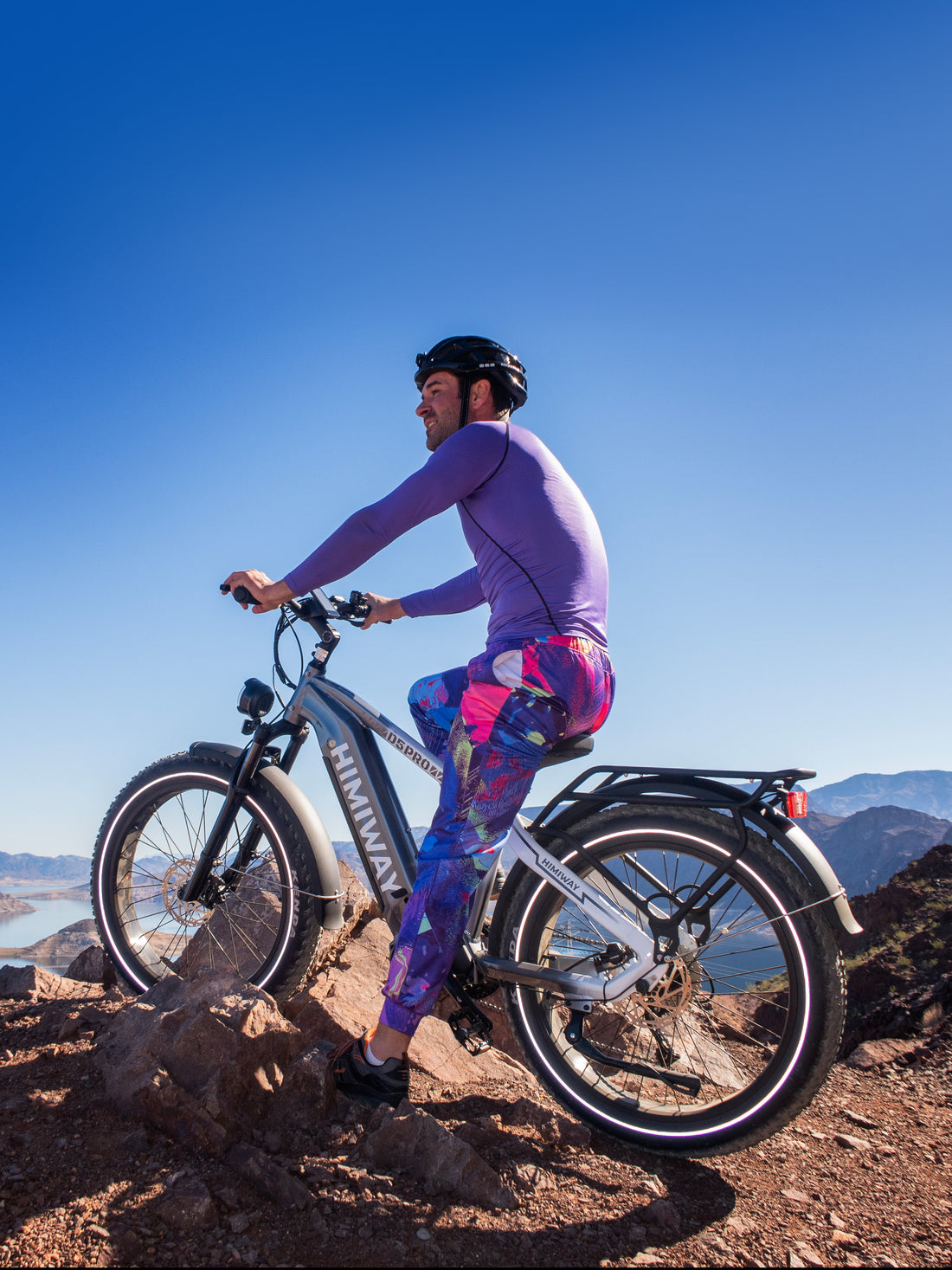
Himiway D5 Zebra

The largest 960Wh battery delivers 60-80 miles per charge. RST front fork with 95mm travel and lockout handles fire roads and light trails perfectly. Torque sensor provides natural pedaling feel.

960Wh Battery | Range: 60-80mi | 400lb capacity

⛰️ Best for Hills

Himiway D5 Pro

Mid-drive 500W motor with 130Nm torque uses your gears for leverage—outperforms hub motors on steep climbs. Same 960Wh battery for 60-80 mile range. Best mid-drive value in the lineup.

Mid-Drive 130Nm | Range: 60-80mi | 400lb capacity

📦 Best for Cargo

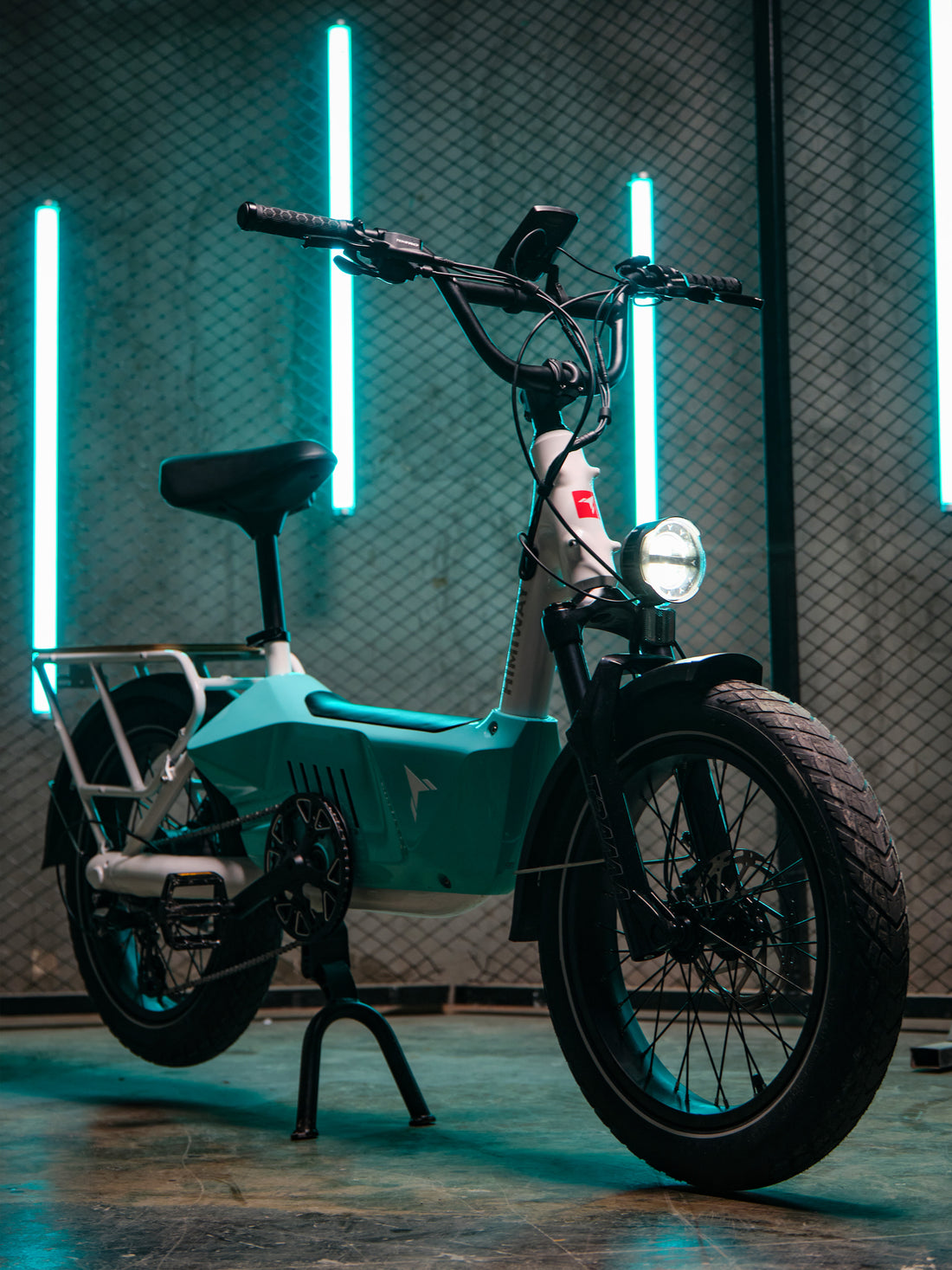
Himiway C3

440lb payload capacity—highest in the lineup. Compact 20" wheels lower center of gravity for stable cargo hauling. Double-leg kickstand prevents tipping when loaded. Perfect for families and deliveries.

960Wh Battery | Range: 60-80mi | 440lb capacity

Frequently Asked Questions

Get answers about choosing between hardtail and full suspension, and finding the right hardtail for your riding style.

Hardtail vs Full Suspension Decision

Should I get a hardtail or full suspension e-bike?

This depends entirely on where you ride and what you prioritize. Many riders overcomplicate this decision—here's the honest breakdown:

Choose a hardtail if you:

  • Ride fire roads, gravel paths, and "flowy" singletrack: These surfaces don't need rear suspension—front suspension handles bumps fine
  • Prioritize efficiency: No rear suspension means 10-15% better battery range and lighter weight for easier climbing
  • Carry cargo or use panniers: Racks mount easily to rigid rear triangles. Full suspension bikes have limited cargo options
  • Want lower maintenance: No rear shock to service means fewer trips to the shop
  • Have a budget under $2000: You get better components on a hardtail than a full-suspension at the same price

Choose full suspension if you:

  • Ride technical trails with roots, rocks, and drops regularly
  • Do aggressive downhill riding
  • Have back or hip issues that require maximum vibration absorption
  • Ride 30+ miles regularly where fatigue becomes a factor

The reality: Experienced riders report that hardtails feel more connected to the trail and more fun for exploring. Full suspension shines when descending mountains fast. If you're not doing technical descents, a hardtail is probably all you need.

For detailed comparison, read our hardtail vs full suspension guide.

Will a hardtail be uncomfortable on rough terrain?

Not necessarily—comfort on a hardtail depends on several factors you can control:

What absorbs bumps on a hardtail:

  • Front suspension fork: 80-100mm travel handles most obstacles. Look for lockout so you can stiffen it on pavement
  • Fat tires: 4.0" tires at lower PSI (8-12 PSI) act as natural rear suspension, absorbing vibration better than you'd expect
  • Your legs: Standing through rough sections is a technique, not a limitation. Many riders find this more engaging

Add-on comfort options:

  • Suspension seatpost: Adds 50-60mm of travel for your rear. Riders strongly recommend Cane Creek Thudbuster or SR Suntour NCX for rough roads
  • Ergonomic grips: Reduces hand fatigue and vibration transfer
  • Proper tire pressure: Running fat tires at 10-15 PSI dramatically improves comfort

Who should avoid hardtails:

  • Riders with chronic back pain who can't stand intermittently
  • Anyone doing technical rock gardens or root-filled trails
  • Riders who prioritize pure comfort over efficiency

For commuters and fire road explorers, a hardtail with fat tires and a suspension seatpost provides more than enough comfort.

Can hardtails handle fire roads and XC-style trails?

Absolutely—this is exactly what hardtails are designed for. Fire roads, gravel paths, and cross-country trails are hardtail territory.

Why hardtails excel on these surfaces:

  • Better power transfer: No rear suspension bobbing under pedal force means more of your energy goes to forward motion
  • Lighter weight: Easier to climb and maneuver than full suspension bikes
  • More predictable handling: Rigid rear end gives direct feedback on surface conditions
  • All-day battery life: Better efficiency means covering more ground per charge

What "XC-style" trails mean:

  • Smooth to moderately rough singletrack
  • Gradual climbs and descents (not steep technical drops)
  • Occasional roots and small rocks (nothing requiring rear suspension)
  • Fire roads, gravel paths, forest service roads

Best hardtails for XC/fire road use:

  • D5 Zebra: 95mm front fork with lockout + 4.0" fat tires for all-terrain grip
  • D5 Pro: Mid-drive motor for superior climbing efficiency on long routes

Finding the Right Hardtail

What's the best hardtail e-bike for commuting and occasional trails?

For mixed commute/trail use, you need a bike that handles pavement efficiently but can also venture off-road. Here's what to prioritize:

Must-have features for commute + trail:

  • Lockable front fork: Lock it for smooth pavement efficiency, unlock for trails
  • Torque sensor: Provides natural pedaling feel and better battery efficiency than cadence sensors
  • Rack mounts: Essential for carrying work bags, groceries, or bikepacking gear
  • Fat tires: 4.0" tires handle potholed city streets AND gravel paths
  • Fenders compatibility: Keep yourself clean during wet commutes

Best options by commute distance:

  • Under 10 miles each way: D3 Cruiser — Budget entry with proven reliability (916+ reviews)
  • 10-20 miles each way: D5 Zebra — 960Wh battery for multi-day commuting without recharging
  • Hilly commute: D5 Pro — Mid-drive motor excels on steep grades

Explore more commuter-focused options in our electric urban bikes collection.

Which hardtail can carry cargo and panniers?

Hardtails are significantly better for cargo than full suspension bikes because the rigid rear frame provides stable rack mounting points.

Why full suspension struggles with cargo:

  • Rear suspension movement can stress rack mounts
  • Limited rack options that work with rear shocks
  • Heavy loads affect suspension performance

Best hardtails for cargo by capacity:

  • 440lb total payload: C3 Cargo — Purpose-built cargo bike with double-thick frame, double-leg kickstand, compact 20" wheels for low center of gravity
  • 400lb total payload: D5 Zebra — Standard rack compatible, 960Wh battery compensates for heavy load power demands
  • 350lb total payload: D3 Cruiser — Budget option with rack mounts included

Rack mounting considerations:

  • Check for rear rack mounts—some frames require aftermarket solutions
  • Consider pannier width vs. fat tire clearance
  • For heavy grocery loads, choose double-leg kickstand models

See more cargo options in our e-bikes for delivery collection.

What's the best hardtail for long-distance touring or bikepacking?

For multi-day trips like the GDMBR or AZT, you need maximum range, cargo capability, and reliability over remote terrain:

Critical features for bikepacking:

  • Largest battery possible: 960Wh minimum for 60-80 mile days
  • Torque sensor: 15-20% more efficient than cadence sensors—huge difference over 50+ miles
  • Multiple mounting points: For bags, cages, and accessories
  • Reliable hub motor: Simpler to service in remote areas than mid-drive
  • Fat tires: Handle varying terrain without tire changes

Best options for bikepacking:

  • Primary choice: D5 Zebra — 960Wh battery provides all-day range, torque sensor for efficiency, 400lb payload for gear + food + water
  • For hilly routes: D5 Pro — Mid-drive 130Nm torque handles loaded climbs better

Range planning reality:

  • Loaded bike with 30+ lbs gear: reduce expected range by 20-30%
  • 960Wh battery loaded: realistically 45-60 miles per charge
  • Plan charging stops every 40-50 miles to be safe

Explore more touring options in our long distance touring collection.

What's the best budget-friendly hardtail e-bike?

Hardtails offer significantly better value than full suspension at similar price points—you get higher quality components and better reliability.

Best options by priority:

  • Best overall value: D5 Zebra — Largest battery (960Wh), torque sensor, 9-speed Shimano, hydraulic brakes
  • Best for accessibility: D5 Zebra ST — Same specs with step-through frame for easier mounting
  • Best budget entry: D3 Cruiser — Most reviewed model (916+ reviews), proven reliability, 720Wh battery
  • Best for compact storage: B3 — Only foldable hardtail, 70-mile range, fits in car trunk/RV

What you get at this price:

  • 750W hub motor (or 500W for urban models)
  • 720-960Wh Samsung/LG battery cells
  • Hydraulic disc brakes (most models)
  • Shimano 7-9 speed drivetrain
  • 2-year warranty on electrical components

See all budget options in our e-bikes under $2000 collection.

Technical Considerations

Hub motor or mid-drive for a hardtail e-bike?

Both work well on hardtails, but they suit different riding styles:

Hub motors (most hardtails):

  • Better for: Flat to moderate terrain, commuting, casual riding, throttle-only use
  • Advantages: Quieter, simpler, lower maintenance, independent of drivetrain
  • Limitations: Less efficient on steep, sustained climbs
  • Best models: D5 Zebra (750W, 86Nm)

Mid-drive motors (specialized haulers):

  • Better for: Steep hills, technical terrain, natural pedaling feel, heavy loads
  • Advantages: Uses gears for leverage (130Nm at low gear is massive), centered weight distribution, better traction
  • Limitations: More drivetrain wear, requires proper shifting technique
  • Best models: D5 Pro (500W mid-drive, 130Nm) — best mid-drive value in the lineup

Decision guide:

  • Mostly flat with occasional hills → hub motor
  • Daily steep grades (12%+) → mid-drive
  • Carrying heavy cargo uphill → mid-drive
  • Want simplest experience → hub motor

Learn more in our hub motor vs mid-drive guide.

How much front suspension travel do I need?

Front suspension travel determines how big of impacts the fork can absorb. Match travel to your terrain:

Travel ranges by use:

  • 40-60mm: Urban commuting, smooth paths, light gravel. Example: B3 (40mm) — sufficient for paved/light gravel
  • 80-100mm: Fire roads, XC trails, moderate off-road. Example: D5 Zebra (95mm) — handles most trail conditions
  • 100-120mm: More aggressive trails with roots and small drops. Example: D5 Pro (100mm) — trail-ready

Key features to look for:

  • Lockout: Stiffens fork for paved efficiency—essential for commuter/trail combos
  • Preload adjustment: Tune stiffness to your weight
  • Air vs coil: Air springs are lighter and more adjustable; coil is more consistent but heavier

The honest truth: For fire roads and gravel, even 60mm is usually enough when combined with fat tires. More travel adds weight and requires more maintenance.

How does hardtail efficiency compare to full suspension?

Hardtails are measurably more efficient—here's why and by how much:

Where the efficiency comes from:

  • No pedal bob: Full suspension compresses when you pedal, absorbing 5-15% of your energy. Hardtails transfer 100% of power to the rear wheel
  • Lower weight: No rear shock, linkages, or pivot bearings—saves 5-15 lbs depending on suspension quality
  • Less drag: Fewer moving parts means less mechanical friction

Real-world impact:

  • Range increase: 10-15% more miles per charge vs equivalent full suspension
  • Climbing speed: Faster on sustained climbs where pedal bob wastes energy
  • Flat ground speed: Slightly faster at same effort level

When full suspension wins:

  • Technical descents where traction matters
  • Rough terrain where a smooth rear wheel maintains better contact
  • Long rides (30+ miles) where rider fatigue from bumps slows you down

Bottom line: For commuting, fire roads, and efficiency-focused riding, hardtails win. For aggressive trail riding and descents, full suspension wins.

Specific Rider Needs

Is a hardtail good for beginner e-bike riders?

Yes—hardtails are excellent for beginners for several reasons:

Why beginners benefit from hardtails:

  • Simpler operation: No rear suspension settings to learn or adjust
  • Better trail feedback: You learn to read terrain and pick good lines—skills that transfer if you upgrade later
  • Lower cost entry: More budget for accessories, gear, or saving for a second bike
  • Easier maintenance: Less to go wrong, simpler shop visits
  • Forces good technique: Learning to stand through rough sections makes you a better rider

Best beginner hardtails:

  • Total beginner: D3 Cruiser ($1,099) — 916 reviews prove reliability, lowest price entry
  • Step-through for easy mounting: D5 Zebra ST ($1,399) — No leg swing required
  • Planning to grow into trails: D5 Zebra ($1,399) — Capable enough for progression

Common beginner concern addressed: "Will I outgrow it quickly?" — Most riders find hardtails meet their needs for years. Many experienced riders prefer hardtails even after trying full suspension.

What hardtail works best for heavier riders (250-350+ lbs)?

Weight capacity on hardtails tends to be higher than full suspension because the rigid rear frame is inherently stronger.

Recommended models by weight:

  • 250-300 lbs: Any 400lb capacity model works well. D5 Zebra (400lb) provides margin for gear
  • 300-350 lbs: C3 Cargo (440lb) offers extra capacity and stability
  • 350+ lbs: C3 Cargo (440lb) is the highest capacity option

Features that matter for heavier riders:

  • Fat tires (4.0"+): Better weight distribution, more stability at low speeds
  • Larger battery (960Wh): Higher weight increases power demand
  • Hydraulic brakes: More stopping power than mechanical brakes
  • High-torque motor (80Nm+): Maintains speed on hills under load

Why hardtail over full suspension for heavy riders:

  • Higher weight capacities available
  • No rear shock to bottom out under heavy loads
  • More reliable long-term (fewer stress points)

See more options at e-bikes for heavy riders.

Can I add a suspension seatpost to improve hardtail comfort?

Yes—a suspension seatpost is one of the best upgrades for any hardtail rider who wants more rear-end comfort without losing efficiency.

What a suspension seatpost does:

  • Adds 50-80mm of vertical travel under your seat
  • Absorbs bumps that would otherwise reach your spine
  • Doesn't affect pedaling efficiency (unlike rear suspension)
  • Easy to install—standard seatpost sizes

Top recommendations from riders:

  • Cane Creek Thudbuster: Multiple elastomer options for different rider weights. Popular for rougher terrain
  • SR Suntour NCX: Parallelogram design prevents saddle tilt. Great for commuting
  • Redshift ShockStop: Premium option with adjustable stiffness

Important considerations:

  • Dropper post trade-off: You can't easily have both suspension AND dropper functionality on the same seatpost
  • Weight match: Choose elastomer stiffness based on your weight for proper function
  • Adds 300-500g: Minor weight penalty for significant comfort gain

Who needs one:

  • Riders doing 20+ mile rides regularly
  • Anyone with lower back sensitivity
  • Commuters on rough city streets
  • Trail riders who want more forgiveness

All Hardtail Models

What are all the hardtail e-bike options available?

Here's the complete lineup of hardtail e-bikes, organized by use case:

All-Terrain Fat Tire Hardtails:

  • D5 Zebra — 960Wh | 60-80mi | Hub 750W | Best overall value
  • D5 Zebra ST — 960Wh | 60-80mi | Hub 750W | Step-through version
  • D5 Pro — 960Wh | 60-80mi | Mid-drive 500W 130Nm | Best for hills
  • D5 Pro ST — 960Wh | 60-80mi | Mid-drive 500W 130Nm | Step-through version

Entry-Level Hardtails:

  • D3 Cruiser — 720Wh | 35-60mi | Hub 750W | Most reviewed (916+)
  • D3 Cruiser ST — 720Wh | Same specs | Step-through version

Specialty Hardtails:

  • C3 Cargo — 960Wh | 60-80mi | Hub 750W | 440lb capacity | Best for cargo
  • B3 Foldable — 720Wh | 70mi | Hub 500W | Only foldable option

Key spec comparison:

  • Longest range: D5 Zebra, D5 Pro, C3 (all 960Wh, 60-80mi)
  • Best hill climbing: D5 Pro (130Nm mid-drive)
  • Highest payload: C3 Cargo (440lb)
  • Most compact: B3 (folds for storage)
  • Most affordable: D3 Cruiser, B3

Why HIMIWAY ?

Ride Further Together

491 K+

Himi Riders
Recognition from knights around the world

15 K+

5-Star Reviews
The knights give an honest opinion

1200 +

Professional Review
What the professional media really thinks of us

Local Shop

Learn More

2-Year Warranty

Learn More

15-Day Trial

Learn More

Free Shipping

Learn More

Bikes for Every Ride

Explore our diverse lineup designed to fit every rider and terrain

Mountain eBike

Kids eBike

City eBike

Cargo eBike

Folding eBike

Find a Local Himiway Shop Near You

Looking for a hands-on experience?
Find a Himiway electric bike shop near you and schedule a test ride today.