



Fat Tire Electric Bike 1000W

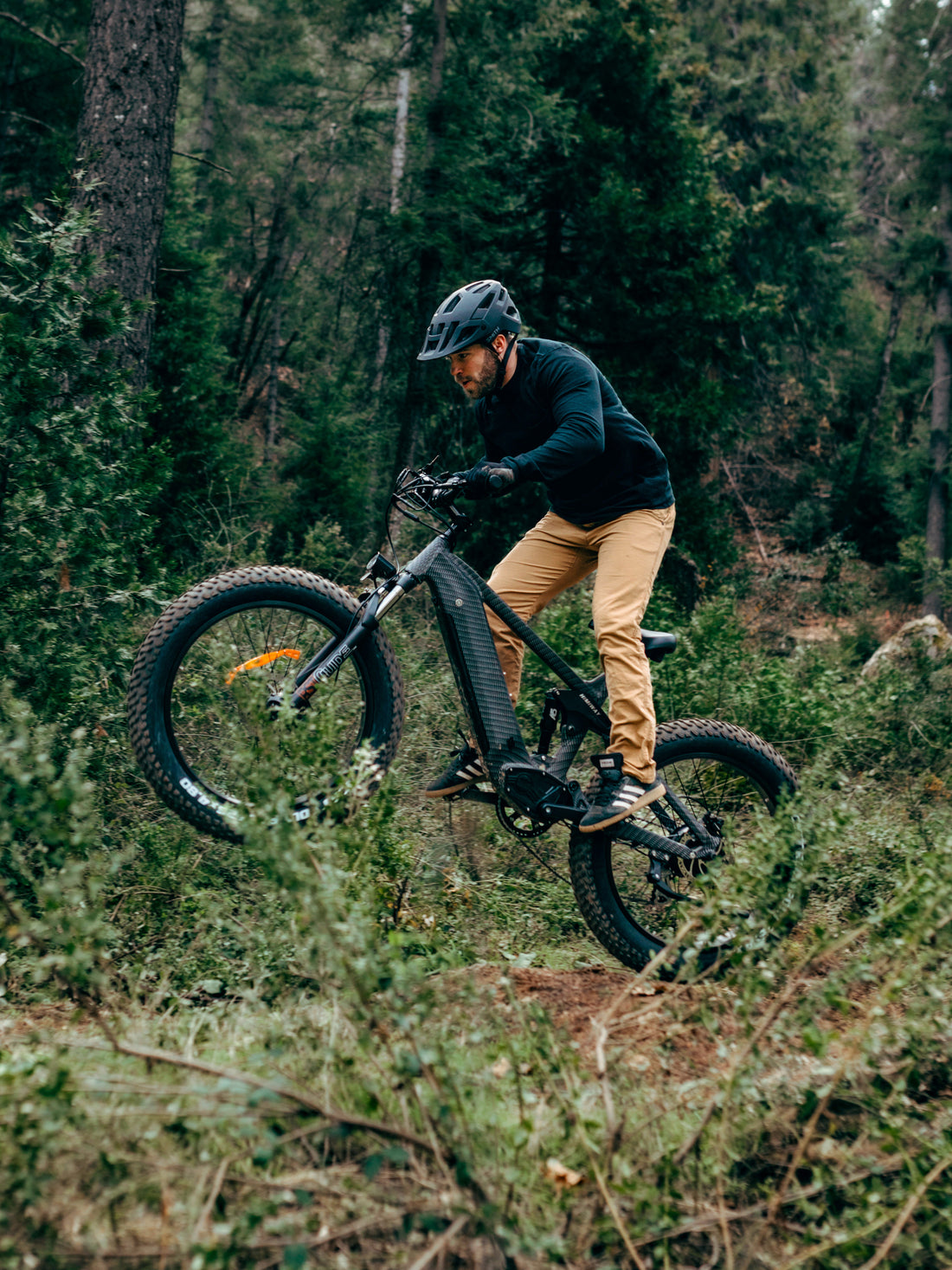
D7 / Full Suspension Electric Hunting Bike
-
80 Miles
Max Range
-
26x4.5
Super Fat Tire
-
Torque
Sensor
-
Hydraulic
Brakes


Himiway D7 Pro Mountain eBike Unstoppable mountain performance
-
1000 W
Mid-drive Motor
-
28 Mph
Top Speed
-
960 Wh
Samsung/LG Battery
-
80 Miles
Max Range
- Featured
- Most relevant
- Best selling
- Alphabetically, A-Z
- Alphabetically, Z-A
- Price, low to high
- Price, high to low
- Date, old to new
- Date, new to old
What Is a 1000W Fat Tire Electric Bike?
A 1000W fat tire electric bike is a high-powered electric bicycle designed for heavy-duty off-road riding, versatile commuting, and handling challenging terrains. It combines an exceptionally strong 1,000-watt motor with oversized 4-inch (or wider) tires to deliver a blend of high-speed acceleration, climbing power, and superior stability.
Core Characteristics
- High-Powered 1000W Motor: The motor provides intense torque (often exceeding 100Nm) to conquer steep slopes up to 30 degrees. It allows riders to easily blast through resistance like loose sand, deep mud, or thick snow.
- Oversized Fat Tires: Measuring 4.0 inches wide or more, these puncture-resistant tires use low air pressure to create a massive contact patch. This prevents the bike from sinking into soft ground and absorbs harsh bumps from rocky trails.
- Speed and Range Capabilities: These bikes commonly reach top speeds between 25 to 28+ MPH, qualifying them as Class 3 e-bikes or off-road vehicles. Powered by robust 48V batteries, they typically offer a travel distance of 30 to 60+ miles depending on rider weight and pedal-assist usage.
- Heavy-Duty Build: Due to the weight of the motor, battery, and thick wheels, these frames are heavily reinforced—often weighing between 65 to 85 lbs—and feature reliable mechanical or hydraulic disc brakes to ensure safe stopping power.
Typical Variations and Market Examples
If you are looking to purchase one, models typically fall into two main design categories:
Himiway D7 1000W Full-Suspension Ebike
An aggressive, full-suspension off-road model built using a lightweight aluminum frame. It integrates a high-torque 1300W peak motor and high-end hydraulic brakes specifically designed for demanding mountain trails and rugged outdoor environments.
Himiway D7 Pro Electric Bike
A versatile, utility-focused model using a heavy-duty steel frame. It comes equipped with functional daily extras like a sturdy integrated rear rack, protective front and rear mud fenders, and front-fork suspension—making it highly suited for mixed beach riding and all-weather city commuting.
Important Considerations Before Buying
- Peak vs. Sustained Power: Always verify if a bike is "1000W continuous" or "1000W peak". A peak 1000W bike may only hit that output briefly during acceleration, whereas a continuous 1000W bike maintains high power constantly.
- Local Legal Restrictions: Many public paths and city streets cap legal e-bike limits at 750W (Class 1 to 3). Check your municipal guidelines on E-Bike Regulations because certain 1000W models can be restricted strictly to private property or designated off-road OHV trails.
How Powerful Is a 1000W eBike Motor?
A 1000W eBike motor is exceptionally powerful, delivering roughly 1.34 horsepower and positioning it at the absolute upper limit of consumer electric bicycles. For context, it provides about twice the power of an average adult cyclist sprinting at maximum effort, allowing riders to conquer steep hills and maintain high speeds with minimal physical exertion.
Speed and Acceleration
- Top Speeds: Easily reaches 28 to 32+ MPH on flat pavement using throttle alone.
- Rapid Acceleration: Launches quickly from a complete stop, making it highly responsive in traffic.
- Heavy Loads: Maintained high speeds even when carrying heavy cargo or heavier riders.
Hill Climbing and Torque
- Steep Inclines: Conquering 20 to 30-degree hills without requiring the rider to stand up and pedal.
- Torque Output: Typically generates between 80 to 100+ Nm of torque, which pulls efficiently through thick mud, loose sand, and deep snow.
- Off-Road Mastery: Powers over exposed tree roots, loose gravel, and rugged trail obstacles effortlessly.
Power Comparison
Reality Check: Nominal vs. Peak Power
When evaluating power, check if the 1000W rating is nominal (sustained) or peak (temporary). A motor with 1000W nominal power can sustain that output continuously and may peak around 1200W–1500W for brief bursts. Conversely, a motor advertised as 1000W peak might only have a 750W nominal rating, meaning it drops down in power after the initial acceleration burst to prevent overheating.
1000W vs 750W Fat Tire eBike
The primary difference between a 1000W and a 750W fat tire eBike is that the 1000W model delivers superior top speed and hill-climbing torque, while the 750W model offers better battery efficiency and wider legal access to public roads.
Key Performance Comparison
| Feature | 750W Fat Tire eBike | 1000W Fat Tire eBike |
|---|---|---|
| Top Speed (Throttle) | 20 – 28 MPH | 28 – 35+ MPH |
| Average Torque | 60 – 80 Nm | 80 – 100+ Nm |
| Hill Climbing | Good (slows on steep hills) | Excellent (maintains speed) |
| Terrain Capability | Soft sand, light snow, dirt | Deep sand, heavy snow, steep mud |
| Battery Consumption | Moderate (longer range) | High (drains battery faster) |
| US Legal Status | Legal on most streets/paths | Often restricted off-road/private |
Performance Trade-Offs
- Speed and Acceleration: A 1000W motor accelerates noticeably faster than a 750W motor. This is especially true when carrying heavy cargo or starting from a complete stop on an incline.
- Torque and Terrain: Fat tire bikes are heavy, often weighing over 75 pounds. While 750W is plenty for flat beaches and gravel paths, 1000W provides the necessary raw power to push through deep, resistance-heavy terrain like loose sand or fresh snow without straining the motor.
- Battery Efficiency: Because 1000W motors draw more current, they require a much larger battery (typically 48V 20Ah or 52V systems) to match the mileage range of a more efficient 750W bike.
Legal and Classification Differences
- 750W Legal Status: In the United States, 750W is the maximum legal limit for a curated three-class eBike system. A 750W eBike is legally treated like a standard bicycle, giving you access to city bike lanes, multi-use paths, and national parks.
- 1000W Legal Status: A 1000W eBike exceeds the federal designation for a low-speed electric bicycle. In many jurisdictions, they are classified as mopeds or off-highway vehicles (OHVs), meaning they are legally banned from public bike paths and sidewalks, restricting them to OHV trails or private property.
How Fast Can a 1000W Fat Tire eBike Go?
A 1000W fat tire eBike can typically reach top speeds between 28 and 35+ MPH on flat pavement. The exact speed depends on how the bike is operated, system voltage, and terrain.
Speed by Mode of Operation
Throttle Only (No Pedaling)
Most 1000W models will easily propel a rider to 28 to 30 MPH using just the thumb or twist throttle.
Pedal Assist Mode (PAS)
When you actively pedal alongside the motor at its highest assist level, you can push the bike to 32 to 35+ MPH, assuming the speed governor is unlocked.
Variables That Affect Your Speed
- System Voltage: A 1000W motor paired with a 52V battery will naturally ride 3 to 5 MPH faster than the exact same motor paired with a 48V battery due to higher electrical pressure.
- Tire Drag and Weight: Fat tires (4" or wider) create massive rolling resistance. Paired with heavy frame weights (75–85 lbs), top speeds are slightly lower than slim-tired commuter bikes.
- Terrain and Load: Headwinds, steep inclines, and total payload lower top speed, though a 1000W motor maintains velocity on hills far better than 500W or 750W alternatives.
Speed Governors and Legality
Out of the box, many manufacturers ship 1000W eBikes electronically speed-limited to 20 MPH (Class 2) or 28 MPH (Class 3) to comply with local regulations. On many models, you can enter the advanced display menu to "unlock" the true maximum speed for private land or off-road trail riding.
Are 1000W Fat Tire eBikes Good for Hills?
Yes, absolutely. Their combination of extreme motor power and high-traction wide tires allows them to conquer steep inclines that would stall standard commuter eBikes.
Why They Excel at Hill Climbing
- Massive Torque Output: Generates 80 to 100+ Nm of torque, preventing the motor from bogging down or overheating when fighting gravity.
- Unrivaled Traction: Low air pressure fat tires create a massive contact patch that bites into loose dirt, gravel, or wet grass without spinning out.
- Effortless Incline Management: Tackles 20 to 30-degree slopes easily. Moderate hills require throttle only, while extreme inclines maintain 15+ MPH with light pedaling.
Mid-Drive vs. Hub Motors for Hills
Positioned at the pedals to drive the bike's chain and gears. Shifting into a lower gear gives the motor mechanical leverage to climb extreme mountain peaks without overheating.
Located inside the rear wheel, bypassing the gears. Extremely powerful for general use, but works harder at low speeds on steep inclines, drawing more battery heat during long climbs.
Key Limitations to Keep in Mind
- Rapid Battery Drain: Sustained hill climbs at full power draw peak current, which can cut total battery range by 50% or more.
- Bike Weight: Frames weigh 75 to 90 lbs. If your battery drains completely mid-climb, pedaling a dead 1000W fat bike uphill requires massive physical exertion.
Battery Range: How Far Can a 1000W eBike Go?
Expect a realistic real-world range of 25 to 55 miles per charge depending on assist level, terrain, and payload.
Average Range Breakdown
Continuous full throttle without pedaling at high speeds.
Best balance of speed, motor assistance, and distance.
Riding constantly at top speeds (28+ MPH).
The Math: Battery Capacity (Wh) is Key
Calculate capacity by multiplying Voltage (V) × Amp-hours (Ah):
Variables That Shorten Your Range
- Tire Pressure & Tread: Running low PSI (e.g., 10 PSI for sand) creates massive drag vs. fully inflated pavement tires (20 PSI).
- Payload Weight: Carrying a 250 lb load requires nearly double the energy of a 150 lb load.
- Extreme Terrain: Mud, deep sand, and steep hills push the motor to peak wattage, cutting range by up to 50%.
Tips to Maximize Your Range
Initial acceleration draws peak power. Use legs to get moving before hitting the throttle.
Riding at 20 MPH instead of 28+ MPH extends battery distance by up to 30%.
Consider 30Ah+ dual setups to extend actual real-world ranges beyond 70+ miles.
1000W Fat Tire eBike Weight Capacity
A 1000W fat tire eBike typically features a maximum weight capacity of 300 to 400 pounds. Engineered with reinforced frames and high-torque motors, they offer some of the highest payload capacities in the electric bicycle market.
Capacity Breakdown by Bike Frame Type
Standard Hardtail Frames
Rigid aluminum or steel frames offering excellent stability, perfect for heavier riders or moderate gear.
Step-Through / Folding
Reinforced lower joints prevent frame flexing under heavy loads while maintaining easy mounting.
Heavy-Duty Cargo / Utility
Thick-walled tubing, integrated rear racks, and ultra-stout wheels maximize total weight distribution.
Why 1000W Fat Tire Bikes Excel with Heavy Loads
- Motor Torque (80–100+ Nm): Prevents slowing to a crawl or overheating when pulling heavy payloads up inclines.
- Structural Tire Support: Oversized 4-inch tires distribute weight evenly across the terrain, eliminating pinch-flats.
- Upgraded Braking Systems: Equipped standard with hydraulic disc brakes and 180mm/203mm rotors to halt heavy weight safely.
Always verify if specs list Total Capacity (Bike + Rider + Cargo) or Payload Capacity (Rider + Cargo only). If a bike has a 350-lb total capacity and weighs 80 lbs, the actual rider/cargo limit is 270 lbs.
Is a 1000W Fat Tire eBike Street Legal?
In most jurisdictions, a 1000W eBike exceeds the standard 750W threshold for low-speed electric bicycles, reclassifying it as a moped or off-highway vehicle (OHV) on public infrastructure.
State-by-State Exceptions
Georgia, Kansas, Minnesota, Oklahoma, Oregon, Virginia (when speed-governed).
Florida, Mississippi (compliance governed strictly by speed limiters).
California, New York, Texas, Colorado (banned from bike paths/lanes).
Software-Limited Exceptions: Some 1000W models include display settings to programmatically lock motor output to 750W (Class 2 / 20 MPH limit) for street legality. Unlocking full power returns the bike to private land / off-road legal status only.
How to Choose the Best 1000W Fat Tire eBike
Match Motor Type to Terrain
Rear Hub: Great for flat roads, sand, snow, and budget commuting.
Mid-Drive: Connects to bike gears for unmatched climbing torque on extreme mountain trails.
Verify Nominal vs. Peak Power
Insist on 1000W Nominal for continuous sustained output (peaking up to 1500W). Avoid bikes rated at 1000W Peak, which are often just 500W or 750W motors pushed temporarily.
Calculate Battery Needs
A 1000W motor demands heavy current. Target at least a 48V 15Ah (720Wh) battery for short trips, or 48V/52V 20Ah (960Wh+) for extended backcountry rides.
Demand Premium Safety Components
Never compromise: require Hydraulic Disc Brakes with 180mm/203mm rotors and front/rear suspension to manage heavy payloads at 30+ MPH speeds.
Frequently Asked Questions (FAQ)
Ride Further Together
Himi Riders
Recognition from knights around the world
5-Star Reviews
The knights give an honest opinion
Professional Review
What the professional media really thinks of us

1000+Shop

2-Year Warranty

15-Day Trial

Free Shipping
Find a Local Himiway Shop Near You
Looking for a hands-on experience?
Find a Himiway electric bike shop near you and schedule a test ride today.
Bikes for Every Ride


