
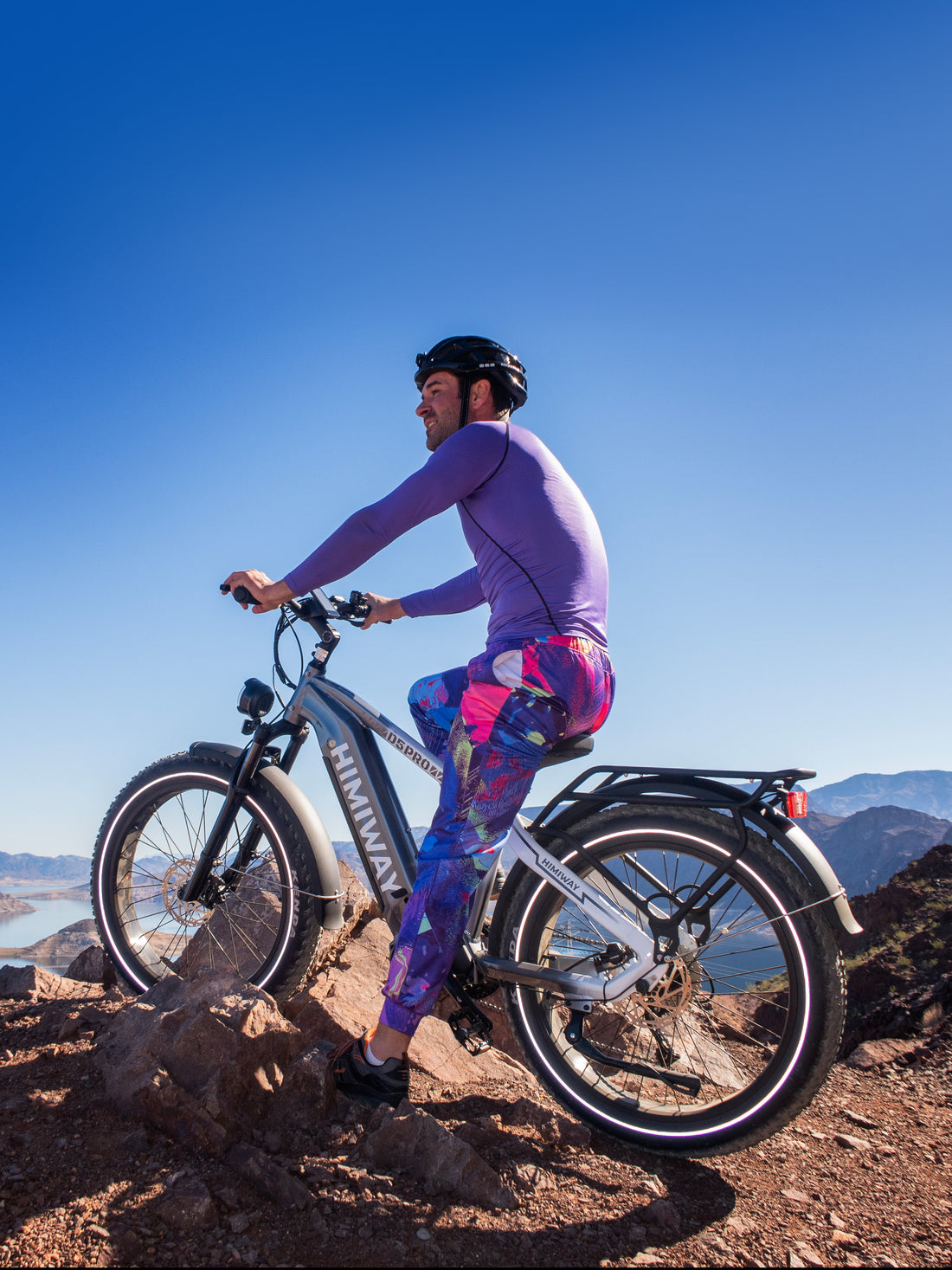
Class 1 ebike

Class 1 ebike

1000+Shop

2-Year Warranty

15-Day Trial

Free Shipping

Class 1 E-Bikes: Pedal Assist for Trails, Commutes, and Long-Range Rides

Based on thousands of conversations with cyclists returning to longer rides, the single biggest discovery is this: the right class 1 e-bike doesn’t replace your effort — it amplifies it. This guide addresses what riders actually want to know before buying.

What Makes These the Best Class 1 E-Bikes

⚡ Pedal Assist That Feels Like Your Own Legs — Stronger

  • Torque sensor reads how hard you push and amplifies proportionally
  • At 14 mph average effort, you still ride at 14 mph — just far less tired
  • 5 assist levels let you dial in exactly how much help you want
  • Motor cuts off cleanly at 20 mph — you can still pedal beyond that
  • Switchable torque/cadence sensor on D5 2.0 series for flexibility

🍂 Trail Access & Legal Compliance

  • Class 1 is the most trail-legal class in the US — accepted in most state parks, national forests, and multi-use paths
  • No throttle by definition — the motor only runs when you pedal
  • Default 20 mph setting satisfies Class 1 requirements in all 50 states
  • UL 2849 and UL 2271 certified — required for some trail permits and apartment charging
  • Explore hunting-legal trail models

🔋 Range to Recapture Long Rides

  • 720Wh batteries deliver 65–70 miles per charge on pedal assist
  • 960Wh models stretch to 80 miles — enough for all-day trail days
  • Battery maintains 80% capacity after 1,000 charge cycles
  • Lower assist levels extend range significantly on flat terrain
  • See our long-range e-bike collection for extended-distance options

Our Top Class 1 E-Bike Recommendations

🏆 Best Overall Class 1 Fat Tire E-Bike

Himiway D5 2.0 20”

The most versatile class 1 build in the lineup. Full suspension (90mm front / 100mm rear), a compact 20” wheel profile that lowers your center of gravity, and the highest payload in the D5 family — all at 80 lb. The switchable torque/cadence sensor means you can run true torque-amplified pedal assist or cadence cruise depending on the ride. Fits 4’11”–6’3”, making it one of the most accessible frames in the lineup for shorter riders and seniors.

750W 90Nm hub motor720Wh battery70 mi range440 lb payloadFits 4’11”–6’3”

⛰ Best Class 1 E-Bike for Hilly Terrain

Himiway A7 Pro

The A7 Pro’s 130Nm ANANDA mid-drive motor handles sustained climbs that would stall a hub motor — all within the 20 mph class 1 cap. Because the motor connects to the drivetrain, downshifting multiplies torque just like your own legs would, making 10% grades manageable and 15% grades achievable. Full suspension (120mm SR-SUNTOUR front / 90mm DNM rear) absorbs bumps without robbing momentum. At 77 lb it’s the lightest mid-drive in the lineup, and an integrated ABUS rear-wheel lock adds trail security.

500W 130Nm mid-drive720Wh battery35–50 mi range300 lb payload77 lb

🍂 Best Class 1 E-Bike for Hunting & Stealth Trails

Himiway D5 2.0 Camo

Built for trails where blending in matters. A seamless camo wrap finish, quiet 750W hub motor, and step-through frame for silent mounting and dismounting in the field. The rear rack handles 120 lb of gear and the bike tows up to 1,000 lb of cargo — critical when hauling game or camp equipment through restricted-motor trails where Class 1 compliance is required. Full suspension (100mm front / 130mm rear) handles forest floor terrain without noise or fuss.

750W 90Nm hub motor720Wh battery65 mi range400 lb payload1,000 lb towing

Frequently Asked Questions

Real answers to the questions avid cyclists and trail riders ask before buying a class 1 e-bike.

Understanding Class 1 E-Bikes

What is a class 1 e-bike, and how does it work?

A class 1 e-bike provides pedal-assist power only — the motor runs when and only when you’re actively pedaling, and it cuts off completely once you reach 20 mph. There is no throttle: you cannot get the motor to push you without pedaling first. That’s the fundamental distinction from Class 2 (which adds throttle) and Class 3 (which allows motor assist up to 28 mph).

Under the hood, a sensor detects your pedaling and tells the motor how much assist to add. There are two types:

  • Torque sensor — measures how hard you push on the pedals and amplifies that force proportionally. Feels like stronger legs. When you ease off, the motor eases off. Preferred by experienced cyclists.
  • Cadence sensor — detects pedal rotation speed and applies a fixed power level. More of a constant push that some riders describe as cruise control. Works fine for casual use.

All Himiway models default to 20 mph — Class 1 behavior — straight out of the box. For a full breakdown of how all three classes compare, read our three-class e-bike system guide.

How fast do class 1 e-bikes go — and will I actually ride at 20 mph the whole time?

No — you will not be riding at 20 mph constantly. That’s the maximum the motor will assist you to, not a cruise control setting. Your actual speed depends on how hard you pedal, what gear you’re in, the terrain, and the assist level you’ve selected.

Here’s a practical example: if you currently average 14 mph on a 25-mile gravel ride at 100% of your own effort, a class 1 e-bike with a torque sensor set to a moderate assist level will let you maintain that same 14 mph while only putting in 40–60% of the effort. You’re not going faster — you’re going the same distance with less physical depletion, which is exactly the range-extension effect most cyclists are looking for.

If you pedal hard enough to reach 20 mph, the motor cuts out and you coast or keep pedaling on your own power — exactly like a regular bike. The 20 mph cap is a ceiling, not a floor.

Typical real-world speeds by scenario:

  • Flat paved paths with low assist: 10–14 mph (conserves battery, extends range)
  • Flat terrain with moderate assist: 15–18 mph
  • Moderate hills with high assist: 10–15 mph (motor works hardest here)
  • Downhills: 20+ mph possible under your own power, no motor assist needed
What’s the difference between class 1, 2, and 3 e-bikes?

The three classes define how and how fast a bike’s motor can assist you — and that determines where you can legally ride it.

  • Class 1: Pedal-assist only, motor cuts off at 20 mph. No throttle. Most widely permitted class — legal on multi-use trails, bike lanes, and protected paths in nearly all US jurisdictions.
  • Class 2: Pedal-assist plus throttle (motor runs even when not pedaling), still limited to 20 mph. Throttle makes it more like a moped at low speeds. Many trails that allow Class 1 do NOT allow Class 2.
  • Class 3: Pedal-assist up to 28 mph, may or may not include throttle depending on state law. Fastest class, but most restricted — many trails and paths exclude Class 3 entirely.

All Himiway e-bikes ship set to 20 mph by default (Class 1 behavior). The system can be adjusted. If you want to keep your bike permanently in Class 1 mode for trail compliance, simply leave the speed setting at the factory default. For more detail on how the classes interact with specific trail laws, see our complete class system guide. You can also compare Class 2 e-bike options if throttle access matters to you for non-trail use.

Trail Access & Legal Riding

Where can I ride a class 1 e-bike? Trails, national parks, bike paths?

Class 1 is the most access-friendly e-bike class in the United States. In general, if human-powered bikes are allowed somewhere, Class 1 e-bikes are permitted — though specific rules vary by jurisdiction, land manager, and trail type.

Where Class 1 is typically allowed:

  • Multi-use paved trails and greenways (virtually all)
  • State park bike trails (most states explicitly permit Class 1)
  • National park bike paths — check each park individually (many permit Class 1 on paved surfaces)
  • National Forest trails open to non-motorized bikes (Class 1 classification increasingly accepted)
  • Most dedicated bike lanes and protected city bike infrastructure
  • Rail-trail conversions across the US (most have updated policies to include Class 1)

Where to check before riding: Contact the specific land manager (state parks department, national forest district, trail organization) for the most current rules. Policies are evolving rapidly as more jurisdictions clarify e-bike regulations. Our hunting and trail-legal e-bikes collection features models built specifically for forest and backcountry trail access.

If I have a class 2 e-bike and don’t use the throttle, does it count as class 1?

No — not legally. A Class 2 e-bike is defined by the presence of a throttle, not by whether you choose to use it. Even if you leave the throttle completely untouched, the bike is still classified as Class 2 under federal and most state definitions. Trail rangers and park rangers typically look at the hardware, not your behavior.

In California (one of the states with the clearest legal language), Class 1 is explicitly defined as having no throttle. If your bike has one, it’s a Class 2 — period — regardless of riding mode.

Practical options if you want true Class 1 access:

  • Choose a bike without a throttle from the start (true Class 1 design)
  • Some bikes allow physical throttle removal — fully disconnecting the hardware, not just software-disabling it
  • Bikes where a throttle can be permanently removed may qualify as Class 1 in some jurisdictions after modification

If trail legal compliance is your primary concern, purchasing a purpose-built Class 1 model is the cleanest solution. The A7 Pro mid-drive focuses all its engineering on pedal-assist performance rather than throttle convenience, making it a natural fit for riders who prioritize trail access.

Can I use a class 1 e-bike for hunting?

Yes — and class 1 is often the only e-bike class allowed on the motorized-vehicle-restricted Forest Service and BLM trails where hunters need access. Class 1’s pedal-assist-only definition keeps it in the “non-motorized” category under many land management regulations, which is a significant practical advantage over throttle-equipped bikes.

What hunting riders specifically need from a Class 1 e-bike:

  • Silent motor — hub motors run quieter than mid-drives; critical near game
  • High payload and towing capacity — hauling gear in, hauling game out
  • Fat tires — forest floors, uneven ground, soft soil require width and traction
  • Full suspension — rough trails at load carry weight without jarring the rider
  • Stealth finish — camo or muted colors prevent spooking animals

The D5 2.0 Camo was designed specifically for this use: seamless camo finish, 750W quiet hub motor, 1,000 lb towing capacity, and a step-through frame for easy mounting in layered hunting gear. See the full hunting e-bikes collection for more options.

Will It Actually Help My Riding?

I’m an avid cyclist. Will a class 1 e-bike let me do longer rides without feeling like I’m cheating?

Yes — and experienced cyclists consistently report that a well-tuned class 1 with a torque sensor feels less like “cheating” and more like “having the fitness you had 10 years ago.” The key is the sensor type.

With a torque sensor, the motor amplifies your actual pedaling force in real time. If you put in 150W of effort, the motor might add another 100W — you arrive somewhere between the two. Put in less, get less assist. The proportional relationship means the bike responds to your actual fitness the same way a geared drivetrain responds to cadence. Riders describe it as “bionic legs” rather than a motor assist.

Practical range impact for an experienced cyclist:

  • Current comfortable limit: 25–30 miles before fatigue sets in
  • Class 1 with torque sensor at moderate assist: 40–55 miles at the same perceived exertion
  • Class 1 with torque sensor at low assist: 30–40 miles at slightly reduced exertion — still a meaningful workout
  • Low assist also conserves battery, extending range to 55–70 miles per charge

For a deep comparison of how each sensor type actually feels under load, read our torque vs cadence sensor guide. The torque sensor e-bikes collection features every Himiway model that uses this technology.

Torque sensor vs cadence sensor — which one should I get?

This is the most important decision you’ll make when buying a class 1 e-bike — more important than motor wattage or battery size in most cases. Here’s how to decide:

Choose a torque sensor if:

  • You’re an experienced cyclist who wants the assist to feel natural
  • You want to maintain fitness and actually pedal, not just spin
  • You’re going for range extension — torque sensors are more efficient because assist scales with effort
  • You ride varied terrain where pedaling intensity changes frequently
  • You find the on/off feel of cadence sensors jerky or unnatural

Choose a cadence sensor if:

  • You want a consistent push without thinking about it — closer to cruise control
  • You’re a casual rider whose primary goal is getting places, not fitness
  • You prefer predictable, fixed-level assist at each setting

The D5 2.0 20” and D5 2.0 series offer a switchable torque/cadence sensor — letting you try both modes and settle on what works. The A7 Pro mid-drive uses torque sensing exclusively, tuned for performance riding. See the full comparison in our sensor comparison guide.

Can a class 1 e-bike handle hills without losing assist?

Yes — hills are actually where class 1 e-bikes shine most. Because you’re pedaling harder to climb, a torque sensor detects that increased effort and delivers more assist automatically. The result is that hills feel significantly more manageable without changing your assist level at all.

Performance varies by motor type:

  • Hub motors (90Nm, like D5 2.0 20”): Handle moderate grades (5–8%) comfortably. Sustained steep climbing (10%+) is possible at high assist but drains battery faster. Works best when you shift to a lower gear to maintain pedaling cadence.
  • Mid-drive motors (130Nm, like A7 Pro): Connected to the drivetrain, so downshifting multiplies torque just like your own legs. Handle sustained 10–15% grades within the 20 mph cap. The preferred choice for genuinely hilly terrain.

A practical tip: keep your pedaling cadence at 70–90 RPM on climbs by shifting gears appropriately. Both motor types are most efficient at that range. Grinding slowly in a high gear wastes battery and reduces assist quality. For dedicated hill performance, explore our best e-bikes for hills collection and read the hub vs mid-drive comparison.

Does a class 1 e-bike still give me a real workout?

Yes — and most experienced riders report getting more total exercise on an e-bike, not less, because they ride more frequently and for longer distances. The e-bike lowers the barrier to starting a ride, especially on days when energy is low or the weather is marginal.

The key is that you’re still pedaling the entire time. The motor reduces the effort required, not the motion itself. At low assist levels (1–2), you’re doing 60–80% of the work yourself. At higher levels, the ratio shifts — but you can always dial down to increase the physical demand.

For riders returning to cycling after health issues or extended breaks, the ability to control exertion precisely is actually a significant advantage over a regular bike. You can push as hard as you want when feeling strong, and dial back when fatigue or health conditions require it — all within the same ride. Riders with joint pain report that the reduced impact combined with maintained motion leads to better long-term outcomes than skipping rides entirely. Explore comfort-focused e-bike options for riders with specific physical needs.

Choosing the Right Class 1 E-Bike

What features should I look for in the best class 1 e-bike?

The right class 1 e-bike depends heavily on your primary use case. Here’s a decision guide based on the most common rider scenarios:

For experienced cyclists wanting range extension:

  • Torque sensor — non-negotiable for natural ride feel
  • 720–960Wh battery for 50–80 mile capability
  • Lightweight frame (77–84 lb) for efficient pedaling
  • 8–9-speed gearing to maintain optimal cadence on varied terrain

For trail and outdoor riding:

  • Fat tires (4.0”) for stability on loose surfaces
  • Full suspension for trail comfort and control
  • UL 2271 certified battery — required for some land permits
  • High payload (400+ lb) if hauling gear

For hilly commutes:

  • Mid-drive motor (130Nm) for sustained climb performance
  • Full suspension for road impact absorption
  • Integrated lights and rack for daily utility

All Himiway class 1 models include UL 2849 and UL 2271 certification, hydraulic disc brakes, and free US shipping with a 2-year warranty. Browse our full suspension e-bikes or the do-it-all e-bike guide for a broader comparison framework.

What’s the difference between a class 1 fat tire e-bike and a regular class 1 e-bike?

Both operate under the same class 1 rules (pedal assist, 20 mph cutoff). The difference is the tire width — and everything that flows from it.

Fat tire class 1 e-bikes (4.0” tires, like D5 series):

  • Absorb bumps, roots, and cracks naturally — reduce the need for full suspension on mild terrain
  • Dramatically better traction on loose surfaces: gravel, packed dirt, sand, wet pavement
  • More stable at low speeds — useful on narrow trails or technical terrain
  • Heavier and slightly higher rolling resistance on smooth pavement
  • Best for: trail riding, mixed-surface routes, outdoor adventures, hunting access roads

Standard tire class 1 e-bikes (2.4” tires, like A7 Pro):

  • Lower rolling resistance on pavement — more efficient for road commuting
  • Lighter overall bike weight
  • Narrower profile navigates tight urban spaces more easily
  • Rely on suspension for impact absorption on rougher surfaces
  • Best for: paved commutes, city riding, hilly road routes

If your riding is primarily paved or lightly graded, a standard tire class 1 with full suspension is more efficient. If you spend significant time on gravel, trails, or unpaved surfaces, fat tires make a meaningful difference in comfort and control. See our 26-inch fat tire e-bike collection for the full fat tire lineup.

What should I know before buying a class 1 e-bike for sale?

The most important checks before purchasing any class 1 e-bike — regardless of brand:

Safety certification:

  • UL 2849 (complete e-bike safety) — required by some cities and apartments for indoor charging
  • UL 2271 (battery safety) — critical for fire risk; uncertified batteries are the primary cause of e-bike fires
  • Samsung or LG 21700 cells — specify cell brand and model in the listing

Actual motor and sensor type:

  • Confirm whether it’s a torque sensor or cadence sensor — this affects ride feel more than any other spec
  • Verify actual wattage and torque (Nm), not just peak wattage claims

Warranty and service network:

  • At minimum: 2-year warranty on electrical components
  • Access to a local service network — Himiway has 1,000+ authorized service locations across the US
  • 15-day return policy as a baseline for trying the bike

Weight and transport:

  • Class 1 fat tire bikes typically weigh 77–92 lb — plan for how you’ll store and transport
  • Check payload capacity: if you weigh 220 lb with gear, a 300 lb limit gives little safety margin; a 400–440 lb limit is more appropriate

See our UL certified e-bikes collection for models that meet the highest safety standards.

Safety & Specific Riders

Is a class 1 e-bike safe and appropriate for teenagers?

Class 1 is the most safety-appropriate e-bike class for younger riders for a straightforward reason: the pedal-assist-only design means the bike never moves on its own. The rider must actively pedal to get motor assistance, and that motor assistance stops the moment pedaling stops. There’s no throttle to accidentally trigger at a stoplight or on a crowded path.

Age and legal considerations vary by state:

  • Many states require riders to be at least 16 for Class 3 e-bikes; Class 1 typically has no minimum age requirement beyond what applies to regular bicycles
  • Always check local regulations — some jurisdictions treat all e-bikes as motor vehicles regardless of class
  • Helmet requirements for e-bikes are stricter than traditional bikes in some states

If you’re buying for a teenager:

  • Prioritize bikes where maximum assist speed (20 mph) is clearly enforced and not easily overridden
  • Look for hydraulic disc brakes (more stopping power and modulation than mechanical)
  • Verify payload capacity covers rider weight with safety margin
  • Consider shorter standover height for easier mounting and control

For younger children (under 12) looking for a proper introduction to assisted cycling, the Himiway C1 Kids eBike features three speed-limited modes (7/13/15 mph) and dual hydraulic/electronic braking specifically designed for developing riders. Our e-bike safety checklist covers pre-ride habits every new rider should build.

I’m a shorter rider or senior — what class 1 e-bike fits me?

Fit matters more than any other spec for riders under 5’4” or those with limited mobility. The good news: the class 1 lineup includes several models specifically optimized for shorter rider geometry and easy mounting.

For riders 4’11”–5’6”: The D5 2.0 20” was designed with this range in mind. Its 17” standover height — the lowest in the D5 family — and 20” compact wheels lower the overall center of gravity, making the bike easier to manage at stops and during slow-speed maneuvering. It accommodates riders 4’11”–6’3” and has the highest payload capacity (440 lb) in the family.

For step-through ease of mounting:

  • D5 2.0 20” (17” standover), D5 2.0 ST (19.3” standover), D5 2.0 Camo (step-through)
  • Step-through frames eliminate the need to swing your leg over a high top tube — critical for riders with hip or knee limitations

For comfort-first riding (seniors): The A7’s 220mm memory foam saddle — the widest in the Himiway lineup — combined with full suspension and the switchable torque/cadence sensor makes it a strong choice for daily riding comfort. It fits riders 5’1”–6’3”.

Explore our dedicated e-bikes for short riders and e-bikes for seniors collections for the full accessible lineup.

Why HIMIWAY ?

Ride Further Together

491 K+

Himi Riders
Recognition from knights around the world

15 K+

5-Star Reviews
The knights give an honest opinion

1200 +

Professional Review
What the professional media really thinks of us

Local Shop

Learn More

2-Year Warranty

Learn More

15-Day Trial

Learn More

Free Shipping

Learn More

Bikes for Every Ride

Explore our diverse lineup designed to fit every rider and terrain

Mountain eBike

Kids eBike

City eBike

Cargo eBike

Folding eBike

Find a Local Himiway Shop Near You

Looking for a hands-on experience?
Find a Himiway electric bike shop near you and schedule a test ride today.