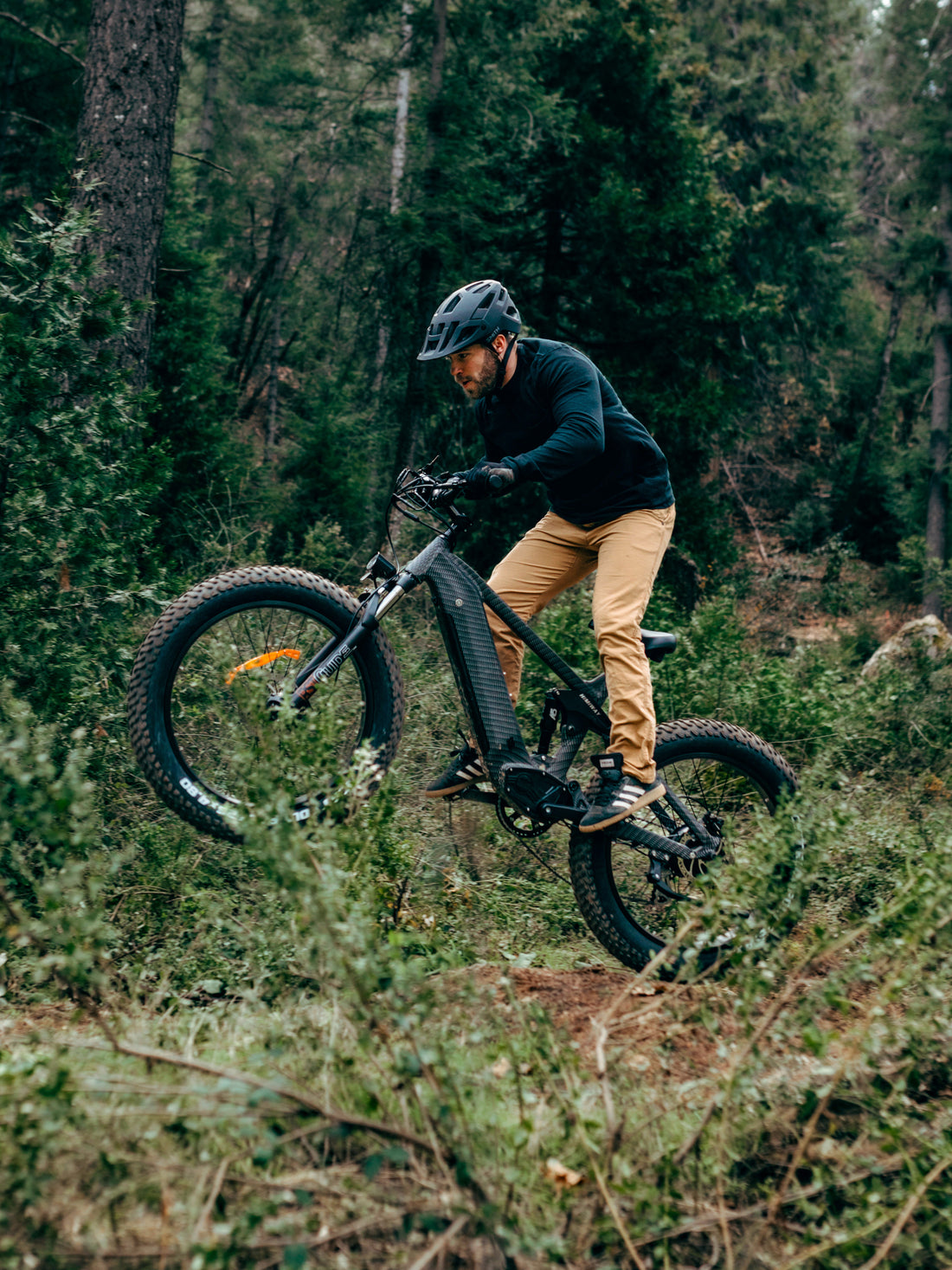
These are the conditions where full suspension fat tire e-bikes are genuinely unmatched among consumer e-bikes — not just "better," but a fundamentally different riding experience.
Snow: At 5–10 PSI, a 4.0"–4.8" fat tire creates a wide, soft contact patch that grips snow the way a snowshoe grips — by distributing weight over a larger surface rather than cutting through. Riders using fat tire e-bikes regularly commute through unplowed residential streets that would stop any standard tire e-bike. Full suspension keeps the rear wheel in contact with the snow surface even over icy bumps.
Mud: Moderate mud (trail mud, light off-road) is handled well by the wide tires — the knobby tread pattern on models like the Maxxis Minion clears mud from the lugs on each rotation. For deep, thick mud (river crossings, farm terrain), a mid-drive motor with higher torque (like the 160Nm D7 Pro) maintains more consistent power delivery than hub motors.
Gravel roads: This is arguably the sweet spot for the D5 2.0 with Maxxis Minion tires — fast enough to cover miles of gravel quickly, soft enough to handle the vibration without fatiguing the rider. At 15–20 PSI, gravel riding is comfortable and stable. Rear suspension absorbs the larger ruts and washboard sections.
- PSI guide: 5–10 PSI (deep snow/sand), 10–15 PSI (loose gravel/trail), 15–20 PSI (packed gravel/light trail), 20–25 PSI (pavement)
Related: Best e-bikes for winter commuting | Winter battery care guide