



What's the difference between pedal assist and throttle on an e-bike? Pedal assist provides motor power only when you're pedaling, amplifying your effort for a natural cycling feel. Throttle mode lets you control speed with a handlebar twist or button, requiring no pedaling—similar to a motorcycle. Most modern e-bikes, including Himiway models, offer both modes for maximum versatility.
Our aim in presenting this article is to provide a clearer understanding of the various modes of electric bike assistance, enabling you to make a more informed decision when making a purchase.
Throttle Mode
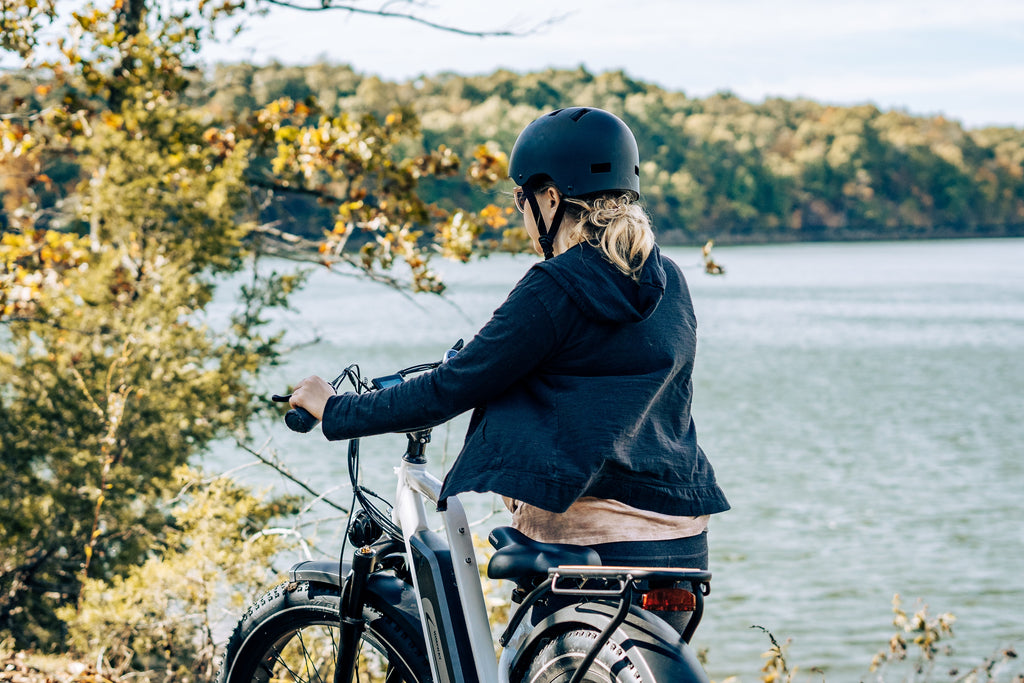
If you have ever ridden a motorcycle or a scooter, then using a throttle would not be difficult for you. You can engage the throttle mode for your e-bike to propel the bike forward regardless of whether you are pedaling, which could be a great help when you are feeling madly lazy but still want to achieve the satisfaction of having an escape from the city. Here are different types of throttle:
Half-Grip Twist Throttle
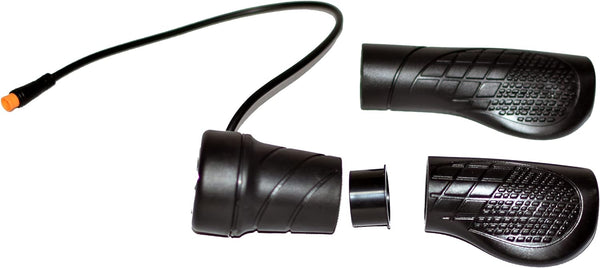 We are confident that our Himiway Moped-Style Electric Bike and All Terrain Fat Bike series can offer an unforgettable travel experience beyond the city's noise. In the meantime, compared to motorcycle riders, Himiway riders are more able to be friendly to the natural environment; we do not make remarkable noises. The combination of fat tire and throttle is thrilling for all the gamers, and we never age in this game.
Thumb Throttle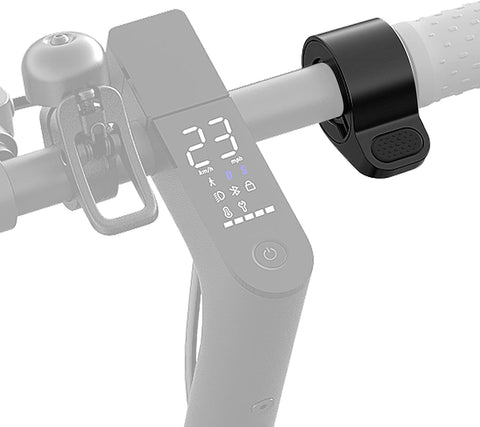
Thumb twist is a smaller option. A small lever protrudes, which you can press with your thumb to activate the throttle.
When to Use Throttle Mode
Many experienced riders report that throttle mode shines in specific situations. Quick starts from intersections are a prime example—using throttle helps you clear busy crossings faster, reducing your time in the most dangerous part of any ride.
Throttle mode also excels when navigating tight spaces or slow-speed maneuvering. In crowded bike paths, parking lots, or narrow trails, the throttle gives you precise control without the need to pedal, which can be awkward when you're moving slowly or need to keep your balance.
Pedal Assist Mode
Pedal assist mode transforms your riding experience by amplifying your natural pedaling effort. Instead of replacing your work, it enhances it—making hills feel flat, headwinds feel calm, and long distances feel achievable. This is the mode that riders who want exercise without exhaustion tend to prefer.
Levels of Pedal Assist
Himiway has five pedal assist settings, ranging from 1 to 5. To make this easier to understand, pedal assist is an operating mode on e-bikes designed to turn on the e-bike motor to help you pedal. When you are operating your bike in pedal assist mode, you can change the setting to make it work best for you.
- High pedal setting (L4/5) would be very helpful for people who want to get to somewhere quicker with minimum effort. It is perfect for people who want to be fresh at work and not to be sweating too much on their way.
- Low pedal setting (L1/2) is trendy to use after work for Himiways' users. It is the best to use it on the way home from work to work their stress out off the system throughout the entire day. Also, it would be a great fun to enjoy the ride without worrying to get their knee injured when they are having the long rides.
The beauty of multiple assist levels is that you can adjust your experience on the fly. Start with Level 3 for your morning commute, dial it down to Level 1 for an afternoon exercise ride, then bump it up to Level 5 when you're tired on the way home. This flexibility means one bike can serve multiple purposes throughout your day.
Different Types of Pedal Assist
Speed Sensor
The motor's assistance adjusts according to your speed. Speed sensors enable you to track your current speed and level of support accurately. At Himiway, we use these speed sensors to enhance your pedal-assist experience.
Torque Sensors
Torque sensors regulate the motor based on how hard you are pushing the pedals. It is essentially amplifying whatever power you are applying to the pedals. Many riders who experience torque sensing for the first time describe it as feeling like they have "always going slightly downhill"—the motor responds instantly to your effort, creating an incredibly natural and intuitive riding feel.
Riders with torque sensor systems often find they rarely use the throttle at all. The smooth, proportional assistance feels so natural that manual throttle control becomes unnecessary. This sensor type is particularly popular among cyclists transitioning from traditional bikes who want to maintain that connected riding experience.
How Does It Work?
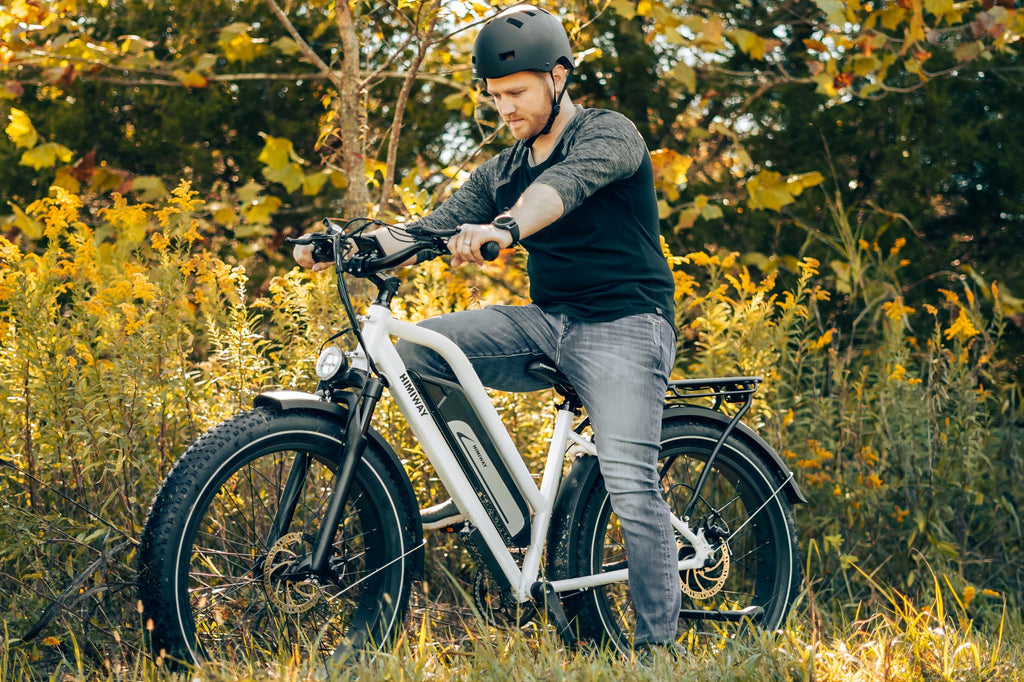
It's quite straightforward – pedal assist only provides support when you're actively pedaling. Simply pedal to activate it, and you're ready to go. The moment you stop pedaling, the motor cuts out, giving you total control over when you receive assistance.
When to Use Pedal Assist
Pedal assist is your best choice for longer rides where battery conservation matters. Riders consistently report that they can achieve 40-60% more range in pedal assist mode compared to throttle-only riding. If you're planning a 30-mile adventure, starting in PAS Level 2 or 3 will get you there and back with battery to spare.
Hilly terrain is where pedal assist truly shines. The motor amplifies your climbing power, allowing you to maintain a steady cadence uphill without burning out your legs or draining your battery. Many riders find they can conquer hills that would have been impossible on a traditional bike.
Perfect for Urban Commuters
If you're looking for a versatile e-bike that excels at both quick throttle starts and efficient pedal assist commuting, the Himiway A7 is designed specifically for city riders. With both throttle and pedal assist modes, you can navigate traffic with confidence and arrive at work fresh, not sweaty.
Pedal Assist vs Throttle: Side-by-Side Comparison
Understanding the differences between these two systems helps you choose the right mode for each riding situation. Here's how they stack up:
| Feature | Pedal Assist | Throttle |
|---|---|---|
| Battery Life | 40-60% more efficient; typical range 40-60 miles on PAS Level 2-3 | Consumes battery faster; typical range 20-35 miles on throttle only |
| Speed Control | Gradual, proportional to pedaling effort; smoother acceleration | Instant, direct control; immediate acceleration from standstill |
| Exercise Value | High - you're actively pedaling and burning calories | Low to none - motor does all the work |
| Learning Curve | Easy to moderate - feels natural if you've ridden a bike before | Very easy - twist or press to go, like a scooter |
| Legal Classification | Class 1 (PAS only, 20mph) or Class 3 (PAS only, 28mph) - fewer restrictions | Class 2 (PAS + throttle, 20mph) - some areas have additional regulations |
| Best Terrain | Hills, long distances, varied terrain | Flat terrain, urban environments, short distances |
| Physical Effort | Moderate - you control intensity with assist level | Minimal - no pedaling required |
| Riding Feel | Natural, integrated cycling experience | Motorcycle/scooter-like experience |
How Pedal Assist and Throttle Affect Your E-Bike Battery
Battery performance is one of the most important factors in e-bike ownership, and your choice between pedal assist and throttle dramatically impacts how far you can ride.
Range Comparison by Mode
Real-world testing shows significant differences in battery consumption. Using throttle exclusively, most e-bikes achieve 20-35 miles per charge, depending on terrain, rider weight, and speed. Switch to pedal assist at Level 2 or 3, and that same battery can take you 40-60 miles—sometimes even further.
The physics behind this difference is simple: when you pedal, you're contributing significant power to forward motion. The motor only needs to supplement your effort, not provide all of it. With throttle, the motor bears the entire load, drawing maximum current from the battery continuously.
Battery Conservation Strategies
Smart riders use a hybrid approach to maximize range. Start from stops with a brief throttle burst to get rolling, then switch to pedal assist for cruising. This technique—commonly used by experienced e-bike commuters—gives you quick acceleration without the sustained battery drain of throttle-only riding.
Another effective strategy is to match your assist level to the terrain. Use Level 1 or 2 on flat ground, increase to Level 3 or 4 for hills, and tap the throttle only when needed for quick maneuvers. This adaptive approach can extend your range by 30-50% compared to staying in high assist levels constantly.
Temperature and Mode Efficiency
Cold weather affects all lithium batteries, but throttle use in winter conditions drains batteries especially quickly. Pedal assist generates some battery warmth through moderate continuous draw, helping maintain efficiency. In temperatures below 40°F, riders often report that pedal assist mode provides 20-30% better range than throttle.
Maximum Range for Long Adventures
For riders who need serious range whether using pedal assist or throttle, the Himiway D5 2.0 delivers with its high-capacity battery system. Experience 60+ miles in pedal assist mode or 35+ miles even with throttle use—perfect for extended tours and all-day adventures.
Safety Tips for Pedal Assist and Throttle Riding
Both modes require awareness and proper technique to ride safely. Here's what you need to know.
Throttle Safety Considerations
Master gradual acceleration. The instant power of throttle mode can surprise new riders, especially from a complete stop. Practice in an empty parking lot to get a feel for how quickly your bike accelerates. Start with gentle thumb or twist pressure, increasing gradually as you gain confidence.
Watch your hand position. Long stretches of throttle-only riding can cause hand fatigue and cramping. Many riders report that alternating between throttle and pedaling prevents discomfort and keeps you more alert and responsive to road conditions.
Be extra cautious in wet conditions. Throttle acceleration on wet pavement or loose gravel can cause wheel slip. Experienced riders recommend reducing throttle power to 50-70% in these conditions and using pedal assist instead whenever possible.
Pedal Assist Safety Considerations
Remember the delay. Most pedal assist systems have a 0.5-1 second lag between when you start pedaling and when the motor engages. This is particularly important at intersections—start pedaling before you need the power, not exactly when you need it.
Downshift before stopping. Unlike throttle mode, if you forget to downshift before a stop sign or red light, you'll need to start pedaling in a high gear before the motor can help. This puts stress on your knees and the drivetrain. Make downshifting before stops a habit.
Expect higher speeds than traditional bikes. Pedal assist makes it easy to cruise at 18-25 mph, much faster than most regular cyclists. Increase your following distance, brake earlier, and be extra visible to drivers who may not expect a bike to be moving so quickly.
Intersection Safety for Both Modes
Intersections represent the highest risk scenario for cyclists. Many riders find that a quick throttle burst from a stop helps them clear the intersection faster, reducing exposure time. However, always look both ways first—speed doesn't replace awareness.
If using pedal assist through intersections, start in a lower gear and higher assist level (4 or 5) to ensure you can accelerate quickly if needed. Your goal is to minimize time in the danger zone where cars are turning across your path.

Choosing Your Ideal E-bike Mode
The selection of an e-bike often depends on your preference between throttle and pedal-assist mode. Both systems offer different benefits, catering to diverse riding intentions.
Throttle Mode: If you're using an e-bike due to physical considerations that make traditional biking inconvenient or unsafe, the throttle mode is an excellent choice. With this setting, you can enjoy your ride without the need for continuous pedaling – let the motor do the work. This mode is also ideal for cargo bike riders who need reliable power when carrying heavy loads or passengers.
Pedal-Assist Mode: If you seek an e-bike experience that delivers both transport and workout, pedal-assist mode is perfect. It provides proportional motor support relative to your pedaling efforts, so you get to enjoy the journey and engage your muscles at the same time. Riders who have switched from traditional bikes often prefer this mode because it maintains the cycling experience they love while removing the barriers of hills and distance.
The Hybrid Approach (Recommended)
The most versatile riding strategy uses both modes strategically. Start your ride with throttle to get through traffic and navigate complex intersections. Once you're on open roads or bike paths, switch to pedal assist Level 2 or 3 for efficient, enjoyable cruising. When you encounter a steep hill, either increase your PAS level to 4 or 5, or use throttle if you're already fatigued.
This combined approach maximizes the strengths of each system: throttle's instant power when you need it, and pedal assist's efficiency and natural feel for sustained riding. Most experienced e-bike riders report using this hybrid method for 80-90% of their rides.
To further enhance your understanding of these different riding modes, we encourage you to explore our detailed resources that provide informative insights into e-bike functionality.
Our Himiway Zebra and Himiway D5 2.0 offer both throttle and pedal-assist modes, allowing you flexibility and control in your ride. Choosing Himiway Bikes for your journeys, be it urban commutes or wilderness adventures, presents an opportunity for holistic well-being. We believe cycling can be a salve for both your body and soul, offering you a therapeutic escape regardless of your destination.

We hope you find this article helpful and that the information herein guides you to a suitable e-bike option. May your Himiway journey bring both excitement and tranquility, providing you with a greater sense of well-being. Enjoy the ride!
Most commuters use a combination of both modes. Throttle excels for stop-and-go city traffic, allowing you to accelerate quickly from red lights and stop signs without building up a sweat. Pedal assist shines for longer stretches where you want efficiency and some exercise. A typical commute strategy is: throttle through busy intersections and congested areas, then pedal assist at Level 2-3 for the majority of your route. This keeps you fresh for work while maximizing battery life for the round trip.
Making Your Decision: Throttle, Pedal Assist, or Both
After exploring both systems in depth, here are the key takeaways to guide your decision:
Choose primarily pedal assist if you:
- Want to maintain fitness while riding
- Need maximum range from your battery
- Prefer a natural cycling experience
- Ride mostly on trails that may restrict throttle use
- Come from a traditional cycling background
Choose primarily throttle if you:
- Have physical limitations that make pedaling difficult
- Want maximum convenience for short trips
- Ride primarily in urban stop-and-go traffic
- Use your e-bike for cargo or passenger hauling
- Prefer a scooter-like experience
Choose a bike with both modes if you want:
- Maximum versatility for different riding scenarios
- The ability to adapt to changing conditions and energy levels
- Options for different types of rides (fitness, commuting, recreation)
- The freedom to evolve your riding style over time
Action Checklist for Buyers:
- Test ride both modes before purchasing if possible—many shops offer demos
- Check local regulations for e-bike classes and where throttle bikes are permitted
- Consider your typical ride distance and whether battery range is a primary concern
- Assess your fitness goals and how much exercise you want from your e-bike
- Think about your terrain—hilly areas benefit more from pedal assist flexibility
- Factor in storage and charging—shorter range may be fine if you can charge daily
The good news? You don't have to choose just one. Himiway e-bikes offer both throttle and pedal assist modes, giving you the freedom to use whichever system fits your needs at any given moment. Explore our complete e-bike collection to find the perfect model for your riding style and goals.


