




Ebikes with Removable Battery

1000+Shop

2-Year Warranty

15-Day Trial

Free Shipping


Himiway D5 2.0 20" eBike
-
Full Suspension
Travel F:90mm R:100mm
-
Torque / Cadence
2 Riding Experiences
-
750W 90Nm
Geared Hub Motor
-
440 lb.
Payload Capacity


Himiway D5 2.0 ST eBike
-
Full Suspension
Travel F:100mm R:130mm
-
Torque / Cadence
2 Riding Experiences
-
750W 90Nm
Geared Hub Motor
-
Smart Auto
5 Assist System


Himiway D5 2.0 Camo eBike
-
Full Suspension
Travel F:100mm R:130mm
-
Torque / Cadence
2 Riding Experiences
-
750W 90Nm
Geared Hub Motor
-
Smart Auto
5 Assist System


Himiway D5 2.0 eBike
-
Full Suspension
Travel F:100mm R:130mm
-
Torque / Cadence
2 Riding Experiences
-
750W 90Nm
Geared Hub Motor
-
Smart Auto
5 Assist System


D7 / Full Suspension Electric Hunting Bike
-
80 Miles
Max Range
-
26x4.5
Super Fat Tire
-
Torque
Sensor
-
Hydraulic
Brakes


Himiway A7 Commuter eBike
-
Full Suspension
Travel F:120mm R:90mm
-
Torque / Cadence
2 Riding Experiences
-
Smart Auto
5 Assist System
-
70 Miles
Per Charge


Himiway A7 Pro Commuter eBike
-
Full
Suspension
-
500 W
Mid-Drive Motor
-
Torque
Sensor
-
Hydraulic
Brakes


D5(Zebra) / All-terrain Electric Fat Bike
-
Torque
Sensor
-
960 Wh
Samsung/LG Battery
-
80 Miles
Max Range
-
750W
Motor

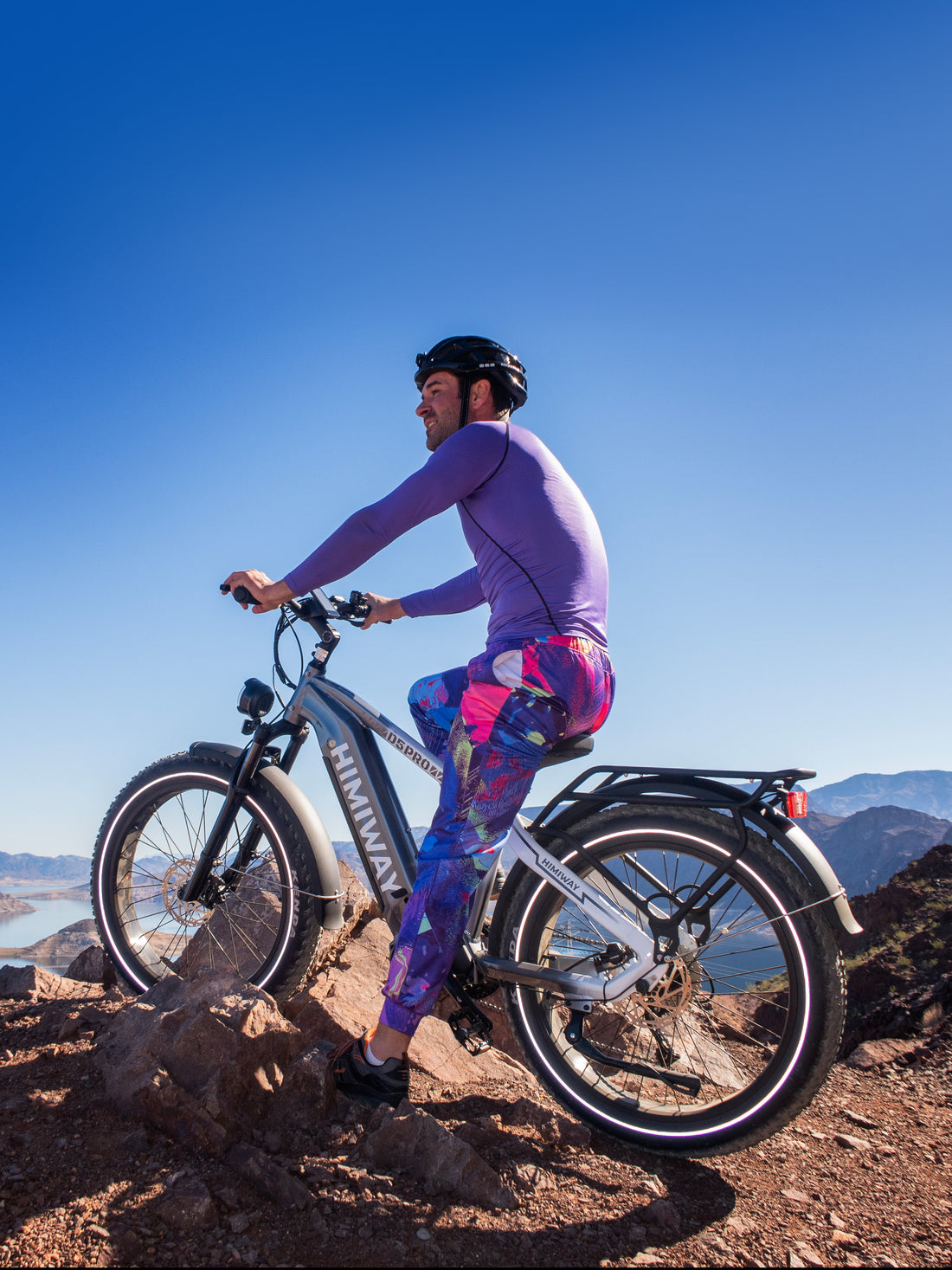
D5 Pro / All-terrain Electric Fat Bike
-
960 Wh
Samsung/LG Battery
-
80 Miles
Max Range
-
500 W
Mid-Drive Motor
-
20+ Mph
Top Speed

D5 Pro ST / All-terrain Electric Fat Bike
-
960 Wh
Samsung/LG Battery
-
80 Miles
Max Range
-
500 W
Mid-Drive Motor
-
20+ Mph
Top Speed


D5 ST(Zebra ST) / All-terrain Electric Fat Bike
-
Torque
Sensor
-
80 Miles
Max Range
-
400 lb.
Max Playload
-
Hydraulic
Brakes


B3 / Foldable Electric Commuter Bike
-
20"×2.4“
Commuter Tires
-
Torque
Sensor
-
2 Step
Folding
-
70 Miles
Per Charge


A3 / Urban Electric Commuter Bike ST
-
Torque
Sensor
-
70 Miles
Per Charge
-
500 W
Geared Hub Motor
-
720 Wh
Samsung/LG Battery


D3 ST(Cruiser ST) / All Terrain Electric Bike
-
50 Miles
Per Charge
-
750W
Motor
-
720 Wh
Samsung/LG Battery
-
350 lbs
Payload Capacity
E-Bikes with Removable Battery for Easy Charging & Total Security
All Himiway e-bikes feature removable batteries designed for ultimate convenience and security. Whether you live in an apartment without ground-floor access, need to prevent battery theft, or want the flexibility to charge at work, our UL-certified removable batteries unlock effortless charging anywhere. Simply remove the lightweight battery, plug it into any standard outlet, and power up without moving your entire bike.
Apartment-Friendly Indoor Charging
Charge your e-bike battery anywhere there's an outlet - no need to haul your 75-90 lb bike up apartment stairs or through tight hallways. Himiway's lightweight removable batteries (8-13 lbs depending on capacity) take approximately 4-6 hours to fully charge from any standard 110V outlet. Perfect for renters, condo owners, and urban dwellers without dedicated bike parking. Store your bike in the garage or hallway, carry only the battery to your living space for safe overnight charging.
Theft Prevention & Total Security
E-bike battery theft has increased significantly in recent years - protect your $500-800 battery investment by taking it with you. Each Himiway battery locks securely to the frame with a keyed lock system. Remove it when parking in public, at work, or overnight storage - a bike without its power source is far less attractive to thieves. The simple unlock-and-lift design takes 5 seconds, providing peace of mind wherever you park your electric bike with detachable battery.
Charge Anywhere - Home, Office, or Road
True flexibility means charging wherever life takes you. Bring your removable battery to your office desk, coffee shop outlet, or friend's house while you visit. With Himiway's fast-charging 2-3A chargers, you'll gain 20-30 miles of range per hour of charging. Forgot to charge overnight? Top up during your lunch break. Planning a long tour? Charge at hotels, campgrounds, or rest stops. The compact charger fits easily in a backpack alongside the battery for ultimate portability.
Extended Battery Life & Easy Replacement
Removable batteries enable climate-controlled storage at optimal temperatures during winter months, extending lifespan by 30-50% compared to bikes left in freezing garages. When your battery eventually reaches end-of-life after 1,000+ charge cycles (typically 3-5 years), replacement is simple - just order a new battery unit instead of buying a new $1,500-3,500 bike. Upgrade to higher capacity anytime: swap your 720Wh battery for 960Wh to gain 15+ extra miles without replacing your entire e-bike.
Top E-Bikes with Removable Battery
- Removable 720Wh UL2271 battery (65-mile range)
- Full suspension: 100mm front + 130mm rear travel
- 750W 90Nm motor, 400lb payload capacity
- Maxxis Minion 26x4.0" premium tires
- Switchable torque/cadence sensors
- Approximately 4-6 hour charging time, lightweight battery design
- Removable 720Wh battery, 65-mile range
- Full suspension: 120mm front + 90mm rear
- 750W 70Nm motor, 400lb payload
- 27.5x2.4" tires, 220mm wide comfort saddle
- Easy battery removal for office/home charging
- Massive removable 960Wh battery (60-80 mile range)
- Excellent value - impressive battery capacity per dollar
- Lightweight 79 lb design, 400lb payload
- 750W 86Nm motor with torque sensor
- Shimano 9-speed drivetrain
- Outstanding long-range removable battery option
Frequently Asked Questions About E-Bikes with Removable Batteries
How do I charge an e-bike with a removable battery in my apartment?
Charging a removable e-bike battery in your apartment is simple and takes just seconds. First, insert your key into the battery lock (typically located on the downtube or rear rack area), turn to unlock, then lift the battery straight up using the integrated handle. Most Himiway batteries weigh 8-13 lbs - about the same as a laptop bag - making them easy to carry upstairs.
Bring the battery to your apartment, plug the charger into any standard 110V wall outlet, then connect to the battery's charging port. A full charge takes approximately 4-6 hours from empty, though you can top up anytime without harming the battery thanks to modern Battery Management System (BMS) protection. The charger's LED indicator shows red while charging and turns green when complete.
For safety, charge on a hard, non-flammable surface away from curtains or bedding. Kitchen counters, desks, or tile floors work perfectly. Avoid charging in direct sunlight or near heat sources. If you're concerned about overnight charging, set a phone reminder - though Himiway batteries include overcharge protection that automatically stops charging when full.
One major advantage: you can charge during off-peak electricity hours to save money, or charge at work during the day while you're at your desk. Many apartment dwellers charge their battery under their desk or in a closet, keeping the bike itself in basement storage or a bike room. This dual-location strategy is impossible with non-removable battery electric bikes.
Winter tip: If you store your bike in an unheated garage or outdoor area during cold months, bring the battery inside before charging. Lithium batteries charge poorly below 32°F and can suffer permanent damage. Room temperature (around 65-75°F) ensures fastest, safest charging and extends your battery's 1,000+ cycle lifespan.
Are removable e-bike batteries safe from theft?
While no solution is 100% theft-proof, removable batteries dramatically reduce your risk. E-bike battery theft has become increasingly common in urban areas, with batteries often targeted more than the bikes themselves due to their $500-800 replacement cost and easy resale value. Your best defense is simple: take the battery with you.
Every Himiway e-bike features a keyed lock system that secures the battery to the frame. When locked, the battery cannot be removed without the key. However, determined thieves can sometimes defeat these locks with tools in 30-60 seconds. That's why security experts universally recommend removing your battery whenever you park in public for more than a few minutes.
Here's the practical approach: For quick stops (grocery store, coffee shop, friend's house), remove the battery and bring it inside with you. The 5-second removal process is faster than finding parking. For longer-term storage at work or home, combine strategies: remove the battery AND use a high-quality U-lock to secure your frame. A bike without its power source is far less attractive to thieves - it's essentially a 75 lb paperweight.
Additional security measures include: GPS trackers hidden in the frame, bike registration programs, and parking in well-lit, high-traffic areas with security cameras. Some riders add secondary cable locks through the battery compartment area as a visual deterrent. Consider homeowner's or renter's insurance that covers e-bike theft - many policies now include e-bikes with riders costing $50-150 annually.
The financial math is clear: a removable battery costs nothing extra (all Himiway models include this feature), while replacing a stolen battery costs $500-800 plus weeks of downtime. If you ride in urban areas, park at offices, or use public bike racks regularly, the ability to remove your electric bike with detachable battery isn't just convenient - it's essential theft protection.
How much does a removable e-bike battery weigh?
Himiway removable batteries weigh between 8-13 lbs depending on capacity. The standard 720Wh battery (found on the D5 2.0 and A7) weighs approximately 8-10 lbs, while the larger 960Wh battery (on the D5 Zebra and C3 Cargo) weighs 11-13 lbs.
For perspective, that's about the same weight as a gallon of milk or a loaded laptop backpack. Most people can comfortably carry this weight with one hand using the integrated handle molded into the battery casing. The handle is ergonomically designed with a rubberized grip to prevent slipping, even with wet or gloved hands.
The weight distribution matters: batteries are rectangular blocks measuring roughly 14" x 4" x 3", making them easy to tuck under one arm or place in a backpack. Some riders prefer dedicated battery bags with shoulder straps for longer carries (like walking from parking garage to office), though most find the built-in handle sufficient for typical apartment stair-climbing or office transport.
Compare this to moving your entire e-bike: Himiway models weigh 68-92 lbs total. Removing the battery reduces bike weight by 10-15%, but more importantly, you're carrying 10-13 lbs instead of 80+ lbs. For apartment dwellers on third floors or offices without elevators, this difference transforms daily logistics from impossible to trivial.
One practical tip: if you have physical limitations, consider the battery weight when choosing capacity. A 720Wh battery (8-10 lbs, 65-mile range) may be more manageable than a 960Wh battery (11-13 lbs, 80-mile range) if you're carrying it daily. Most riders find even the larger batteries easy to manage with practice. The time savings versus hauling an entire bike makes any momentary weight inconvenience worthwhile.
What's the best e-bike with removable battery for long range?
The Himiway D5 Zebra offers an excellent combination of removable battery capacity and value, featuring a massive 960Wh removable battery that delivers 60-80 miles per charge. This model provides exceptional range with a removable battery design at a competitive price point.
For riders needing even more range flexibility, the Himiway C3 Cargo also features the 960Wh removable battery with optimized energy efficiency thanks to its torque sensor and 20" wheels. This model achieves 80 miles maximum range while carrying up to 440 lbs of payload - ideal for grocery hauling, delivery work, or family cargo needs without sacrificing the ability to remove the battery for apartment charging.
If you prefer mid-drive power for hilly terrain while maintaining long range, the D5 Pro combines a 960Wh removable battery with a 500W 130Nm mid-drive motor, offering 60-80 mile range with superior hill-climbing torque. The mid-drive system provides more efficient power delivery on steep grades compared to hub motors, though range decreases slightly when using full power on climbs.
Battery capacity directly impacts range: 720Wh batteries provide 50-65 miles depending on terrain and rider weight, while 960Wh batteries extend this to 60-80 miles. Real-world range depends on factors like rider weight (heavier riders consume more power), terrain (hills drain batteries faster), assist level (throttle-only riding reduces range by 40%), temperature (cold weather decreases range 20-30%), and tire pressure (under-inflated tires increase rolling resistance).
Pro tip for maximum range: combine your removable battery with a spare. Carry a second fully-charged battery in a backpack for 120-160 mile total range. Swap batteries in 5 seconds without tools - far faster than waiting several hours for a charge.
Can I charge my e-bike battery without removing it?
Yes, all Himiway e-bikes with removable batteries can be charged while the battery remains mounted on the bike. Each model features an external charging port (usually protected by a rubber cover on the battery casing) that allows you to plug in the charger without removing the battery. This dual-charging capability gives you maximum flexibility.
When to charge on-bike: If you have ground-floor parking, a garage with electrical outlets, or secure outdoor storage near power, charging on-bike is convenient. It's also useful when you need to charge quickly at a friend's house or public charging station without dismounting the battery. Simply plug in, lock your bike, and charge.
When to charge off-bike: Apartment dwellers benefit most from removable charging. If your bike storage is far from electrical outlets (basement, outdoor shed, street parking), removing the battery eliminates long extension cord runs. Cold weather charging also favors removal - lithium batteries charge poorly below 32°F and can suffer damage. Bring the battery to room temperature (around 65-75°F) for optimal charging speed and longevity.
Security considerations matter: charging on-bike in public requires constant supervision. An unattended e-bike plugged into a charging station invites theft of both the bike and the $500-800 battery. Even locked bikes are vulnerable when thieves see the charger cable (indicating valuable components inside). For public charging, remove the battery, lock the bike separately, and charge the battery in a secure location.
Weather protection: if you must charge outdoors, ensure the charging port connection stays dry. While Himiway batteries feature IPX5-IPX6 water resistance, charging ports are vulnerable when exposed. Never charge in rain, snow, or standing water. The rubber port cover should seal completely when not charging. For regular outdoor charging, consider weatherproof outlet covers or bring the battery indoors.
Battery lifespan tip: whether charging on or off the bike, avoid extreme temperatures. The optimal charging range is around 50-77°F. Charging in freezing garages or hot summer cars accelerates capacity degradation. One advantage of removable batteries: you control the charging environment, extending your battery's 1,000+ cycle lifespan by 30-50% through proper temperature management.
How long do removable e-bike batteries last?
Himiway removable batteries are rated for 1,000+ charge cycles and typically last 3-5 years with proper care. A charge cycle equals one full discharge from 100% to 0%, though most riders charge from 20-30% back to 80-90%, meaning you'll get more calendar time from your battery. After 1,000 cycles, Himiway batteries still retain approximately 80% of their original capacity.
Real-world lifespan varies based on usage patterns. Daily commuters charging 5 times per week complete about 260 cycles annually, reaching 1,000 cycles in approximately 4 years. Weekend recreational riders charging twice weekly need about 10 years to hit 1,000 cycles. Your riding frequency directly determines battery longevity - less frequent charging extends calendar lifespan significantly.
Removable batteries last 30-50% longer than non-removable batteries when properly stored. Why? You can control the charging environment. Store your removable battery at 50-60% charge in a climate-controlled space (optimal temperature around 50-77°F). Avoid hot garages (temperatures above 90°F accelerate degradation) and freezing sheds (cold damages lithium cells). Remove the battery during winter months if your bike stays in unheated storage.
All Himiway batteries use UL2271-certified Samsung or LG 21700 cells with advanced Battery Management Systems (BMS) that prevent overcharging, over-discharging, and overheating. The BMS also balances individual cell voltages, ensuring even wear across the 50-60 cells inside your battery pack. This protection extends lifespan compared to cheap batteries without sophisticated management.
Warranty coverage: Himiway provides a 2-year warranty on all removable batteries covering manufacturing defects. If your battery fails within 24 months due to workmanship issues (not crash damage or neglect), you'll receive a replacement at no cost. After warranty expiration, replacement batteries cost $500-800 depending on capacity (720Wh vs 960Wh).
Maximizing lifespan tips: avoid full discharges (recharge at 20-30% remaining), store partially charged (50-60% is ideal), keep at moderate temperatures, clean charging contacts monthly with rubbing alcohol, and avoid leaving the battery fully charged for weeks without use. Following these practices, many riders report 6-8 years of useful battery life before capacity drops below acceptable levels for their needs.
What's the difference between 720Wh and 960Wh removable batteries?
The primary difference is capacity and range: 720Wh batteries provide 50-65 miles per charge, while 960Wh batteries extend range to 60-80 miles. That extra 240Wh (33% more capacity) translates to approximately 15-20 additional miles depending on terrain, rider weight, and assist level usage.
Weight difference matters for daily carrying: 720Wh batteries weigh 8-10 lbs, while 960Wh batteries weigh 11-13 lbs. If you're carrying your battery up apartment stairs daily, that extra 2-3 lbs is noticeable. However, most riders find even the larger 960Wh battery manageable for regular transport. Consider your physical capabilities and frequency of battery removal when choosing.
Charging time differs proportionally: 720Wh batteries typically charge in approximately 4-5 hours from empty, while 960Wh batteries take approximately 5-6 hours using Himiway's standard 2-3A chargers. The 960Wh battery takes about an hour longer for a full charge due to its larger capacity. However, you're charging less frequently thanks to the extended range, potentially saving time overall.
Price varies by model: Models with different battery capacities are priced across various ranges. Check current pricing for specific models on the Himiway website, as prices may vary based on features and promotions.
Which models have each size? 720Wh batteries: D5 2.0 series, A7, A7 Pro, D3 Cruiser, A3, B3. 960Wh batteries: D5 Zebra series, D5 Pro series, D7 Pro, Cobra Pro, C3 Cargo.
When to choose 720Wh: If your daily commute is under 30 miles round-trip, you value lighter weight for frequent battery carrying, or you charge daily anyway regardless of remaining capacity. The 720Wh size is perfectly adequate for most urban commuters and recreational riders who charge after every ride.
When to choose 960Wh: If you ride 40+ mile round-trips, want multi-day range without charging, carry heavy cargo that increases energy consumption, ride in hilly terrain (hills drain batteries faster), or experience cold winters (cold weather reduces range 20-30%). The larger battery also means fewer total charge cycles over your ownership period, potentially extending battery lifespan by 20-30%.
Can I buy a spare removable battery for extended rides?
Yes, Himiway sells spare batteries separately, and using a dual-battery strategy is excellent for touring, long commutes, or multi-day adventures. A spare battery effectively doubles your range: combine two 960Wh batteries for 120-160 total miles, or two 720Wh batteries for 100-130 miles depending on terrain and riding style.
Cost considerations: Spare batteries range $500-800 depending on capacity. A 720Wh replacement costs approximately $500-600, while a 960Wh battery runs $650-800. This is significantly cheaper than buying a second e-bike, and you can swap batteries in 5 seconds versus waiting several hours for a charge.
Installation is tool-free: Simply slide the spare battery into the mounting bracket on your frame and push until it clicks and locks. The keyed lock secures it in place. To swap batteries mid-ride: unlock and remove the depleted battery (5 seconds), insert the fresh battery (5 seconds), lock it (2 seconds), and continue riding. Total swap time: 15 seconds including unlocking the bike lock.
Carrying strategies: Most riders use a backpack to carry the spare battery. The rectangular 14" x 4" x 3" shape fits standard hiking backpacks. Some prefer dedicated battery bags with padded compartments and shoulder straps. Weight distribution matters: an 11-13 lb battery on your back is noticeable on long rides, but manageable for most riders. Alternatively, strap the spare to a rear rack using cargo nets or bungee cords.
Which models support dual batteries? All Himiway models accept spare batteries, but only one battery can power the bike at a time (you manually swap when depleted). Some riders build custom dual-battery mounts using Y-cables and external battery holders, though this requires electrical modifications not officially supported by Himiway. The standard approach - carrying one spare and manually swapping - is safer and warranty-compliant.
Touring and camping use cases: Dual batteries enable genuine long-distance touring. Ride 60-80 miles on battery one, swap to battery two for another 60-80 miles, then charge both overnight at your campground or hotel. This strategy supports 100-150 mile daily distances with only nightly charging. Some bicycle tourists report crossing entire states using two 960Wh batteries and charging every 1-2 days at RV parks or motels.
Maintenance tip: if you buy a spare battery, rotate usage evenly. Don't always use the same battery while keeping the spare for "emergencies only." Lithium batteries degrade even when unused (about 2-5% capacity loss per year from calendar aging). Regular rotation ensures both batteries age evenly and you don't discover your "emergency" spare has degraded from years of storage.
Are Himiway removable batteries UL certified and safe?
Yes, all Himiway removable batteries carry UL2271 certification - the gold standard for e-bike battery safety. This certification requires rigorous testing including crush tests, overcharge protection, short-circuit resistance, thermal stability, and fire hazard evaluation. Additionally, complete Himiway e-bikes are UL2849 certified, covering the entire electrical system integration.
What UL2271 certification means: Independent testing labs subject batteries to extreme conditions that exceed normal use. Tests include: overcharging to 150% capacity (ensuring automatic shutoff), external short circuits (verifying the battery doesn't catch fire), crush and impact tests (simulating crashes), thermal runaway prevention (stopping one cell failure from cascading to others), and altitude/temperature cycling (ensuring performance across a wide temperature range).
Cell quality matters: Himiway uses Samsung or LG 21700 lithium-ion cells - the same cells found in electric vehicles and power tools from premium brands. These cells are manufactured to automotive-grade standards with built-in safety features. Cheap e-bikes often use generic cells without proper testing, which can lead to safety issues.
Battery Management System (BMS) protection: Every Himiway battery contains a sophisticated BMS computer that constantly monitors 50-60 individual cells. The BMS prevents overcharging (stops at 100%), over-discharging (cuts power at 5-10% remaining), overheating (shuts down above safe temperatures), overcurrent (limits motor draw), short circuits (instantly disconnects), and cell imbalance (equalizes voltage across cells). This multi-layer protection makes catastrophic failure extremely unlikely.
Fire safety record: Himiway maintains a strong safety record with proper battery usage. Battery incidents reported in news stories typically involve cheap no-name brands, modified batteries, damaged batteries used after crashes, or charging with incompatible third-party chargers. Using Himiway batteries as designed with Himiway chargers carries minimal fire risk.
Cold weather safety: Unlike some batteries that can fail when charged below freezing, Himiway BMS systems detect low temperatures and reduce charging current to safe levels. However, you should still avoid charging below 32°F when possible - bring your removable battery indoors to room temperature before charging. This protects both safety and battery longevity.
Crash damage protocol: If you crash your e-bike and the battery shows physical damage (dents, punctures, swelling, or leaked fluid), stop using it immediately and contact Himiway support. Never charge a visibly damaged lithium battery. The removable design makes this safer - you can easily inspect the battery casing for damage after any impact, unlike integrated batteries hidden inside frames.
How do I store my removable e-bike battery during winter?
Proper winter storage extends your removable battery's lifespan by 30-50%. The key is temperature control: lithium batteries degrade rapidly below 32°F and above 90°F. If you're not riding during winter months, remove the battery from your e-bike and store it indoors at room temperature (optimal range around 50-77°F, ideal around 65-75°F).
Optimal charge level for storage: Store your battery at 50-60% charge, not fully charged or empty. Storing fully charged accelerates capacity degradation (you could lose significant capacity per year vs. minimal loss at partial charge). Storing completely empty risks over-discharge damage where voltage drops below safe levels. Check the battery display before storage - 3-4 bars out of 5 indicates proper storage charge.
Monthly maintenance required: Even during storage, lithium batteries self-discharge 2-5% per month. Check your battery monthly and recharge to 50-60% if it drops to 2 bars or below. This 10-minute monthly check prevents deep discharge damage that can permanently reduce capacity or even "brick" the battery. Set a recurring phone reminder for the first of each month.
Storage location matters: Choose a climate-controlled space away from temperature extremes. Closets, under beds, or garage storage shelves work well if heated. Avoid unheated sheds, car trunks, or outdoor storage where temperatures swing wildly. Also avoid hot attics (summer heat above 90°F damages cells) or next to furnaces and water heaters.
Why remove the battery from the bike: Even if you store your e-bike in a heated garage, removing the battery provides extra protection. It prevents accidental discharge from parasitic draws (some displays consume tiny amounts of power when "off"), makes monthly charging easier (no need to access the garage), and eliminates theft risk if your garage isn't secure. The 5-second removal process is worth the protection.
Humidity control: While less critical than temperature, avoid extremely humid environments (above 80% relative humidity) that can corrode charging contacts. If storing in a damp basement, place the battery on a shelf (not the floor) and consider a small dehumidifier. Wipe the charging contacts with rubbing alcohol on a cloth every 2-3 months to prevent oxidation.
Spring preparation: When ready to ride again after winter storage, charge the battery to 100% indoors before installation. Let it reach room temperature if it was in cold storage (allow 2-4 hours). Check for any physical damage, swelling, or corrosion on contacts. If the battery won't charge or shows error codes, contact Himiway support - don't force it. A well-stored battery should wake up perfectly after months of winter rest and provide the same performance as before storage.
Why HIMIWAY ?
Ride Further Together
Himi Riders
Recognition from knights around the world
5-Star Reviews
The knights give an honest opinion
Professional Review
What the professional media really thinks of us




Bikes for Every Ride


Find a Local Himiway Shop Near You
Looking for a hands-on experience?
Find a Himiway electric bike shop near you and schedule a test ride today.