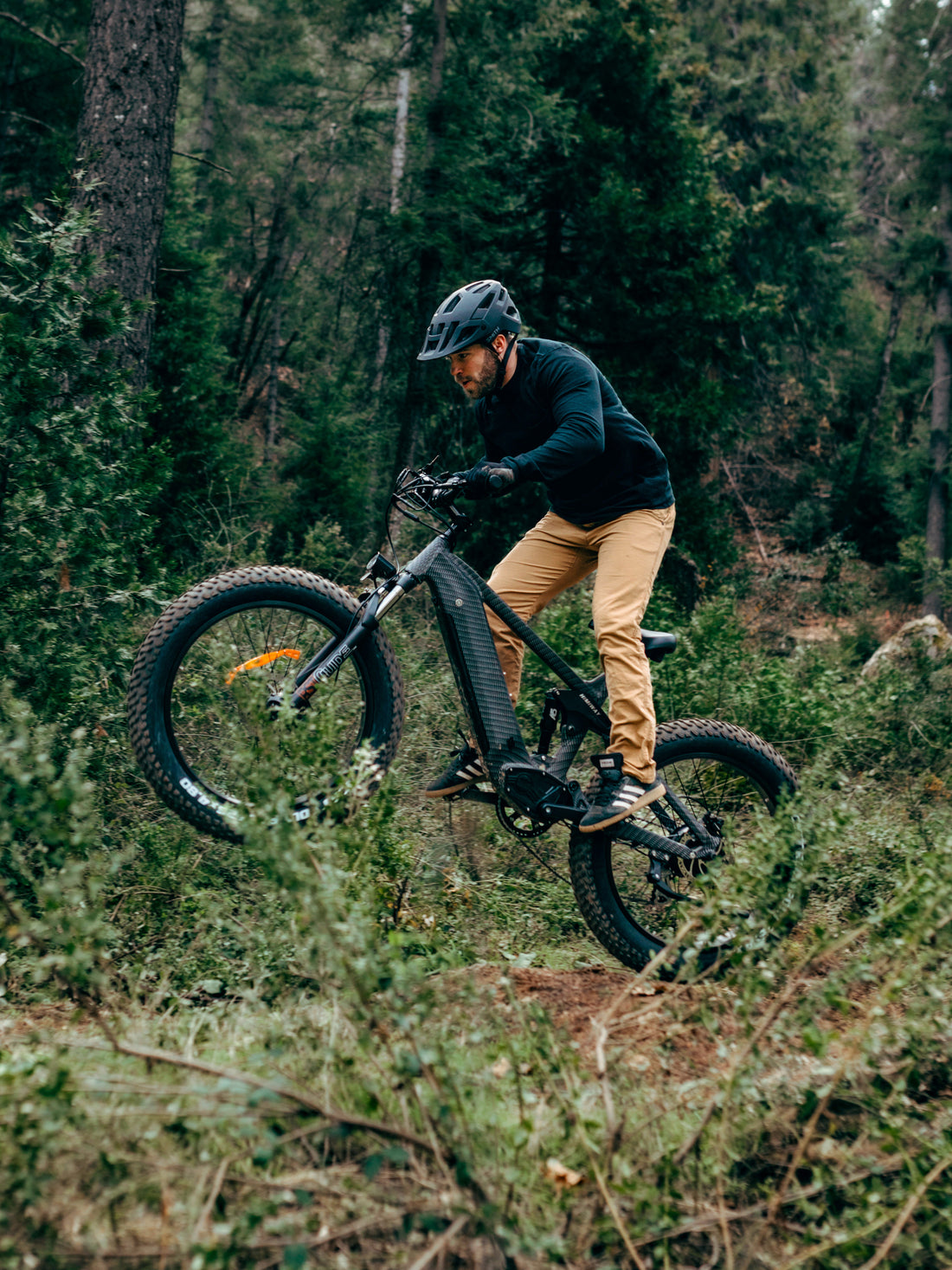
user custom ebike

user custom ebike

1000+Shop

2-Year Warranty

15-Day Trial

Free Shipping

Custom eBike: Build It Your Way on a Platform That Lasts

Most experienced riders don't build from scratch — they buy a solid base bike and make it theirs over time, swapping components as they learn what they actually want.

What Makes a Great Custom eBike Platform

🔧 Standard Parts You Can Actually Source

  • Shimano 8-speed drivetrain — every bike shop on the planet carries Shimano chains, cassettes, and derailleurs. No hunting for proprietary replacements
  • Tektro hydraulic disc brakes — standard mineral oil brake pads and caliper components available at most shops and online retailers
  • Standard 31.8mm handlebars — the universal diameter for aftermarket bars, stems, and computer mounts
  • 135mm quick-release rear dropout — compatible with the widest range of aftermarket wheel and hub options
  • Standard seatpost diameter — lets you swap in a suspension seatpost, dropper post, or ergonomic post from any third-party brand

🎨 Personalize Ergonomics & Aesthetics

  • Adjustable stem (0–60°) — dial in your exact riding position before spending on aftermarket parts; many riders find stock adjustment is all they need
  • Saddle swap (first upgrade most riders make) — any saddle with a standard two-bolt rail clamp fits. Wide memory foam, narrow performance, or cutout relief saddles all mount directly
  • Handlebar customization — rise bars, swept-back cruiser bars, or flat XC bars all use the standard 31.8mm clamp. Change the whole feel of the bike for under $40
  • Grip and pedal upgrades — lock-on grips with ergonomic palm support and platform pedals with more pins dramatically improve comfort and control
  • Color and camo options — the D5 2.0 Camo starts with a factory-applied hunting camouflage for riders who want a distinct look from the first ride

⚡ Expand What the Bike Can Do

  • MIK HD rear rack ecosystem — one-click mounting standard for panniers, cargo bags, child seats, and grocery baskets from dozens of compatible brands
  • Integrated headlight wiring — add-on lights can connect to the bike's battery via the accessory port; no separate battery required
  • GPS tracker + bike alarm — aftermarket GPS units (AirTag, Apple Find My, or dedicated bike trackers) fit inside handlebar ends, under the saddle, or inside the frame without modifying the bike
  • Suspension seatpost upgrade — a 27.2mm suspension seatpost adds 30–50mm of vertical compliance for rough terrain without touching the frame
  • Fender and mudguard mounts — standard fender eyelets on the fork and rear dropout accept aftermarket fender sets for year-round all-weather riding

Best Base Platforms for a Custom eBike Build

🏆 Best All-Around Customization Platform

Himiway D5 2.0 eBike

The D5 2.0 is the cleanest starting canvas in the lineup for a custom build. It ships with Shimano 8-speed (standard cassette and chain), Tektro hydraulic brakes (standard pads and fluid), and a 31.8mm handlebar clamp — every component sourced from the mainstream bike parts ecosystem. The 26" × 4.0" fat tire clearance accepts a wide range of aftermarket Maxxis, Schwalbe, and Kenda tires from commuter-width to maximum-volume. Add a suspension seatpost, upgrade the saddle, and bolt on a MIK rear rack system: this is what experienced builders mean when they say "a good bike is a starting canvas."

Drivetrain: Shimano 8-speed (standard parts)
Brakes: Tektro HD-E350 hydraulic
Handlebar: 31.8mm clamp (universal)
Motor: 750W / 90Nm torque sensor
View Bike →

🌿 Best for Visual Identity & Style Customization

Himiway D5 2.0 Camo eBike

For riders who want a distinctive aesthetic from day one without custom paint, the D5 2.0 Camo starts the conversation differently. Factory-applied camouflage separates it visually from every other e-bike on the trail, making it the strongest starting point for riders who prioritize visual identity alongside mechanical capability. All technical specs match the standard D5 2.0 — same Shimano drivetrain, same Tektro hydraulic brakes, same 90Nm torque sensor motor, same MIK rack compatibility. Add Camo-matched accessories (saddle bag, grips, frame bag) and the cohesive look builds itself.

Aesthetic: Factory camouflage finish
Drivetrain: Shimano 8-speed
Motor: 750W / 90Nm torque sensor
Suspension: Full (100mm front + 130mm rear)
View Bike →

⚙️ Best for Mechanical Tinkerers & Mid-Drive Enthusiasts

Himiway A7 Pro Commuter eBike

The A7 Pro's mid-drive motor is the configuration that experienced DIY eBike builders consistently recommend for a starting platform. Unlike hub motors, a mid-drive works through the bike's gearing system — which means drivetrain upgrades (cassette swaps, chainring changes) directly affect how the motor performs, giving you granular tuning control without touching the electronics. The Shimano gear sensor integration, standard cable housing routing, and open accessory port make the A7 Pro the most "tinkerer-friendly" bike in the lineup for riders who plan to modify beyond accessories.

Motor type: Mid-drive (works through gears)
Drivetrain: Shimano gear-sensor integrated
Rack: MIK HD (60 lb rated)
Saddle: 220mm memory foam (often the first swap)
View Bike →

Frequently Asked Questions

Real questions from riders who want to build, upgrade, or personalize their eBike.

Pre-Built and Modify, or Build from Scratch?

Is it worth building a custom eBike from scratch, or should I start with a pre-built and modify it?

The experienced answer: unless you have a very specific performance goal that no pre-built bike achieves, buying a quality pre-built and modifying it is the better path for most riders. Here's why:

  • Pre-built bikes include engineering you'd pay separately for: a complete e-bike system (motor, controller, BMS, display, wiring harness, battery) that works together out of the box has taken significant engineering effort. Sourcing these components individually and making them work reliably together requires electronics knowledge and debugging time
  • The warranty covers the hard-to-replace parts: motor, battery, and controller — the most expensive failure points — are covered under the 2-year warranty on pre-built bikes. DIY builds cover none of these
  • Parts availability matters long-term: a pre-built bike using Shimano drivetrain and standard hydraulic components means you can source replacement parts from any bike shop. Many DIY builds use controller-motor combos that become orphaned when the supplier changes products
  • DIY wins when: you need a specific motor type or power level not available in pre-built form, you want full control over every component, or you genuinely enjoy the building and tuning process as part of the hobby

The most common path experienced riders describe: buy a solid pre-built, ride it for a few months to understand what you actually want to change, then upgrade the parts that genuinely improve your experience.

See also: Best off-road electric bikes for adults

What's the real difference between buying a pre-built and customizing it vs building one yourself?

The distinction is where you spend your time and what you get control over:

Pre-built + customize: You control the riding experience — frame geometry, fit, component quality, accessories, aesthetics. The electrical system (motor, battery, controller, display) is pre-engineered and warrantied. This is where most riders live, and it covers 90% of the "I want my bike to feel and look different" goals.

DIY from scratch: You control everything, including motor power, battery voltage, controller programming, and power mapping. This is where you can build a bike that reaches 30+ mph, uses a 72V system, or has custom torque curves. The tradeoff: every component interaction is your problem to solve, and troubleshooting electrical issues requires multimeter-level knowledge.

A practical middle path many tinkerers use: buy a pre-built bike, ride it stock for 3–6 months, then decide which one or two things actually limit your experience. A saddle swap and new tires changes how the bike feels more than most people expect — and often that's enough. Deeper electrical modifications (controller reprogramming, motor swaps) are for riders who have already maxed out the accessible modifications and know exactly what they're chasing.


What Can I Actually Upgrade on a Pre-Built eBike?

What components can I realistically change on the D5 2.0 or A7 without voiding the warranty or needing specialized tools?

The modifications that don't require electrical knowledge and won't affect your warranty:

  • Saddle: The most impactful upgrade for most riders. Any saddle with a standard two-bolt rail clamp fits. Swap in 5 minutes with an allen wrench. No tools beyond a 4mm hex key
  • Grips: Lock-on grips with ergonomic palm support replace the stock grips without tape or glue. Barend plugs included. 10 minutes, no special tools
  • Pedals: Standard 9/16" pedal thread is universal. Upgrade to platform pedals with more pins for better foot grip, or clipless pedals if you're a more serious cyclist. Standard pedal wrench or 8mm hex
  • Tires: A tire swap requires removing the wheel, breaking the bead, and mounting the new tire — straightforward with tire levers and a floor pump. The D5 2.0's 26" rim accepts any 26" × 3.5"–4.8" fat tire
  • Handlebar stem position: The 0–60° adjustable stem changes riding position significantly before you commit to a new handlebar purchase. Adjust it through its full range first
  • Rear rack and accessories: MIK-compatible rack accessories mount without tools. Standard fender eyelets accept 4mm bolts

Components that require more skill and may affect warranty (confirm with support before modifying): handlebar replacement, suspension fork service, brake bleed, electrical system modifications.

Which single upgrade makes the biggest real-world difference to how the bike rides?

Almost universally, the answer from experienced riders is tires — and specifically, tire pressure.

The single most impactful "upgrade" you can make to a fat tire e-bike costs nothing: adjust your tire pressure for your terrain and riding style. Most bikes ship at a moderate pressure that works acceptably everywhere but excels nowhere.

  • Packed gravel and light trails: 15–18 PSI. The tire conforms to surface irregularities, providing grip and absorbing small impacts. This transforms how the bike feels on unpaved surfaces
  • City pavement and smooth paths: 22–25 PSI. Lower rolling resistance, more responsive steering, faster-feeling ride. Many riders who "find their bike feels sluggish" simply need to inflate the tires
  • Sand and deep mud: 10–12 PSI. Maximum tire contact patch for floatation. Only practical if your terrain genuinely requires it

After tire pressure, the next highest-impact component swap is the saddle. A saddle that fits your sit bone width and riding position eliminates the #1 complaint among new riders (discomfort on rides over 30 minutes) and is a 10-minute, $30–$80 upgrade.

I want to upgrade the suspension fork — can I swap in a higher-quality fork on the D5 2.0?

A fork swap on a fat tire e-bike is a more involved modification than most accessories, but it's technically feasible for mechanically inclined riders. Key specs to match:

  • Steerer tube diameter: 28.6mm (1-1/8" tapered or straight) — match your existing headset
  • Axle width: 135mm or 150mm — must match the front hub width of the D5 2.0's wheel
  • Tire clearance: The replacement fork needs to clear at minimum 4.0" wide tires at 26" diameter. Many "fat fork" compatible options specify this in their product listing
  • Brake mount: Post mount (most common) — confirm with the fork spec sheet

If the goal is simply more suspension compliance, a suspension seatpost is a significantly easier modification with a meaningful comfort improvement: a 27.2mm suspension seatpost (with a shim if needed) adds 40–50mm of vertical travel and costs a fraction of a fork upgrade.

For riders seriously considering a fork upgrade: start with tire pressure adjustments and a seatpost — in many cases they address the underlying comfort concern without the complexity of a fork swap.

Choosing the Right Starting Platform

I want to customize a commuter eBike — starting from the A7 vs the D5 2.0 ST, which gives me more to work with?

For commuter-focused customization, the A7 and D5 2.0 ST offer different upgrade directions:

A7 as a commuter platform: The MIK HD rear rack (60 lb rated) is the strongest cargo mounting system in the lineup — it opens up the full ecosystem of MIK-compatible panniers, cargo bags, child seats, and basket attachments from multiple brands. The 27.5" × 2.4" tires accept a wide range of aftermarket hybrid, commuter, and even slightly wider touring tires. The memory foam saddle is already among the most comfortable in the lineup, so the usual "first upgrade" is often not needed. Customize focus: lighting, GPS security, panniers, fenders.

D5 2.0 ST as a commuter platform: The 4.0" fat tires are harder to upgrade (fewer aftermarket options than standard widths), but they handle any surface your commute throws at them without needing different tire setups. The step-through frame is more convenient for frequent stop-and-start urban riding. Customize focus: saddle, lighter aftermarket handlebars, MIK rack accessories.

If your commute is primarily paved and you want maximum cargo expandability: A7. If your route includes mixed surfaces or you value the step-through convenience: D5 2.0 ST.

Browse: Best eBikes for hilly commutes | Best eBike for errands

What does the Camo model actually offer beyond the paint job? Is it the same bike?

Mechanically yes — the D5 2.0 Camo uses identical specifications to the standard D5 2.0: same 750W motor, same 90Nm torque sensor, same Shimano 8-speed drivetrain, same Tektro hydraulic brakes, same 100mm front + 130mm rear suspension travel.

Where it differs is in application and rider profile:

  • Factory camouflage finish — applied to the frame and fork during manufacturing. More durable than aftermarket vinyl wraps or rattle can paint because it's done before final assembly
  • Visual cohesion starting point — riders who want a distinctive aesthetic find the Camo a better base than starting with a black or silver bike and adding aftermarket elements piecemeal
  • Trail and hunting context — the camouflage is specifically effective for hunters who want the bike to blend into a woodland environment and not reflect light at dawn or dusk

For style-focused customizers: the Camo provides a ready-made identity that's difficult to achieve with aftermarket vinyl on a plain frame. For pure trail riders who want a unique look without the visual attention a brightly colored bike draws: the Camo handles both goals simultaneously.

Related: Best electric bikes for hunting

Why do experienced eBike builders prefer mid-drive motors for custom builds?

This preference comes down to how the motor interacts with the rest of the drivetrain:

Hub motor (D5 2.0 series): The motor is housed in the rear wheel hub. It drives the wheel directly, independent of the bike's gears. Upgrading to a larger cassette or different chainring changes the pedaling feel, but doesn't change how the motor delivers power. The motor runs at one effective gear ratio all the time.

Mid-drive motor (A7 Pro): The motor drives the crankshaft. Its power goes through the bike's gearing system before reaching the rear wheel. This means:

  • Shifting to a lower gear on a steep climb gives the motor better leverage — exactly as it works for your legs. The motor "gets stronger" as you shift down
  • Upgrading the cassette (more gears, wider range) expands the motor's effective operating range
  • Changing the front chainring size changes the motor's torque-to-speed ratio across all assist levels

For a tinkerer, a mid-drive system means that standard bike component upgrades — cassette, chainring, chain — have direct, predictable effects on the motor's behavior. A hub motor's performance characteristics are fixed by the motor hardware itself, not the surrounding drivetrain.

Mid-drive also provides better weight distribution (motor at the bottom bracket vs at the rear wheel) and more natural motor-off pedaling, which is why riders who use the bike in both motor-on and motor-off modes consistently prefer it.

Accessories, Add-Ons & Cargo Systems

What accessories can I add to create a more practical or purpose-built setup?

The most commonly added accessories, grouped by function:

Cargo and carrying:

  • MIK-compatible rear panniers — fit directly to the MIK HD rack with one-click mounting, no tools
  • Handlebar bag or stem bag — adds 3–10L of easily accessible storage for keys, wallet, phone, snacks
  • Frame triangle bag — uses space inside the main triangle, keeps weight centered low

Security:

  • GPS tracker (Apple AirTag, Samsung SmartTag, or dedicated bike GPS) — fits inside a handlebar end plug, under the saddle, or inside a frame bag without visible protrusion
  • Alarm sensor — vibration-triggered motion alarms mount under the saddle. Paired with a U-lock and chain, these are the standard urban anti-theft setup

Lighting:

  • Rear LED blinker — adds a high-visibility flashing mode the integrated tail light doesn't provide
  • Bar-end turn signal kit — more visible than hand signals in traffic; battery-powered units require no wiring

Comfort:

  • Ergonomic lock-on grips — the grip diameter change reduces hand fatigue on rides over 45 minutes significantly
  • Suspension seatpost — adds passive vertical compliance without touching the frame or suspension settings

Browse: eBikes with basket | eBikes with turn signals

Can I add a front cargo basket or front rack to the D5 2.0 or A7?

Front racks and cargo baskets on e-bikes require specific fork mounting points — eyelets on the fork legs and/or crown — and the weight capacity of the fork must match your intended load.

For the D5 2.0 series: the suspension fork's travel and stanchion design makes conventional front rack mounting impractical without a dedicated low-rider rack that mounts to the fork dropouts rather than the stanchions. A handlebar-mounted basket (typically 10–15 lb capacity) is the more practical front-carry option — these mount to the handlebar clamp and don't require fork eyelets.

For the A7: similar considerations apply. The most cargo-stable setup is a handlebar bag + rear MIK pannier combination, which keeps the heaviest items over the rear axle and lighter items within reach at the front.

Practical guideline: for total loads under 15 lbs, a handlebar bag works well. For 15+ lbs of cargo, use the MIK rear rack with panniers — rear-weighted cargo is significantly more stable than front-weighted cargo on any bike.

Technical, Battery & Safety Questions

Are the components standard parts or proprietary? If the company goes away, can I still get replacement parts?

This is one of the most important long-term questions to ask about any e-bike, and it's worth separating the answer into two categories:

Standard components (sourced anywhere):

  • Shimano 8-speed drivetrain (chain, cassette, derailleur, shifter) — industry-standard parts available at any bike shop globally
  • Tektro hydraulic brakes (pads, mineral oil) — widely available at bike shops and online
  • Maxxis tires — stocked at most outdoor retailers and bike shops
  • Standard saddle, handlebar, seatpost dimensions — universal spec, thousands of aftermarket options

Proprietary components (sourced through Himiway):

  • Motor — specific to the bike model, warrantied for 2 years
  • Battery — model-specific voltage/connector, UL 2271 certified. Battery management replacement if needed goes through Himiway support
  • Display unit — brand-specific, replacement sourced through Himiway warranty/support

Himiway, founded in 2017 with global distribution and a significant installed base, maintains parts availability for current and recent models. The realistic long-term concern (5+ years out) is motor and battery availability — the same concern that applies to any e-bike brand. The standard mechanical components will always be sourceable regardless of the brand's future.

I want to charge the battery at home in an apartment. Is it safe, and what should I actually do?

The UL 2271 battery certification on D5 2.0 and A7 series bikes addresses this concern directly. UL 2271 is the most rigorous independent safety standard for e-bike batteries in the US, testing for overcharge, short circuit, thermal stress, and runaway conditions — the failure modes that have caused residential e-bike battery fires.

Practical safe charging practice:

  • Remove the battery and bring it indoors: charge at room temperature (60–75°F), not in a hot garage in summer or below-freezing storage. Extreme temperatures during charging are the primary stress condition that degrades battery cells over time
  • Use only the included charger: third-party chargers that don't match the battery's specifications can bypass the battery management system's protection circuits
  • Don't leave charging unattended overnight indefinitely: a full charge takes 6–8 hours. Charge while you're awake and home, disconnect when full
  • Inspect periodically: if the battery case shows swelling, produces unusual heat during normal riding, or smells unusual — stop using it and contact support. These are early warning signs that require attention before charging

Many apartment buildings and condominiums with fire safety rules specifically accept UL 2271-certified batteries for indoor charging. If you need to document this for building management, UL 2271 is the certification to reference.

Browse: UL certified e-bikes | eBikes with removable batteries

Can I adjust the display settings, pedal assist calibration, or top speed limit on a Himiway bike?

The D5 2.0 and A7 series display units allow user-accessible settings for several parameters:

  • Assist level sensitivity: the ratio between pedal effort and motor response can be adjusted within the display settings menu — useful if you find Level 2 too aggressive or too mild for your terrain
  • Wheel circumference calibration: if you swap to a different tire size, update the wheel circumference setting so the speedometer and odometer remain accurate
  • Auto Assist threshold: the D5 2.0 series' Auto Assist mode has adjustable sensitivity — how aggressively the system shifts between assist levels based on terrain detection

Factory speed limit settings (Class 2: 20 mph motor cutoff, Class 3: 28 mph) are set at the controller level in compliance with local regulations. Modifying the factory speed limit settings affects the bike's legal classification as a bicycle vs. a motor vehicle and is the rider's responsibility to understand under their local law.

The Bluetooth-connected display supports over-the-air firmware updates from Himiway — these occasionally include display behavior adjustments and performance refinements that don't require a shop visit to receive.

Why HIMIWAY ?

Ride Further Together

491 K+

Himi Riders
Recognition from knights around the world

15 K+

5-Star Reviews
The knights give an honest opinion

1200 +

Professional Review
What the professional media really thinks of us

Local Shop

Learn More

2-Year Warranty

Learn More

15-Day Trial

Learn More

Free Shipping

Learn More

Bikes for Every Ride

Explore our diverse lineup designed to fit every rider and terrain

Mountain eBike

Kids eBike

City eBike

Cargo eBike

Folding eBike

Find a Local Himiway Shop Near You

Looking for a hands-on experience?
Find a Himiway electric bike shop near you and schedule a test ride today.