



Street Legal eBike for Adults


Himiway D5 2.0 20" eBike Easy to Maneuver. Built for Power.
-
Full Suspension
Travel F:90mm R:100mm
-
Torque / Cadence
2 Riding Experiences
-
750W 90Nm
Geared Hub Motor
-
440 lb.
Payload Capacity


Himiway D5 2.0 ST eBike Endless Comfort: Turning Rough Roads into Silk.
-
Full Suspension
Travel F:100mm R:130mm
-
Torque / Cadence
2 Riding Experiences
-
750W 90Nm
Geared Hub Motor
-
Smart Auto
5 Assist System


Himiway D5 2.0 eBike Endless Comfort: Turning Rough Roads into Silk.
-
Full Suspension
Travel F:100mm R:130mm
-
Torque / Cadence
2 Riding Experiences
-
750W 90Nm
Geared Hub Motor
-
Smart Auto
5 Assist System

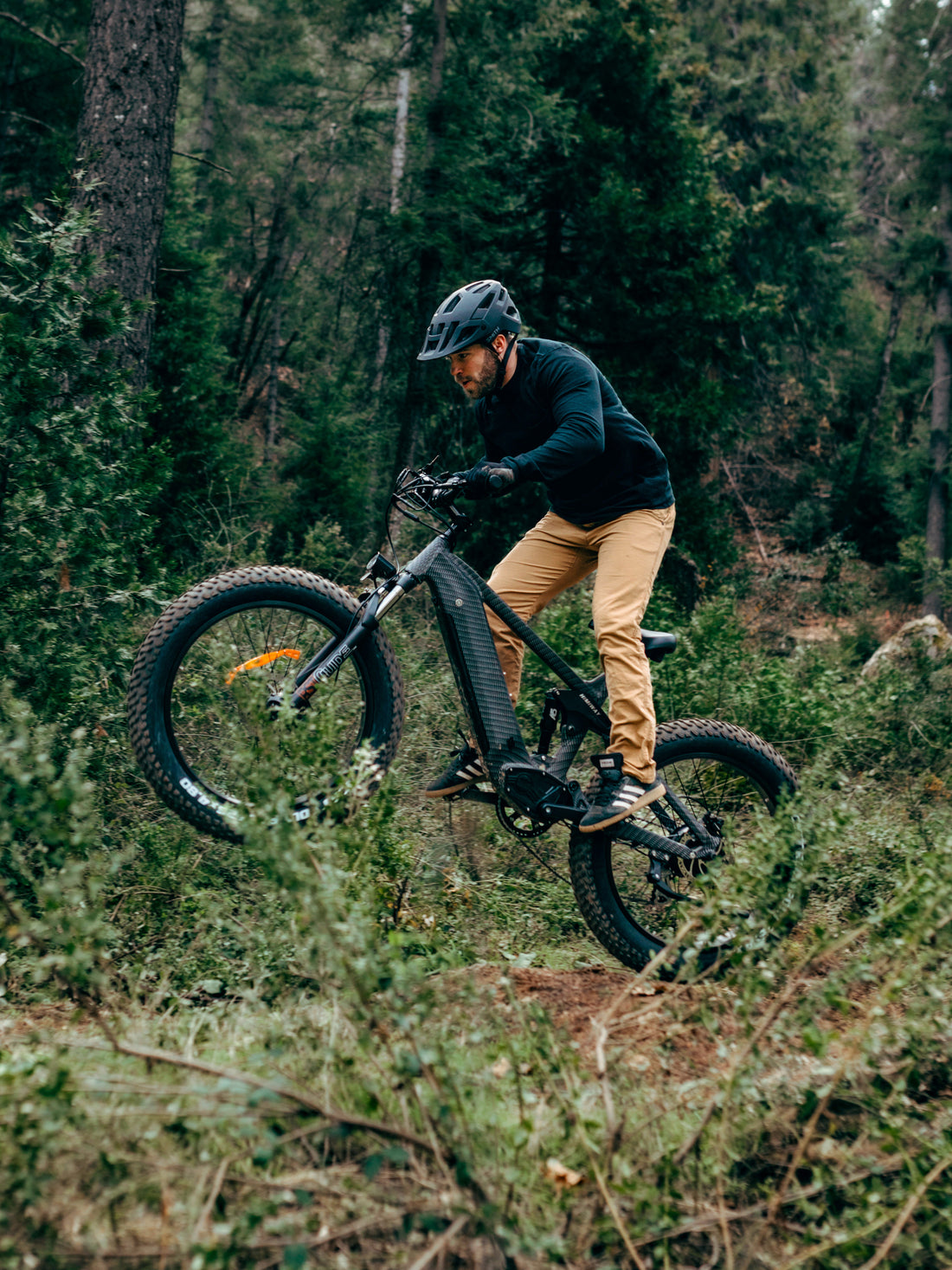
D7 / Full Suspension Electric Hunting Bike
-
80 Miles
Max Range
-
26x4.5
Super Fat Tire
-
Torque
Sensor
-
Hydraulic
Brakes


Himiway D7 Pro Mountain eBike Unstoppable mountain performance
-
1000 W
Mid-drive Motor
-
28 Mph
Top Speed
-
960 Wh
Samsung/LG Battery
-
80 Miles
Max Range


Himiway A7 Commuter eBike Full Suspension, Pure Comfort.
-
Full Suspension
Travel F:120mm R:90mm
-
Torque / Cadence
2 Riding Experiences
-
Smart Auto
5 Assist System
-
70 Miles
Per Charge


Himiway A7 Pro Commuter eBike Full Suspension, Mid-Drive Power.
-
Full Suspension
Travel F:120mm R:90mm
-
500 W
Mid-Drive Motor
-
Torque
Sensor
-
Hydraulic
Brakes


Himiway D5 2.0 Camo eBike Blend In, Ride Out: The Top Choice for Hunting
-
Full Suspension
Travel F:100mm R:130mm
-
Torque / Cadence
2 Riding Experiences
-
750W 90Nm
Geared Hub Motor
-
Smart Auto
5 Assist System
- Featured
- Most relevant
- Best selling
- Alphabetically, A-Z
- Alphabetically, Z-A
- Price, low to high
- Price, high to low
- Date, old to new
- Date, new to old
What Is a Street Legal eBike?
A street-legal eBike is an electric bicycle that you can legally ride on public roads, bike lanes, and paths without needing a driver's license, registration, or license plates. In most regions, it must function primarily like a regular bicycle and adhere to specific speed and motor power limits. Here is a breakdown of what makes an eBike street legal.
The Three-Class System
Most U.S. states and territories categorize street-legal eBikes into three distinct classes:
- Class 1: Pedal-assist only. The motor helps while you pedal and stops assisting at 20 mph.
- Class 2: Throttle-assisted. The motor can propel the bike without pedaling, up to 20 mph.
- Class 3: Pedal-assist only. The motor assists up to 28 mph and requires a speedometer.
Key Technical Limits
To maintain its legal status as a bicycle rather than a moped or motorcycle, an eBike must meet these criteria:
- Motor Power: The motor capacity cannot exceed 750 Watts (1 horsepower) in the U.S. (250 Watts in Europe).
- Top Speed: Motor assistance must cut off at 20 mph (Classes 1 and 2) or 28 mph (Class 3).
- Functional Pedals: The bike must have fully operable pedals propelled by human power.
Where You Can Ride
- Public Roads: Allowed on any road where regular bicycles are permitted.
- Bike Lanes: Classes 1 and 2 are universally allowed; Class 3 is sometimes restricted.
- Multi-Use Paths: Generally restricted to Class 1 and Class 2 eBikes.
Street Legal eBike Laws in the US
E-bike laws in the United States operate under a dual system where federal law regulates manufacturing and product safety, while state laws dictate how and where you can ride.
Most states recognize the standardized Three-Class System, ensuring that compliant e-bikes require no driver's license, registration, or insurance. However, state-level variations—including localized age, helmet, and equipment laws—create a complex regulatory landscape.
1. The Federal Definition vs. State Application
The federal government establishes what qualifies as an electric bicycle at the product level, while states control operations on public property.
- Federal Manufacturing Law (HR 727 / Consumer Product Safety Act): Enforced by the Consumer Product Safety Commission (CPSC), a "low-speed electric bicycle" is federally defined as a two- or three-wheeled vehicle with fully operable pedals, an electric motor under 750 Watts (1 hp), and a maximum motor-powered speed of 20 mph on a flat surface with a 170-lb rider.
- The Federal Purpose: This law ensures manufacturers can sell e-bikes under bicycle safety standards rather than strict motor vehicle safety standards. It does not automatically grant permission to ride them on state roads or trails.
- The Sticker Requirement: Under state adoption of the class system, manufacturers must permanently affix a classification label to the frame stating the e-bike's class, top assisted speed, and motor wattage.
2. State-Level Legal Frameworks
States generally split into three categories based on how they write their traffic codes:
Standardized Three-Class States
The vast majority of states (over 40 jurisdictions) have adopted the model legislation promoted by PeopleForBikes. In these states, Class 1, 2, and 3 e-bikes are legally categorized as traditional bicycles, exempting them from DMV registration, licensing, and insurance.
Modified or Capped Jurisdictions
A handful of jurisdictions recognize e-bikes but explicitly cap street-legality at 20 mph. Regions like Washington D.C., Kentucky, Massachusetts, Montana, North Carolina, Pennsylvania, and South Carolina do not recognize Class 3 (28 mph) e-bikes as bicycles. On public streets, Class 3 bikes in these areas may be treated as mopeds.
Outdated Moped/Scooter Classifications
A few states lack specific e-bike terminology. They rely on legacy codes that loop any motorized cycle into a "motor-driven cycle" or "moped" category, technically requiring structural additions like turn signals, a vehicle identification number (VIN), or license plates.
3. Key Legal Variations by State
| State | Three-Class System? | License & Registration | Helmet Rules | Key Unique Restrictions / Updates |
|---|---|---|---|---|
| California | Yes | None | Required for Class 3; mandatory for all under 18. | Effective 2026: Mandatory battery safety testing/labeling. Red rear reflector or light required at all hours. |
| Colorado | Yes | None | Required for Class 3 riders under 18. | Class 3 bikes are prohibited from pedestrian paths unless adjacent to a highway. |
| New Jersey | Reclassified | Required | Mandatory for all e-bike riders. | Strict rules: All e-bikes are "motorized bicycles." Requires an e-bike or driver's license and MVC registration. |
| Hawaii | No | Required | Mandatory for all riders under 18. | Requires a one-time registration fee. Riders under 16 can only ride Class 2/3 under direct adult supervision. |
| Alaska | No | Varied | No statewide mandate. | Treats e-bikes strictly as motorized vehicles on state trails and for hunting purposes. |
4. Critical Rules of the Road
- The "Out-of-Class" Trap: Modifying or "unlocking" an e-bike's software to exceed 28 mph or installing a motor over 750W instantly voids its legal status as an e-bike. It becomes an unregistered, illegal motor vehicle on public streets. Because these custom bikes lack a VIN, turn signals, and department certification, they cannot be registered or insured, leaving riders vulnerable to heavy fines and vehicle confiscation.
- Age Limits: While Class 1 and 2 e-bikes rarely carry statewide age restrictions, Class 3 e-bikes almost universally require the operator to be 16 years of age or older.
- Sidewalk Laws: Sidewalk riding is highly restricted. Even states that allow traditional bicycles on sidewalks frequently ban e-bikes from them, or defer the rule entirely to local municipal ordinances.
Class 1 vs Class 2 vs Class 3 Street Legal eBikes
The primary difference between Class 1, Class 2, and Class 3 street-legal eBikes is how the motor delivers power (pedal-assist vs. throttle) and the maximum speed at which the motor provides assistance.
Understanding these differences is critical, as they dictate who can ride the bike, where it can be ridden, and what equipment is legally required.
Comparison Overview
| Feature | Class 1 eBike | Class 2 eBike | Class 3 eBike |
|---|---|---|---|
| Drive Type | Pedal-Assist Only | Throttle & Pedal-Assist | Pedal-Assist Only* |
| Max Assisted Speed | 20 mph (32 km/h) | 20 mph (32 km/h) | 28 mph (45 km/h) |
| Throttle Allowed? | No | Yes | No* |
| Motor Cut-off | At 20 mph | At 20 mph | At 28 mph |
| Speedometer Required? | No | No | Yes |
| Typical Minimum Age | None | None | 16 years old |
| Helmet Required? | Age-dependent | Age-dependent | Yes (usually all ages) |
*Note: A few states allow Class 3 eBikes to have a throttle, but it must strictly cut off at 20 mph, while the pedal-assist continues up to 28 mph.
Class 1: Pedal-Assist (Low-Speed)
Class 1 eBikes require you to actively pedal to activate the motor. The electric motor detects your pedaling effort and amplifies it, but stops providing help the moment you reach 20 mph.
- The Ride Feel: It feels exactly like riding a traditional bicycle, just with "superhuman" legs.
- Legal Advantage: Because they require physical effort and are capped at 20 mph, Class 1 eBikes face the fewest legal restrictions. They are treated almost identically to standard mountain or road bikes.
Class 2: Throttle-Assisted (Low-Speed)
Class 2 eBikes feature a throttle (usually a twist-grip or thumb-button on the handlebars) that allows the motor to propel the bike without any pedaling at all. The motor will push the bike up to 20 mph, at which point it cuts off.
- The Ride Feel: Similar to riding a lightweight moped or scooter when using the throttle alone, though you can still choose to pedal.
- Legal Advantage: Highly accessible for commuters, adaptive riders, or those with physical limitations who need a break from pedaling.
Class 3: Speed Pedal-Assist
Class 3 eBikes are high-performance electric bicycles. Like Class 1, they are pedal-assist only, but the motor continues to assist you all the way up to 28 mph. Because of this higher speed, manufacturers are legally required to equip Class 3 bikes with a built-in speedometer.
- The Ride Feel: Fast and highly efficient, designed primarily for long-distance road commuting and keeping up with urban traffic.
- Legal Disadvantage: Subject to the strictest regulations. They face widespread bans on bike paths, require helmets for all riders in most states, and operators must usually be at least 16 years old.
Where Each Class Can Legally Ride
While local municipal codes can vary, state traffic laws generally follow these access rules for public property:
- Public Roads & Bike Lanes (On-Street): Classes 1, 2, and 3 are widely permitted in designated on-street bike lanes and standard traffic lanes.
- Paved Multi-Use Paths: Class 1 and Class 2 are universally accepted on paved paths (like rail-trails or park loops). Class 3 is frequently banned from these paths due to the danger of high-speed differentials with pedestrians.
- Singletrack Dirt Trails (Mountain Biking): Class 1 is increasingly allowed on motorized and some non-motorized dirt trails, depending on local land management (like the US Forest Service). Class 2 and Class 3 are almost universally banned from non-motorized natural surface trails.
Are 750W eBikes Street Legal?
Yes, 750W eBikes are street legal in the United States, provided they comply with speed caps and functional pedal requirements. Under federal law (HR 727) and the vast majority of state traffic codes, 750 Watts (equivalent to 1 horsepower) is the maximum allowable motor wattage for a vehicle to still be legally classified as a bicycle. However, simply having a 750W motor does not automatically make the bike legal for street use. It must still fit strictly into the established class limits.
The Strict Conditions for 750W Street Legality
To maintain its identity as a bicycle on public roads, your 750W eBike must adhere to three critical rules:
- Speed Limitations: The motor must stop assisting at 20 mph if it uses a throttle or Class 1 pedal-assist, or 28 mph if it is a Class 3 pedal-assist bike.
- Fully Operable Pedals: The bike must feature functional pedals that can propel the bicycle using human power alone if the battery dies.
- The 750W Cap is the Ceiling: A motor rated at 751W or higher immediately loses its "electric bicycle" status. In states like California or New York, it is reclassified as an unregistered motor vehicle or moped.
Peak Power vs. Nominal Power
When shopping for a 750W eBike, you will often see two different wattage numbers listed by manufacturers:
- Nominal Power (Legal Measure): This is the continuous power output the motor can sustain safely over a long period. The nominal rating must be 750W or lower to be street legal.
- Peak Power (Temporary Spike): This is the maximum power the motor can pull for a few seconds when climbing a steep hill or accelerating from a dead stop. Peak power on a legal 750W motor can safely spike to 1,000W or 1,200W without violating federal or state eBike laws.
Exceptions and International Warnings
- Local Trail Restrictions: While a 750W eBike is street legal on public roads and bike lanes, local park systems, wildlife preserves, and natural singletrack dirt trails often ban 750W motors, restricting trail access exclusively to lower-powered options or traditional bicycles.
- European / UK Standards: If you travel outside the U.S., a 750W eBike is illegal on public roads without registration and insurance. The European Union and the United Kingdom strictly cap street-legal eBikes at a much lower 250 Watts and a top assisted speed of 15.5 mph (25 km/h).
How Fast Can a Street Legal eBike Go?
A street-legal eBike can travel up to 20 mph or 28 mph under motor power, depending on its specific classification. The absolute maximum speeds for motor assistance are strictly regulated by law.
Maximum Assisted Speeds by Class
- Class 1 (Pedal-Assist): The motor cuts off completely at 20 mph.
- Class 2 (Throttle-Assist): The motor cuts off completely at 20 mph.
- Class 3 (Speed Pedal-Assist): The motor cuts off completely at 28 mph.
Going Faster via Human Power
An eBike can physically travel faster than 20 or 28 mph, but only if propelled by gravity or the rider's own muscle power.
- The Motor Limit: Once you hit the class speed limit, the electric motor shuts off or stops providing assistance.
- The Bike Limit: You can pedal the bike down a hill or sprint using your own leg strength to reach 30 or 35 mph legally.
Why You Can't "Unlock" More Speed
Many eBikes feature software settings that allow riders to unlock an "off-road mode" to reach speeds of 30 to 45 mph. While using these higher speeds is legal on private property, doing so on public roads, bike lanes, or city streets immediately reclassifies the eBike as an illegal, unregistered motor vehicle.
Do You Need a License, Registration, or Insurance?
In the vast majority of U.S. states, no, you do not need a driver's license, vehicle registration, or insurance to ride a street-legal Class 1, Class 2, or Class 3 eBike.
Because compliant eBikes are legally categorized as bicycles, they are exempt from the standard Department of Motor Vehicles (DMV) requirements that apply to cars, motorcycles, and mopeds. However, there are a few strict regional exceptions and boundary lines you must look out for.
The Strict Exceptions: States That Require Documentation
A small handful of states deviate from the standard bicycle exemptions. If you live in or travel to these areas, you will face registration or licensing laws:
- New Jersey: Reclassified all eBikes as "motorized bicycles". You must have a valid driver's license (or a dedicated moped license) and register the eBike through the MVC.
- Hawaii: Does not use the standard three-class system. It requires a one-time registration fee ($30) at a county DMV, and the rider must be at least 15 years old to operate it.
- Alaska: Frequently treats eBikes as motor vehicles depending on the specific municipal district, occasionally requiring standard licensing depending on where you ride.
When an eBike Instantly Triggers DMV Laws
Even in states with rider-friendly eBike laws, your bike will immediately require a license, registration, and insurance if it breaks the street-legal engineering limits:
- Over 750 Watts: If the motor's nominal rating is 751W or higher, it is no longer an eBike.
- Over 28 mph: If the motor continues to assist you past 28 mph—or if a throttle propels you past 20 mph—the vehicle is legally a moped or motorcycle.
- The Catch-22: If your bike exceeds these limits, police can ticket you for driving an unregistered, uninsured motor vehicle. However, because these "out-of-class" eBikes lack a Vehicle Identification Number (VIN) and turn signals, the DMV will usually refuse to register or insure them, making them completely illegal to ride on public streets.
A Note on Insurance: While auto insurance is not legally mandated for eBikes, standard homeowners or renters insurance policies rarely cover eBike theft or liability because they feature a motor. If you commute frequently or own an expensive eBike, purchasing a specialized, standalone eBike insurance policy is highly recommended to protect against theft and liability damages.
Street Legal eBike Safety Tips
Riding a street-legal eBike requires more focus than riding a traditional bicycle because you are traveling faster and sharing the road with heavier vehicles. Implementing these targeted safety strategies will protect you, your equipment, and other road users.
1. Master Your Braking Technique
Electric bikes are significantly heavier than standard bicycles and travel at higher average speeds, which greatly increases your stopping distance.
- Avoid Brake Grab: Squeezing the front brake too hard can cause the rear wheel to lift, throwing you over the handlebars.
- The 70/30 Rule: Apply pressure to both brakes simultaneously, distributing roughly 70% of the braking power to the front wheel and 30% to the rear wheel.
- Bridge the Gap: Begin braking much earlier than you would on a standard bicycle when approaching intersections, stop signs, or obstacles.
2. Guard Against the "E-Bike Smidsy"
The acronym SMIDSY stands for "Sorry Mate, I Didn't See You." Drivers routinely misjudge the speed of eBikes because they expect two-wheeled vehicles with pedals to move slowly.
- Own Your Lane: Avoid hugging the extreme right curb where you are hidden by parked cars. Ride predictably in the right-third of the travel lane or designated bike lane.
- Daytime Lights: Run your headlamps and rear blinking lights at all hours of the day, not just at night, to break through visual clutter.
- Make Eye Contact: Never assume a driver turning across your path sees you. Look directly at the driver's face to confirm visual contact before crossing an intersection.
3. Protect Your Battery and Charging System
Lithium-ion battery safety is critical to preventing thermal runaway and fire hazards.
- Look for Certifications: Only buy and use eBikes or replacement batteries that are certified by accredited safety laboratories, such as UL 2849.
- Ditch Aftermarket Chargers: Never use cheap, unbranded chargers from third-party websites. Only use the charger supplied by your eBike's original manufacturer.
- Monitor Charging: Do not leave your eBike battery charging overnight or unattended in your living space. Unplug the charger as soon as the battery reaches 100%.
4. Manage Your Speed on Shared Paths
While Class 1 and Class 2 eBikes are legal on multi-use pedestrian paths, riding at maximum motor speed (20 mph) in these zones is highly dangerous.
- Match the Pace: Drop your speed to 10–12 mph when riding around walkers, runners, children, or pets.
- Audible Warnings: Give a polite verbal warning ("On your left") or ring a handlebar bell at least 30 feet before passing a pedestrian from behind.
- Yield Absolute Right of Way: Pedestrians always have the right of way on shared paths. Be prepared to stop completely if a pedestrian makes an unexpected movement.
5. Wear Class-Appropriate Safety Gear
Standard bicycle helmets are only drop-tested for impacts up to roughly 15 mph.
- Upgrade for Class 3: If you operate a Class 3 eBike capable of hitting 28 mph, invest in a helmet that meets the NTA 8776 safety standard. These helmets are specifically designed to absorb impacts at higher eBike speeds.
- Eye Protection: Wearing clear or tinted shatterproof glasses protects your eyes from insects, gravel, and wind blast, which become major hazards above 20 mph.
How to Choose the Right Street Legal eBike for Adults
Choosing the right street-legal eBike depends on your physical needs, your daily commute, and where you plan to ride. Because adults use eBikes for everything from intense mountain biking to effortless grocery hauling, matching the bike's specs to your lifestyle is essential. Follow this step-by-step guide to find the perfect match.
Step 1: Pick Your Ideal eBike Class
Your choice of class dictates your speed and how much effort you want to exert.
- Choose Class 1 (Pedal-Assist, 20 mph max): If you want a natural workout, plan to ride on mountain bike trails, or face strict local park rules.
- Choose Class 2 (Throttle-Assist, 20 mph max): If you have knee/joint pain, need help starting from a dead stop on hills, or want the option to cruise home without pedaling at all.
- Choose Class 3 (Pedal-Assist, 28 mph max): If you have a long urban commute (over 10 miles), need to keep pace with city traffic, and don't mind wearing a helmet at all times.
Step 2: Select the Right Frame Style
Adult bodies have different comfort and accessibility requirements. Choose a frame that fits your mobility:
- Step-Through Frames: These lack a high top bar. They are excellent for adults with limited hip or leg mobility, or anyone who frequently carries cargo on a rear rack, as you don't have to swing your leg over the back.
- Step-Over (Traditional) Frames: These feature a traditional diamond shape. They offer higher structural rigidity, which is better for aggressive off-road riding or carrying heavier weight over rough terrain.
- Folding Frames: Ideal for apartment dwellers or multi-modal commuters who need to pack the bike into a car trunk or take it onto a commuter train.
Step 3: Match the Motor to Your Geography
Not all 750W or 500W motors are engineered the same way. Look closely at the motor placement:
- Hub Motors (In the Wheel): These push the bike forward regardless of how hard you pedal. They are affordable, low-maintenance, and great for flat cities and casual cruising.
- Mid-Drive Motors (At the Pedals): These drive power directly through the bike's chain and gears. They are highly efficient, handle steep hills beautifully, and offer a balanced, natural-feeling ride. Choose this if you live in a very hilly area.
Step 4: Calculate Your Real-World Battery Range
Manufacturers often exaggerate battery range by testing under perfect conditions. Use these real-world metrics to ensure you don't get stranded:
- Check the Watt-Hours (Wh): Look at the battery's Wh rating rather than just voltage. A good rule of thumb for commuting is 20 Wh per mile. If you have a 20-mile round trip, look for a battery with at least 400 Wh.
- Account for Weight and Throttle: Heavy use of a Class 2 throttle or carrying heavy groceries will cut your battery range by 30% to 50%. Always buy slightly more battery capacity than you think you need.
Step 5: Prioritize Adult Weight Capacity and Components
Electric bikes carry more momentum and stress than traditional bikes. Do not skimp on heavy-duty components:
- Payload Capacity: Check the total weight limit (rider + cargo). Standard adult eBikes support 250–300 lbs, while heavy-duty cargo eBikes can support up to 400 lbs.
- Hydraulic Disc Brakes: Avoid cheap mechanical rim or mechanical disc brakes. Ensure the bike features hydraulic disc brakes, which provide the vital stopping power needed for a heavy bike traveling at adult speeds.
- Integrated Lighting: Look for a bike with built-in headlamps and brake lights that draw power directly from the main battery so you are always visible.
Frequently Asked Questions (FAQ)
What happens if I ride a non-compliant eBike on the street?
If your eBike has a motor larger than 750W or exceeds legal speed caps (20/28 mph), it is legally classified as an unregistered motor vehicle. Police can ticket you for operating an uninsured vehicle, riding without a license, or speeding in a bike lane. They also hold the legal authority to impound non-compliant bikes.
Can I ride a street-legal eBike in the rain?
Yes, reputable street-legal eBikes are engineered to withstand rain, splashes, and wet roads. Manufacturers assign an IP (Ingress Protection) rating to components to indicate water resistance. Look for a rating of IPX5 or higher, which means the bike can handle steady rain. Never submerge an eBike or wash it with a high-pressure power washer.
Do eBike batteries catch fire easily?
No, provided they are manufactured and maintained correctly. Reputable eBikes use high-quality lithium-ion cells with a complex Battery Management System (BMS) that prevents overheating and overcharging. To guarantee safety, only buy eBikes and charging systems certified to the UL 2849 safety standard, and never buy cheap, unbranded aftermarket batteries.
Do I have to pedal an eBike to make it move?
It depends entirely on the class of the eBike:
- Class 1 and Class 3: Require you to pedal. The motor only activates when it senses your physical leg movement.
- Class 2: Features a handlebar throttle. You can push a button or twist the grip to make the bike move without pedaling at all.
How long does it take to charge a street-legal eBike battery?
A standard eBike battery takes between 3 to 6 hours to charge completely from 0% to 100%. Total charging time depends on the size of the battery (measured in Watt-hours) and the speed of the charger (measured in Amps). Most batteries charge to 80% relatively quickly, while the final 20% takes longer to safely balance the cells.
Can I ride a street-legal eBike on federal lands or National Parks?
Yes, under current federal rules, eBikes are permitted on any public trails within National Parks and Bureau of Land Management (BLM) lands where traditional bicycles are allowed. However, local park superintendents retain the authority to restrict eBike access on specific sensitive trails, so you must always check the specific park website before arriving.
Ride Further Together
Himi Riders
Recognition from knights around the world
5-Star Reviews
The knights give an honest opinion
Professional Review
What the professional media really thinks of us

1000+Shop

2-Year Warranty

15-Day Trial

Free Shipping
Find a Local Himiway Shop Near You
Looking for a hands-on experience?
Find a Himiway electric bike shop near you and schedule a test ride today.
Bikes for Every Ride


