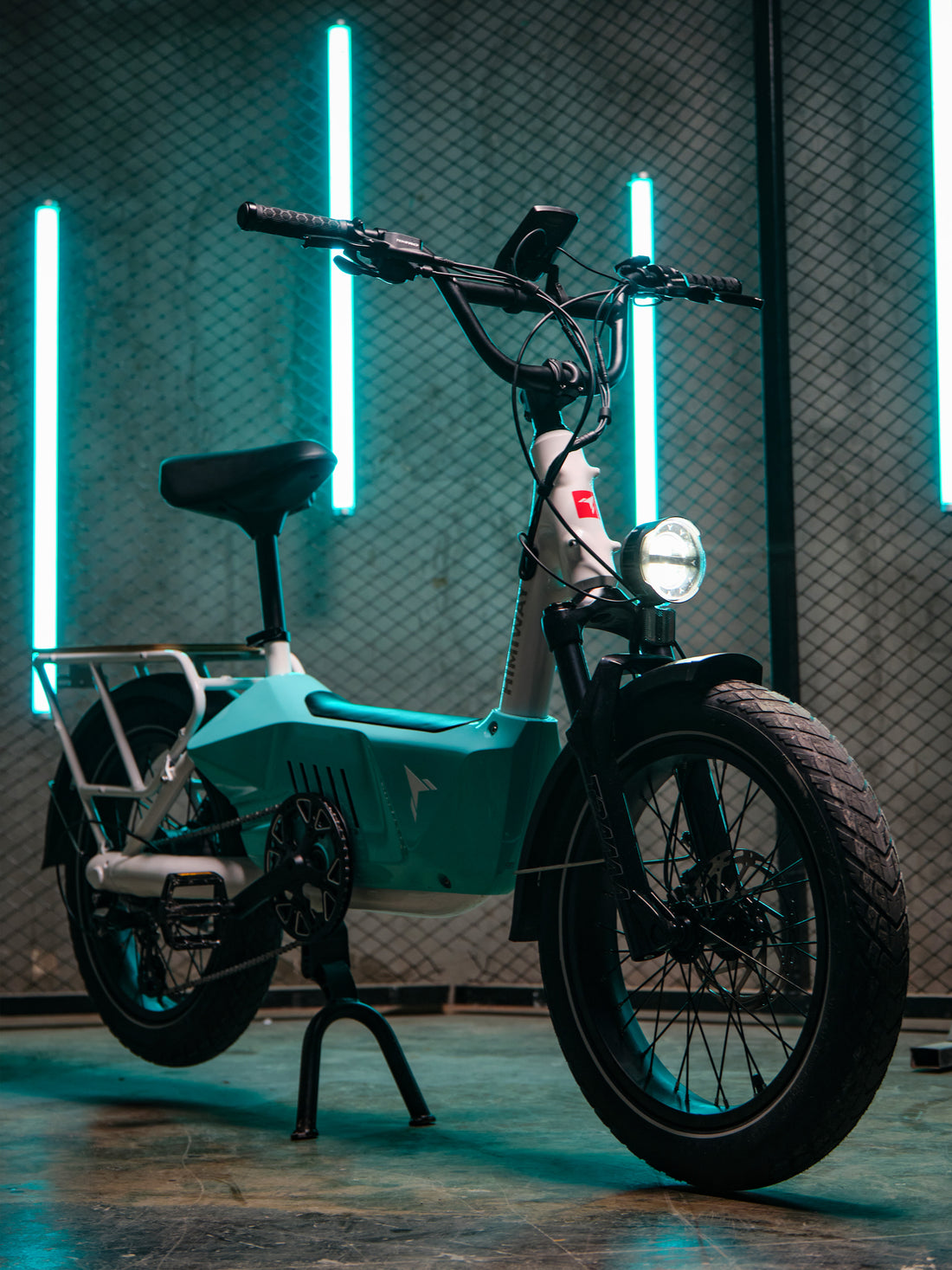
electric bike for family

electric bike for family

1000+Shop

2-Year Warranty

15-Day Trial

Free Shipping

Best Electric Bikes for Families Guide

Find the right electric bike for your family — whether you need a cargo hauler for toddlers and groceries, an adventure bike with child-seat options, or a kids e-bike so your child can ride alongside you.

Why Families Are Choosing Electric Bikes Over Second Cars

👶 Carry Your Kids, Not Car Keys

  • The C3 Cargo supports 440 lb total capacity — enough for a parent, two children, and a full grocery run in one trip
  • Double-leg kickstand provides rock-solid stability when kids are climbing on and off — no tipover risk while loading
  • Step-through frame designs (19" standover on C3, 19.3" on D5 2.0 ST) make mounting and dismounting easy while holding a child's hand
  • 960Wh battery on the C3 delivers 60–80 miles per charge — a full week of 8-mile school drop-off round trips without recharging

👨‍👩‍👧 Ride Together, Stay Together

  • The C1 Kids eBike offers three speed modes — Apprentice (7 mph), Journeyman (13 mph), Master (15 mph) — so kids match the parent's pace naturally
  • Dual safety braking on C1 (hydraulic rear + electronic auxiliary) gives parents confidence that their child can stop quickly and reliably
  • D5 2.0 full suspension absorbs bumps for parent comfort while C1's 16x3.0" fat tires keep kids stable on uneven surfaces
  • Optional training wheels on C1 for beginners ages 4–6; adjustable saddle and frame grow with your child through age 12

🏕️ Weekend Adventures as a Family

  • D5 2.0 series features full suspension (100mm front + 130mm rear) that handles trails, beaches, campground paths, and gravel roads
  • The D5 2.0 Camo offers 1,000 lb towing capacity for pulling bike trailers loaded with camping or fishing gear
  • The compact D5 2.0 20" fits shorter parents or teen riders (4'11"+) with a 17" standover height
  • MIK rear rack system accepts 1,000+ compatible accessories — panniers, baskets, child seats, and adventure gear carriers

Our Top 3 Picks for Families

🏆 Best Family Cargo Hauler

Himiway C3 Cargo

The C3 carries the most weight of any Himiway e-bike — 440 lb total capacity handles a parent, two small children, and a bag of groceries in one trip. Compact 20x3" wheels lower the center of gravity for cargo stability and confident handling when loaded. The double-leg kickstand holds the bike rock-solid while kids climb on and off, and 960Wh battery delivers 60–80 miles per charge — easily covering a full week of school drop-offs and errand runs without plugging in. Torque sensor provides smooth, natural power delivery with no sudden surges that could startle young passengers. "Visually rather unusual e-bike that is also ideal for transporting large loads" — notebookcheck.

750W 86Nm | 960Wh | 60-80mi | 80lb | 440lb capacity

🌟 Best Family Adventure Bike

Himiway D5 2.0 ST

Full suspension (100mm RST GUIDE front fork + 130mm multi-link rear) absorbs bumps on trails, gravel paths, and rough pavement — keeping you comfortable whether you're hauling a child seat or exploring campground roads. The step-through frame with 19.3" standover height lets you swing a leg over easily even with a rear-mounted child seat installed. Maxxis Minion 26x4.0" fat tires grip on trails, sand, gravel, and wet surfaces with EXO sidewall protection. MIK rear rack is compatible with popular child seats like Yepp and Thule. Switchable torque/cadence sensor lets you choose between a natural workout feel and effortless cruising depending on whether you're carrying kids or riding solo. Rated 4.9/5 stars across 64 verified purchases.

750W 90Nm | 720Wh | 65mi | 92lb | 400lb capacity

👧 Best Kids E-Bike (Ride With Parents)

Himiway C1 Kids eBike

Three progressive speed modes — Apprentice (7 mph), Journeyman (13 mph), Master (15 mph) — let parents control how fast their child rides as skills develop. Dual-brake safety system pairs a hydraulic rear brake with an electronic auxiliary brake, giving young riders reliable stopping power. At 32 lb, the C1 is the lightest bike in the entire Himiway lineup — manageable for kids when walking the bike or picking it up after a tumble. Extended ergonomic saddle and adjustable components grow with your child from age 4 to 12 (3'3" to 4'9"). "Himiway has safety and security in mind, as the bike is equipped with both hydraulic and electronic brakes" — insideevs.

350W | 360Wh | 40-50mi | 32lb | Ages 4-12

Electric Bike for Family FAQ

Real questions from parents considering family e-bikes — answered with specific scenarios, numbers, and honest guidance so you can decide with confidence.

Is a Family E-Bike Right for Us?

Is an electric bike a safe way to transport my kids?

Yes — when you choose a bike with the right safety features. Family e-bikes with hydraulic disc brakes, stable kickstands, UL certification, and appropriate speed limits are designed specifically for carrying precious cargo. The key is buying from a reputable brand with standard components that any bike shop can service.

Safety features that matter most for families:

  • Hydraulic disc brakes: Stop reliably even when the bike is loaded with 200+ lbs of parent, child, and gear. The C3 Cargo uses Tektro HD-E3520 hydraulic discs with 180mm rotors — consistent stopping power in rain or shine, unlike mechanical brakes that fade under heavy loads
  • Stable kickstand: Parents consistently cite kickstand stability as a top concern — kids wiggling on a parked bike can cause a tipover. The C3's double-leg kickstand holds the bike upright firmly while children climb on and off
  • UL certification: All Himiway adult models carry UL 2849 certification, meaning battery, charger, and electrical systems meet independent safety standards. This is non-negotiable for a bike stored in your garage near your family
  • Speed control: Adjustable Class 1/2/3 settings let you limit top speed to 20 mph (Class 2) for neighborhood riding or unlock 28 mph (Class 3) for road commuting without kids. Set the right speed for each trip

For a complete pre-ride safety routine, follow the e-bike safety checklist — especially important when carrying children. Browse all UL certified e-bikes for family-safe options.

Can an electric cargo bike really replace our second car?

For trips under 8 miles — which covers most school drop-offs, grocery runs, playground visits, and local errands — an electric cargo bike handles nearly everything a second car does, without gasoline, insurance premiums, or parking fees. Many parents who start with weekend rides end up using the bike daily within the first month.

What a cargo e-bike replaces well:

  • School drop-off/pickup: A 2-mile round trip twice a day uses about 5% battery on the C3 Cargo (960Wh) — you'd charge roughly once a week. No idling in the carpool line, no circling for parking
  • Grocery runs: The C3 at 440 lb capacity hauls a full grocery load. 20" compact wheels give a low center of gravity for stable handling when loaded
  • Playground and park trips: Kids ride in the back or — if old enough — alongside on the C1 Kids eBike. No need to strap them into car seats for short hops
  • Weekend restaurant and coffee trips: Parents describe the look on their kids' faces when told "we're taking the bike" — excitement that never happens when loading into the car

What still needs a car: Trips over 15 miles one-way, highway travel, heavy rain/snow days, and large furniture purchases. The electric cargo bike for family use works best as a complement to one car rather than a total car replacement.

See the full range of long-range e-bikes if distance is your primary concern.

At what age can my child ride their own electric bike?

Children as young as 4 can start on the Himiway C1 Kids eBike, which is specifically designed with progressive speed modes and safety features for young riders. Before that age, children ride as passengers on an adult's cargo bike or in a rear-mounted child seat.

Age-appropriate setup:

  • Ages 1–3: Rear-mounted child seat on a step-through model like the D5 2.0 ST or in the cargo area of the C3. Always use a harness and helmet
  • Ages 4–6: C1 Kids eBike in Apprentice mode (max 7 mph) with optional training wheels for beginners. The 16x3.0" fat tires provide stability while they build balance and confidence
  • Ages 7–9: C1 in Journeyman mode (max 13 mph). Most children at this stage ride comfortably without training wheels and can handle light neighborhood riding alongside parents
  • Ages 10–12: C1 in Master mode (max 15 mph). Ready for longer family rides on bike paths and trails. The extended ergonomic saddle and adjustable design accommodate kids up to 4'9" and 165 lb

Key safety consideration: The C1's thumb throttle is specifically designed to prevent accidental acceleration — a crucial detail for young riders who may grip the handlebar tightly when startled.

For more options and detailed age-specific guidance, read our best electric bikes for kids guide.

Which Family E-Bike Setup Is Right for Us?

What is the best electric bike for families?

The best electric bike for family use depends entirely on your family's stage — toddlers who ride as passengers need a different setup than kids old enough to pedal alongside you. Here's how to match your family to the right bike:

Match your family stage to the right setup:

  • Family with toddlers (ages 1–4): C3 Cargo — 440 lb capacity, compact 20" wheels for a low center of gravity, double-leg kickstand for stability during loading. Ideal for daycare drop-offs and errand runs with little ones secured in the cargo area
  • Family with kids ages 4–12: Parent on the D5 2.0 ST + child on the C1 Kids eBike — ride side-by-side on bike paths. The C1's progressive speed modes let the child match the parent's pace, and the D5 2.0 ST's full suspension keeps parents comfortable over longer rides
  • Active outdoor family: D5 2.0 for taller parent + D5 2.0 ST for shorter parent — matching bikes with full suspension and Maxxis fat tires for trail riding, camping, and beach trips. Both carry 400 lb, fitting a rear child seat plus gear
  • Family with height differences: The D5 2.0 20" (17" standover, fits 4'11"+) pairs with the standard D5 2.0 (27.6" standover, fits 5'1"+) so both parents ride the same platform in their ideal size

For more on choosing the right frame style, read the step-over vs step-through guide. See all step-through models for easy-access family bikes.

Should I get a cargo e-bike or a regular e-bike with a trailer?

For parents new to cycling, a regular electric bike with a kid trailer can be a smart entry point — it feels more like normal biking and costs less upfront. But a dedicated cargo e-bike is more maneuverable, easier to park, and better for daily routines like school drop-offs where you stop and load frequently.

Cargo e-bike advantages:

  • Maneuverability: A cargo bike like the C3 at 20" wheels turns tighter than a standard bike pulling a 4-foot trailer. Easier through doorways, tight parking, and crowded bike paths
  • Daily convenience: No attaching/detaching a trailer — just load the kids and go. Parents doing daily school runs say the 30-second time savings each direction add up fast
  • Visibility: Kids on a cargo bike sit higher than in a ground-level trailer, making them more visible to drivers
  • Weight handling: The motor assists you directly through the load. With a trailer, the bike carries its own weight plus pulls the trailer — hills become significantly harder

Trailer advantages:

  • Lower entry cost: Use any e-bike you already own plus a $200–500 trailer
  • Versatility: Detach the trailer and you have a regular bike for solo riding
  • Weather protection: Many trailers include rain covers and sun shades

Worth noting: The D5 2.0 Camo offers 1,000 lb towing capacity if you want the best of both worlds — a capable all-terrain e-bike that can also pull a kid trailer when needed.

What's the best electric cargo bike for families with young children?

For families with children under 6, the C3 Cargo is the standout choice — it combines the highest payload capacity in the lineup (440 lb) with stability features specifically designed for hauling small passengers who tend to wiggle, shift, and lean unpredictably.

Why the C3 works best for young children:

  • Low center of gravity: 20x3" compact wheels sit lower than standard 26" bikes, reducing the tipping risk when a toddler suddenly leans sideways. This matters more than most parents realize until they experience it
  • Double-leg kickstand: Holds the loaded bike upright on its own while you strap children in or unload groceries. A single-leg kickstand with 200 lb of cargo is a recipe for a slow-motion tip that ruins your day
  • Torque sensor power delivery: Provides smooth, proportional acceleration instead of the sudden on/off feel of cadence sensors. No lurching forward that scares small passengers
  • 960Wh battery: The largest in the Himiway lineup delivers 60–80 miles per charge. Even with the extra weight of children and cargo, range anxiety is essentially eliminated for local trips
  • Step-through frame (19" standover): Swing your leg over without lifting it to hip height — critical when you're balancing with one hand and holding a child's hand with the other

For a comprehensive look at how to set up your cargo bike with the right accessories, see the do-it-all e-bike guide. Browse e-bikes with passenger seating for all family-friendly options.

Real-World Family Riding Concerns

How much weight can a family electric bike carry?

Family electric bikes range from 165 lb (kids bikes) to 440 lb (cargo bikes) in total payload capacity — and getting the math right matters, because the payload number includes rider, passengers, and everything on the bike.

Payload breakdown by family scenario:

  • C3 Cargo (440 lb): 180 lb parent + 45 lb toddler + 35 lb preschooler + 40 lb groceries + 60 lb of gear = 360 lb total — still 80 lb under the limit. This covers the majority of family cargo trips
  • D5 2.0 ST (400 lb): 200 lb parent + 50 lb child (in rear seat) + 30 lb backpack/panniers = 280 lb — 120 lb of margin for a comfortable buffer. Ideal for one parent + one child adventures
  • D5 2.0 20" (440 lb): Despite the compact 20" wheels, this model matches the C3's payload capacity — making it an excellent option for heavier riders or families who need maximum hauling in a smaller frame
  • C1 Kids (165 lb): Designed for children weighing 40–165 lb, covering ages 4–12 comfortably

Important: Always leave at least a 10–15% buffer below the stated payload. Riding at absolute maximum capacity affects braking distance and handling, especially on hills or wet pavement.

If payload is a primary concern, explore the 400 lb capacity e-bikes and heavy-rider options for maximum carrying capability.

How far can we ride as a family on a single charge?

Most family outings are 3–8 miles round trip — well within the range of any family e-bike. Even with the extra weight of children and cargo, batteries last significantly longer than most families expect for local riding.

Range by typical family trips:

  • School drop-off (2 miles round trip): Uses about 3–5% battery. The C3 Cargo at 960Wh handles 10+ school trips on a single charge
  • Playground + errands (5 miles round trip): Uses about 8–12% battery. Charge once a week for daily use
  • Weekend adventure (15 miles round trip): Uses about 25–35% battery on the C3 or D5 2.0 series. Plenty of margin for detours and exploration
  • Long family ride (25+ miles round trip): Possible on a single charge with the C3 (60–80 miles range) or D5 2.0 (65 miles). Use lower PAS levels and pedal more to extend range on longer rides

Range factors families should know: Carrying an extra 80–100 lb of children and gear reduces range by roughly 15–25% compared to solo riding. Hills, headwinds, and higher PAS levels also consume battery faster. Cold weather (below 40°F) can reduce range by an additional 20–30% — bring the battery inside overnight in winter.

For detailed charging tips, read the battery optimization and maintenance guide.

Can my child keep up with me on a family ride?

Yes — that's exactly what the C1 Kids eBike is designed for. Its three progressive speed modes let parents set a speed ceiling that matches the family's riding pace, so children stay nearby without falling behind or racing ahead dangerously.

Pace matching by family riding style:

  • Casual neighborhood ride (7–10 mph): C1 in Apprentice mode (7 mph max) while the parent rides at low PAS on any adult model. Perfect for first-time family rides and getting comfortable together
  • Bike path cruising (12–15 mph): C1 in Journeyman (13 mph) or Master (15 mph) mode while the parent uses PAS Level 2–3. The most common family riding speed for regular outings
  • Parent riding solo (20+ mph): Leave the C1 at home and use the D5 2.0 or C3 at full Class 2/3 speed for commuting or errands when the kids aren't along

Practical tip: Start in Apprentice mode for the first few rides regardless of your child's age — it builds confidence and lets you establish ground rules (staying on one side, hand signals, stopping at intersections) before introducing more speed.

The C1's 40–50 mile range on a single charge means kids won't run out of battery before parents are ready to head home — even on a full-day weekend adventure.

Is it safe to ride with a child seat on an electric bike?

Yes — rear-mounted child seats work well on electric bikes with the right frame type. The critical factors are a step-through frame for easy mounting, full suspension for ride comfort, and sufficient payload capacity to account for the combined weight of parent, child, seat, and gear.

Best setup for child seat riding:

  • Frame choice: Step-through frames are essential — you cannot safely swing your leg over a high-step frame with a child seat mounted on the back. The D5 2.0 ST at 19.3" standover height provides ample clearance
  • Suspension matters: Full suspension (100mm front + 130mm rear on the D5 2.0 ST) absorbs road imperfections that would otherwise transfer directly to the child. Kids in rigid-frame child seats feel every pothole — suspension is not optional for their comfort and willingness to ride
  • Weight planning: A typical rear child seat weighs 10–15 lb. With 400 lb total capacity on the D5 2.0 ST, a 200 lb parent + 40 lb child + 15 lb seat = 255 lb — well within limits with room for a backpack or panniers
  • Tire confidence: Maxxis Minion 26x4.0" fat tires on the D5 2.0 ST provide more contact area than standard 2" tires, reducing the chance of slipping on wet roads, gravel, or uneven pavement — all scenarios where a child seat amplifies risk

Always check child seat compatibility with the specific rack installed. The D5 2.0 ST's MIK HD rear rack works with most major child seat brands via adapter plates.

For additional family mounting options, see e-bikes with basket and cargo features.

Budget, Maintenance & Practical Considerations

How much should I spend on a family electric bike?

For a family electric bike you'll rely on daily, the middle ground between "cheapest available" and "most expensive possible" is the sweet spot — buy something reliable enough that you'll use it regularly, but don't overspend on features your family won't need for weekend park rides.

What matters more than the price tag:

  • Hydraulic disc brakes (not mechanical): Mechanical disc brakes lose stopping power under heavy loads and in wet weather — exactly when you need brakes most. All three top family picks (C3, D5 2.0 ST, C1) use hydraulic brakes. This is the single biggest safety differentiation between budget and quality e-bikes
  • Torque sensor (not cadence only): Torque sensors deliver smooth, proportional power — you pedal harder, the motor works harder. Cadence-only sensors deliver all-or-nothing power that can lurch forward unexpectedly, which is unsettling when carrying children
  • Standard components: Shimano drivetrains, Tektro brakes, and common tire sizes mean any local bike shop can service your bike. Proprietary components on some budget brands turn a $30 brake service into a $200 hunt for parts — or worse, a bike that sits broken in the garage
  • UL certification: Non-negotiable for a bike stored in your home. UL 2849 certification means the battery and electrical system won't pose fire risks — a critical consideration with children in the house

The real question isn't "how much should I spend?" — it's "will I actually use it?" Parents who buy quality bikes consistently report using them far more than expected, while budget purchases often sit unused after initial enthusiasm fades due to uncomfortable rides or unreliable components.

Explore e-bikes under $2,000 for family-ready options at every budget level.

What maintenance does a family electric bike need?

A family e-bike needs simple, regular attention — less maintenance than a car, about the same as a traditional bicycle, plus one extra step: battery care. The critical difference with family bikes is that maintenance directly affects the safety of your passengers.

Family e-bike maintenance schedule:

  • Before every ride with kids (30 seconds): Squeeze both brakes to confirm they engage firmly. Check that the child seat or cargo area is secure. Verify lights are working if riding near dusk
  • Weekly (2 minutes): Check tire pressure — properly inflated tires improve range by 10–15% and prevent dangerous pinch flats. The C3's 20x3.0" CST tires and D5 2.0 ST's 26x4.0" Maxxis tires both have recommended PSI ranges printed on the sidewall
  • Monthly (10 minutes): Clean and lube the chain. Wipe battery contacts. Inspect brake pads for wear — with the extra weight of family riding, pads may wear faster than solo use
  • Every 1,000 miles (~$15–30): Replace chain. A worn chain damages the cassette, which costs significantly more. At 10 miles per day of family riding, that's roughly every 100 riding days
  • Annually (~$80–150): Professional tune-up at a local bike shop — derailleur adjustment, spoke tension, bearing check, brake bleed. Himiway partners with 1,000+ service locations nationwide

Battery care for families: Store and charge indoors at room temperature. Samsung/LG cells maintain 80%+ capacity after 1,000 charge cycles — at 2–3 charges per week, that's 6+ years of family riding before noticeable degradation.

For a step-by-step maintenance walkthrough, follow the complete maintenance guide.

How do I store a family electric bike safely?

Family e-bikes weigh 32–92 lb depending on the model, so storage planning matters — especially if you don't have a garage. The good news is that all Himiway models feature removable batteries, which simplifies both storage and security.

Storage solutions by living situation:

  • Garage or shed: The ideal scenario. Park the C3 Cargo (80 lb) or D5 2.0 ST (92 lb) on its kickstand, remove the battery, and bring it inside to charge at room temperature. A bike cover protects against dust and moisture
  • Apartment or condo: Focus on the C1 Kids eBike (32 lb) — light enough for stairs. For adult bikes, consider a ground-floor wall mount near the building entrance. Walk mode on all models lets the motor push the bike at walking speed through hallways and ramps so you just steer
  • No indoor storage: Use a heavy-duty, waterproof bike cover rated for outdoor use. Lock the frame and both wheels to a fixed structure. Remove the battery every night — a bike without a battery is significantly less attractive to thieves

Battery storage rules (critical for families):

  • Always store batteries indoors and away from extreme heat or cold (40–80°F range)
  • Never charge unattended or overnight in living areas — charge in a well-ventilated space like a garage or utility room
  • If storing long-term (over a month), charge to 60–80% and check monthly

All models feature removable batteries for flexible storage and charging. For cold-weather specifics, see the winter battery care guide.

Why HIMIWAY ?

Ride Further Together

491 K+

Himi Riders
Recognition from knights around the world

15 K+

5-Star Reviews
The knights give an honest opinion

1200 +

Professional Review
What the professional media really thinks of us

Local Shop

Learn More

2-Year Warranty

Learn More

15-Day Trial

Learn More

Free Shipping

Learn More

Bikes for Every Ride

Explore our diverse lineup designed to fit every rider and terrain

Mountain eBike

Kids eBike

City eBike

Cargo eBike

Folding eBike

Find a Local Himiway Shop Near You

Looking for a hands-on experience?
Find a Himiway electric bike shop near you and schedule a test ride today.