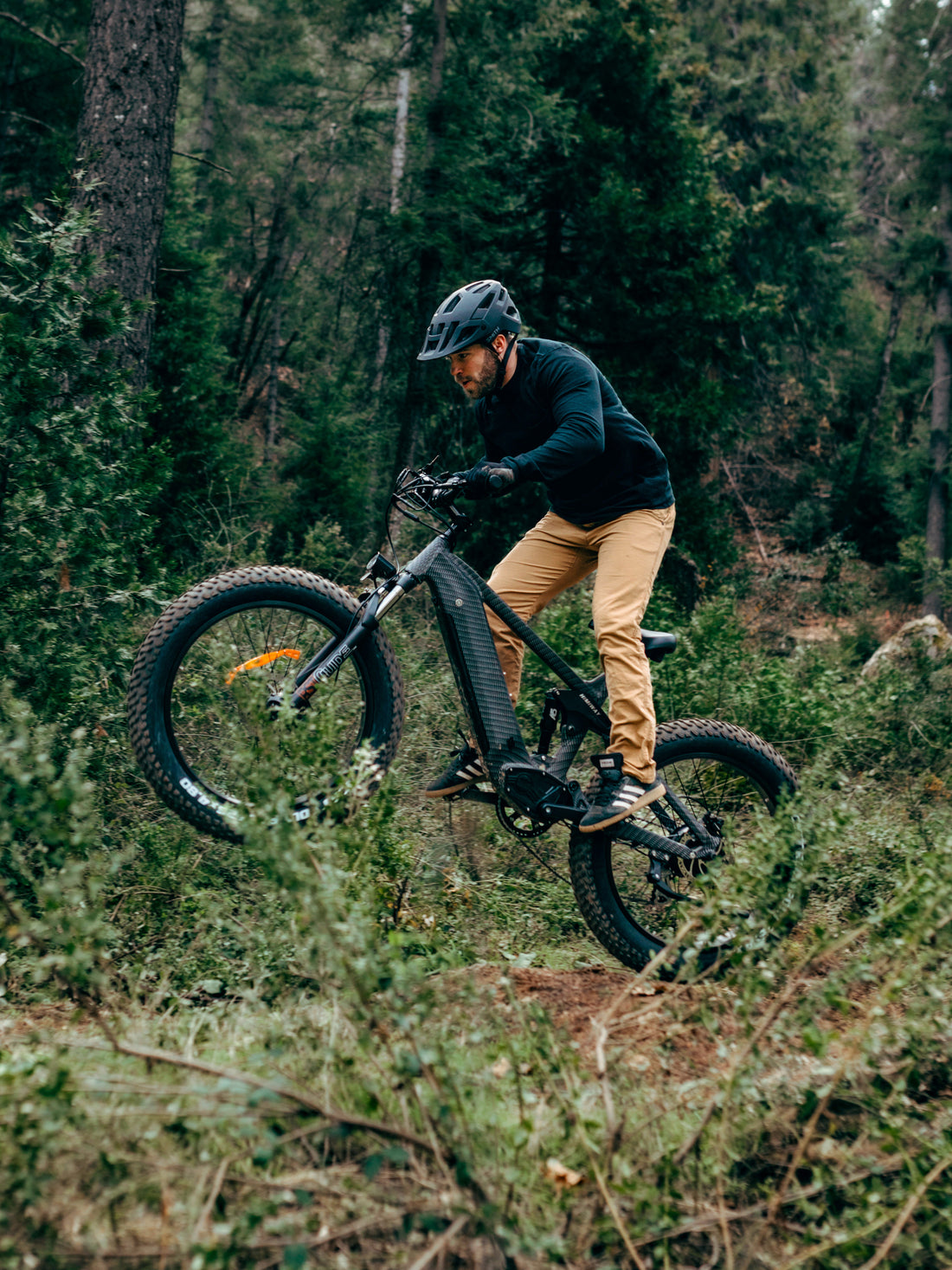
Class 3 eBike 28mph

Class 3 Ebike

1000+Shop

2-Year Warranty

15-Day Trial

Free Shipping

What Is a Class 3 eBike?

A Class 3 eBike is a high-speed electric bicycle equipped with a motor that provides assistance only when the rider is actively pedaling, up to a maximum assisted speed of 28 mph (45 km/h). Designed primarily for fast road commuting, utility, and covering long distances efficiently, Class 3 models represent the fastest category of legal eBikes before a vehicle transitions into being classified as a moped or motorcycle.

Key Specifications & Features

  • Max Assisted Speed: 28 mph under pedal assist. The motor cuts off power once you reach this threshold, though you can pedal faster using purely your own leg strength.
  • Motor Power: Capped at a maximum of 750 watts (1 horsepower) in accordance with the United States 3-Class Ebike System.
  • Speedometer Requirement: Legally required to be equipped with a functional speedometer so riders can monitor their high speeds.
  • Throttle Configuration: Under strict definitions, Class 3 bikes are pedal-assist only. However, many manufacturers build "hybrid" models with a throttle that functions up to 20 mph, requiring you to pedal to reach the top 28 mph limit.

Regulatory Restrictions

Because Class 3 eBikes travel significantly faster than Class 1 or Class 2 models (which both max out at 20 mph), they face stricter legal rules:

  • Riding Restrictions: They are typically allowed on public roads, standard bike lanes, and the shoulders of roads. However, they are generally prohibited from multi-use recreational paths, shared-use pedestrian trails, and mountain bike trails to ensure pedestrian safety.
  • Age Limits: Many states mandate a minimum age requirement (typically 16 or 17 years old) to legally operate a Class 3 eBike.
  • Helmet Laws: Helmet usage is strictly mandatory for Class 3 riders in several jurisdictions, regardless of age.
  • No Licensing: Despite the extra speed, they are legally classified as bicycles, meaning you do not need a driver's license, license plate, or vehicle registration to ride them.

How Fast Is a Class 3 eBike?

A Class 3 eBike has a maximum motor-assisted speed of 28 mph (45 km/h).

Key Speed Details

  • Pedal Assist: The motor only helps while you pedal. It stops assisting once you hit 28 mph.
  • Higher Speeds: You can go faster than 28 mph, but only by using your own muscle power or gravity downhill.
  • Optional Throttle: If the bike has a throttle, it will usually stop assisting at 20 mph. You must pedal to reach the top 28 mph speed.

Class 3 vs Class 1 vs Class 2 eBike

The core difference between eBike classes lies in their maximum assisted speed and how power is delivered (pedal-assist vs. throttle). Here is the direct breakdown of the three classes defined by US regulations:

Quick Comparison

Feature Class 1 Class 2 Class 3
Max Assisted Speed 20 mph 20 mph 28 mph
Drive Type Pedal-assist only Throttle & Pedal-assist Pedal-assist only*
Throttle Included? No Yes Usually No*
Trail Access Widest access (most bike paths) Moderate access (some restrictions) Most restricted (roads/lanes)
Common Use Case Casual riding, mountain biking Commuting without sweating Fast commuting, traffic lanes

*Note: Some states allow Class 3 eBikes to have a throttle that cuts off at 20 mph while pedal-assist continues up to 28 mph.

Class 1: Pedal-Assist (20 mph Max)

Class 1 eBikes only provide motor power when you are actively pedaling. The motor stops assisting once you reach 20 mph.

  • How it works: Sensors detect your pedaling and add a matching boost.
  • No throttle: You cannot move without moving your legs.
  • Where to ride: These enjoy the most freedom. Allowed on most multi-use bike paths, city streets, and mountain bike trails.
  • Best for: Mountain bikers, traditional cyclists wanting a boost, and casual trail riders.

Class 2: Throttle-Assisted (20 mph Max)

Class 2 eBikes feature a throttle (grip twist or thumb button) that can propel the bike without any pedaling. The motor stops assisting at 20 mph.

  • How it works: You can pedal with assistance, or simply press the throttle to cruise like a moped.
  • Speed limit: Even with pedaling, the motor cuts out strictly at 20 mph.
  • Where to ride: Generally allowed on streets and many paved bike paths, but frequently banned from dirt mountain biking trails.
  • Best for: Commuters who want to avoid sweating, riders with mobility limitations, and casual cruisers.

Class 3: Speed Pedal-Assist (28 mph Max)

Class 3 eBikes are high-performance models that provide assistance only when pedaling, but they continue boosting you up to 28 mph.

  • How it works: They feature more powerful motors and require a speedometer by law.
  • Safety rules: Many states require riders to be at least 16 years old and wear a helmet.
  • Where to ride: Restricted to roads, bike lanes, and commuter paths due to higher speeds. Banned from standard multi-use paths.
  • Best for: Long-distance commuters, cargo biking, and keeping up with urban traffic.

Local Laws and Sourcing

Before purchasing, verify your local park guidelines or state laws, as regulations vary by municipality. Major brands like Specialized, Trek Bicycles, and Rad Power Bikes offer diverse models across all three classes.

Where Can You Ride a Class 3 eBike?

Class 3 eBikes are legally allowed on public roads, streets, and designated on-road bike lanes. Because they reach speeds up to 28 mph, they face much stricter geographic restrictions than Class 1 and Class 2 models. They are banned by default from most multi-use recreational paths, pedestrian walkways, and natural-surface singletrack trails.

Permitted Riding Areas

  • Public Roads and Highways: You can ride a Class 3 eBike on any public street where standard bicycles are permitted. They are highly capable in urban and suburban traffic environments.
  • On-Road Bike Lanes: Striped or protected bike lanes running parallel to motorized traffic lanes are open to Class 3 models.
  • Locally Approved Commuter Paths: Some municipalities explicitly opt-in to allow Class 3 eBikes on wide paved commuter trails. However, this requires local government authorization.
  • Motorized Trails and OHV Roads: You can ride Class 3 eBikes on rugged public lands, including the Bureau of Land Management (BLM) or U.S. Forest Service routes, but only on trails and dirt roads explicitly designated for motorized off-highway vehicles (OHVs).

Prohibited Riding Areas

  • Standard Multi-Use Paths: Paved paths shared with pedestrians, joggers, and casual cyclists usually ban Class 3 eBikes to prevent high-speed collisions.
  • Non-Motorized Singletrack Trails: Mountain biking trails designated for non-motorized use are strictly off-limits to Class 3 eBikes. Even where Class 1 and Class 2 electric mountain bikes (eMTBs) are permitted, Class 3 models are barred.
  • Sidewalks: Riding on pedestrian sidewalks is illegal across most states and municipalities due to safety risks to walkers.

State and Federal Land Access Overview

The rules shift depending on which agency manages the land you wish to ride through:

Land Type / Agency Class 3 Access Rules
Federal Lands (USFS & BLM) Treated as motorized vehicles. Allowed only on OHV trails and motorized dirt roads. Banned from non-motorized trails.
National Parks Allowed only on public-access park roads and paved parking areas where regular cars drive. Banned from park paths.
State Parks Restricted to designated roadways and paved on-road bike lanes. Banned from natural-surface multi-use trails.
Local Municipalities Governed by town or city ordinances. Cities can restrict or open specific paths at their own discretion.

Essential Class 3 Restrictions

If you operate a Class 3 eBike, you must adhere to additional state regulations:

  1. Age Limits: Most states prohibit anyone under the age of 16 from operating a Class 3 eBike.
  2. Helmet Mandates: Helmets are legally mandatory for Class 3 riders, though exact age cutoffs depend on state laws (e.g., required for riders under 18 in California and Colorado).
  3. Required Equipment: By law, a Class 3 eBike must be manufactured with a functioning speedometer.

What people are saying

Local bike associations and community groups frequently discuss navigating local singletrack closures, emphasizing the need to check localized trailhead signage before taking high-speed builds onto county trails. To look up exact regional rules or trail access configurations before traveling, check the official interactive mapping data tools hosted on the Colorado Trail Explorer (COTREX) database or your local parks department platform.


Are Class 3 eBikes Good for Commuting?

Yes, Class 3 eBikes are the best overall option for long-distance and urban commuting. Their 28 mph top speed allows you to cover distance quickly and blend seamlessly into city traffic, drastically cutting down travel times compared to Class 1 or Class 2 models.

Why They Excel at Commuting

  • Faster Travel Times: Sustaining 25–28 mph means you can easily shave 15 to 20 minutes off a typical 10-mile commute compared to standard 20 mph eBikes.
  • Safer in Traffic: The ability to keep pace with cars on 25 mph city streets prevents aggressive overtaking. It allows you to take the lane confidently when necessary.
  • Flattens Hills and Fights Wind: High-speed motors ensure that steep inclines, heavy headwinds, and heavy cargo loads (like laptops, changes of clothes, or groceries) won't slow you down.
  • Less Sweat: Because the motor handles the heavy lifting at higher speeds, you can arrive at work fresh and presentable without needing a shower.

The Commuting Drawbacks

  • Stricter Path Restrictions: You cannot use pedestrian paths or standard multi-use recreational shortcuts. If your commute relies heavily on scenic greenways, you will be forced onto the road or parallel bike lanes.
  • Faster Battery Drain: Riding consistently at 28 mph requires significantly more wattage. Your battery range will drop by 30% to 50% compared to riding the same bike at 15–20 mph.
  • Heavy Build Quality: To handle higher speeds safely, Class 3 eBikes feature beefier frames, stiffer forks, and larger brakes. They often weigh 55 to 75 lbs, making them difficult to carry up office stairs or lift onto transit racks.
  • Higher Initial Cost: High-quality components (like four-piston hydraulic brakes, commuter lights, and robust drivetrains) usually command a premium price tag.

Key Features to Look For in a Commuter Build

If you choose a Class 3 eBike for your daily route, ensure it includes these essential utility components:

Integrated Lighting

High-output headlights and taillights powered directly by the main battery for night or rainy riding.

Fenders and Racks

Full-coverage fenders to block road spray from ruining your clothes, and a rear pannier rack to keep heavy bags off your back.

Puncture-Resistant Tires

Wide, street-optimized commuter tires (like Schwalbe Marathon E-Plus) to prevent flats during rush hour.

Hydraulic Disc Brakes

Essential for reliable, rapid stopping power when traveling at 28 mph in wet or unpredictable traffic.


How Far Can a Class 3 eBike Go?

A typical Class 3 eBike can travel between 25 and 60 miles on a single charge. The exact range varies dramatically because riding at maximum assist speed (28 mph) drains the battery twice as fast as riding at lower speeds (15 to 20 mph).

Real-World Range Estimations

E-bike ranges are always stated as a wide spectrum. Here is what you can realistically expect based on how you manage your power:

50–75+ Miles
Maximum Range

Achieved by using the lowest pedal-assist level (Eco mode), keeping your speed around 15–18 mph, and doing plenty of the pedaling work yourself on flat terrain.

30–50 Miles
Average Commuter Range

Achieved by using moderate assist levels (Tour or Sport mode), maintaining speeds of 20–24 mph, and tackling occasional hills or stop-and-go city traffic.

15–25 Miles
Minimum Range

Occurs when you run the bike continuously at maximum assist (Turbo mode) to maintain a strict 28 mph pace, climb steep hills, or carry heavy cargo.

The Variables That Determine Your Distance

1. Battery Capacity (Watt-Hours)

Battery capacity is measured in Watt-Hours (Wh). This is the single most important factor for baseline range.

  • Small batteries (400 Wh – 500 Wh): usually yield 20 to 40 miles.
  • Standard batteries (600 Wh – 750 Wh): usually yield 35 to 60 miles.
  • Dual-battery setups (1,000 Wh+): can push past 80 to 100 miles.

2. The "Speed Penalty" (Aerodynamic Drag)

Air resistance increases exponentially as you go faster. Cruising at a Class 3 speed of 28 mph requires roughly double the energy from your motor and battery than cruising at a Class 1 or 2 speed of 20 mph.

3. Total Payload Weight

The motor has to work much harder to move mass. A 220-pound rider carrying heavy commuter panniers will drain the battery significantly faster than a 140-pound rider with a light backpack.

4. Terrain and Weather

  • Elevation: Constant hill climbing eats battery capacity rapidly.
  • Wind: A strong headwind acts like a continuous hill climb, while a tailwind extends your range.
  • Temperature: Lithium-ion batteries lose 15% to 20% of their effective capacity when operated in freezing winter temperatures.

Simple Ways to Extend Your Range

If you have a long commute and are worried about running out of power, use these habits to get more miles per charge:

  • Downshift your gears: Keep your legs spinning at a fast, efficient cadence (70–90 RPM). This allows the motor to operate in its optimal efficiency zone.
  • Drop down one assist level: Lowering your assist setting from "Turbo" to "Sport" or "Tour" can add 10 to 15 miles of life while only dropping your top speed by a few miles per hour.
  • Check your tire pressure: Riding on soft, underinflated tires creates massive rolling resistance, which steals battery power. Keep them pumped to the manufacturer's recommended maximum PSI.
  • Coast mindfully: Ease off the power when you see a red light or a stop sign ahead. Don't accelerate hard right before you have to brake.

What Motor and Battery Does a Class 3 eBike Need?

To legally and effectively run a Class 3 eBike, you need a motor with a maximum of 750W of continuous power to comply with US federal law, paired with a robust 48V or 52V battery packing at least 500 to 750+ Watt-hours (Wh).

Because sustaining a 28 mph pace demands a massive amount of electrical energy, standard lightweight components will cause the bike to lag and drain the battery within minutes.

The Motor Requirements

  • The Legal Limit (750W Nominal): In the United States, a street-legal eBike motor cannot exceed 750 Watts (1 horsepower) of nominal continuous power. While a motor may briefly "peak" higher (e.g., 1,000W to 1,400W) to climb a hill, its baseline rating must be 750W or lower. Anything higher risks being legally reclassified as a moped or motorcycle.
  • High Torque (65 to 90+ Nm): Torque measures rotational force. Because air resistance increases exponentially at 28 mph, you need a high-torque motor (ideally 75–120 Nm) to preserve acceleration and handle inclines without losing speed.
  • Motor Type Matters:

    Mid-Drive Motors: Positioned at the pedals, these leverage the bike's mechanical gears. They are highly efficient, handle steep hills beautifully, and offer a natural bicycle feel.

    Rear Hub Motors: Positioned in the back wheel. These are less expensive and provide a powerful "push" feeling. However, they work harder and consume more power to maintain 28 mph on steep hills.

🔋

The Battery Requirements

Sustaining a Class 3 speed requires heavy-duty electrical output. Your battery should meet these baseline specifications to ensure decent range:

  • High Voltage (48V or 52V): Do not buy a 36V system for a Class 3 eBike. A 48-Volt or 52-Volt electrical system provides the necessary force and efficiency to feed the motor at high RPMs without overheating the wiring.
  • Large Capacity (600Wh to 1,000Wh+): Because a Class 3 bike consumes roughly 20 to 25 Watt-hours of energy per mile at top speed, a small battery will run out of power rapidly.
    500Wh Good for short 15–20 mile fast commutes.
    1,000Wh+ Dual-battery setups for 40+ miles or heavy cargo.

Understanding the Controller and Sensors

The motor and battery do not work alone; they rely on hidden components that dictate how the bike handles at high speeds:


How to Choose the Best Class 3 eBike

To choose the best Class 3 eBike, you must match the bike's drive system, components, and frame geometry to your specific terrain and daily riding distance.

01

Choose the Right Motor Drive Type

The motor's position completely changes how the bike handles and performs.

Mid-Drive Motors Best for Hills & Natural Feel

Positioned between the pedals. They route power through the bike's chain and gears.

  • Pros: Superior hill climbing, balanced weight distribution, highly responsive feel.
  • Cons: More expensive; puts more wear and tear on your chain and drivetrain.
Rear Hub Motors Best for Flats & Budget

Positioned inside the rear wheel hub. They push the bike forward independently of your gearing.

  • Pros: More affordable; less drivetrain wear; often features a throttle option (up to 20 mph).
  • Cons: Heavy tail-end handling; less efficient on steep, prolonged hills.
02

Calculate Your Real-World Battery Needs

Do not trust the maximum advertised range on the box. Because riding at 28 mph drains energy rapidly, use this quick sizing guide based on your daily round-trip distance:

< 20 Miles 500 Wh Battery
20 to 40 Miles 600 Wh – 750 Wh Battery
> 40 Miles 900 Wh+ / Dual Battery
03

Match the Frame and Bike Style to Your Use Case

The Daily Commuter

Rigid or front-suspension frame outfitted with integrated head/tail lights, full-coverage fenders, and a heavy-duty rear rack for pannier bags.

The Cargo Carrier

Massive step-through frames and high-torque motors (85+ Nm) designed to carry kids, groceries, or cargo safely at speed.

The Sport Cruiser

Aggressive, forward-leaning geometry and wider street tires, maximizing aerodynamics for riders who want a fast, fitness-oriented road workout.

04

Insist on High-Speed Safety Components

Sustaining 28 mph places immense stress on bicycle components. Never compromise on these safety features:

4-Piston Hydraulic Disc Brakes

Essential stopping power for a 65-pound bike at 28 mph. Look for brands like Shimano, Tektro, or Magura with thick 180mm or 203mm rotors.

E-Bike Rated Tires

Must have explicit puncture-resistant casings certified for eBike speeds up to 30 mph (e.g. Schwalbe Marathon series).

Rigid Thru-Axle Fork

Replaces standard quick-release wheels to eliminate wheel flex and keep steering stable under high motor torque.

05

Test the Sensor Types

Highly Recommended
Torque Sensors

Measures exact foot pressure. Delivers power proportionally so it feels like you have bionic legs. Provides maximum control in tight city traffic.

Cadence Sensors

Only detects if pedals are turning. Delivers power like an on/off switch, which can cause sudden jerks at high assist levels.


Frequently Asked Questions (FAQ)

1. Do I need a license, registration, or insurance to ride a Class 3 eBike?

No. Under US federal law and most state regulations, Class 3 eBikes are legally classified as bicycles, not motor vehicles. You do not need a driver's license, vehicle registration, or license plates to operate one.

2. Can a Class 3 eBike have a throttle?

It depends on where you live. Under strict federal definitions, Class 3 eBikes are pedal-assist only. However, states like California and Utah allow a "hybrid" Class 3 layout: the bike can feature a throttle that tops out at 20 mph, while pedal-assist continues boosting you up to 28 mph.

3. Is it legal for children to ride a Class 3 eBike?

Generally, no. Because of the higher speeds, the vast majority of states place strict age limits on Class 3 models, restricting their operation to individuals 16 years of age or older.

4. Can I ride a Class 3 eBike if the battery dies?

Yes. If your battery runs out of charge, the bike functions exactly like a traditional, unassisted bicycle. However, because Class 3 builds feature heavy motors, large batteries, and robust frames, pedaling a dead eBike uphill can be physically exhausting.

5. How long does it take to fully charge a Class 3 battery?

A standard Class 3 battery (600Wh to 750Wh) takes roughly 4 to 6 hours to charge from empty to 100% using a standard 2-Amp smart charger. Upgrading to a fast 4-Amp charger can cut that time down to 2 to 3 hours.

6. Can I safely ride a Class 3 eBike in heavy rain?

Yes. Reputable eBike manufacturers design their motors, displays, and battery enclosures to be water-resistant (typically rated IPX5 or higher). While they can easily handle downpours and road spray, you must never submerge an eBike completely in deep water or clean it with a high-pressure power washer.

Why HIMIWAY ?

Ride Further Together

491 K+

Himi Riders
Recognition from knights around the world

15 K+

5-Star Reviews
The knights give an honest opinion

1200 +

Professional Review
What the professional media really thinks of us

Local Shop

Learn More

2-Year Warranty

Learn More

15-Day Trial

Learn More

Free Shipping

Learn More

Bikes for Every Ride

Explore our diverse lineup designed to fit every rider and terrain

Mountain eBike

Kids eBike

City eBike

Cargo eBike

Folding eBike

Find a Local Himiway Shop Near You

Looking for a hands-on experience?
Find a Himiway electric bike shop near you and schedule a test ride today.