



Best eBike for Parents


Himiway D5 2.0 20" eBike Easy to Maneuver. Built for Power.
-
Full Suspension
Travel F:90mm R:100mm
-
Torque / Cadence
2 Riding Experiences
-
750W 90Nm
Geared Hub Motor
-
440 lb.
Payload Capacity


Himiway D5 2.0 eBike Endless Comfort: Turning Rough Roads into Silk.
-
Full Suspension
Travel F:100mm R:130mm
-
Torque / Cadence
2 Riding Experiences
-
750W 90Nm
Geared Hub Motor
-
Smart Auto
5 Assist System


Himiway D5 2.0 Camo eBike Blend In, Ride Out: The Top Choice for Hunting
-
Full Suspension
Travel F:100mm R:130mm
-
Torque / Cadence
2 Riding Experiences
-
750W 90Nm
Geared Hub Motor
-
Smart Auto
5 Assist System


Himiway D5 2.0 ST eBike Endless Comfort: Turning Rough Roads into Silk.
-
Full Suspension
Travel F:100mm R:130mm
-
Torque / Cadence
2 Riding Experiences
-
750W 90Nm
Geared Hub Motor
-
Smart Auto
5 Assist System


D5(Zebra) / All-terrain Electric Fat Bike
-
Torque
Sensor
-
960 Wh
Samsung/LG Battery
-
80 Miles
Max Range
-
750W
Motor


D5 ST(Zebra ST) / All-terrain Electric Fat Bike
-
Torque
Sensor
-
80 Miles
Max Range
-
400 lb.
Max Playload
-
Hydraulic
Brakes


Himiway D7 Pro Mountain eBike Unstoppable mountain performance
-
1000 W
Mid-drive Motor
-
28 Mph
Top Speed
-
960 Wh
Samsung/LG Battery
-
80 Miles
Max Range


Himiway A7 Commuter eBike Full Suspension, Pure Comfort.
-
Full Suspension
Travel F:120mm R:90mm
-
Torque / Cadence
2 Riding Experiences
-
Smart Auto
5 Assist System
-
70 Miles
Per Charge


Himiway A7 Pro Commuter eBike Full Suspension, Mid-Drive Power.
-
Full Suspension
Travel F:120mm R:90mm
-
500 W
Mid-Drive Motor
-
Torque
Sensor
-
Hydraulic
Brakes

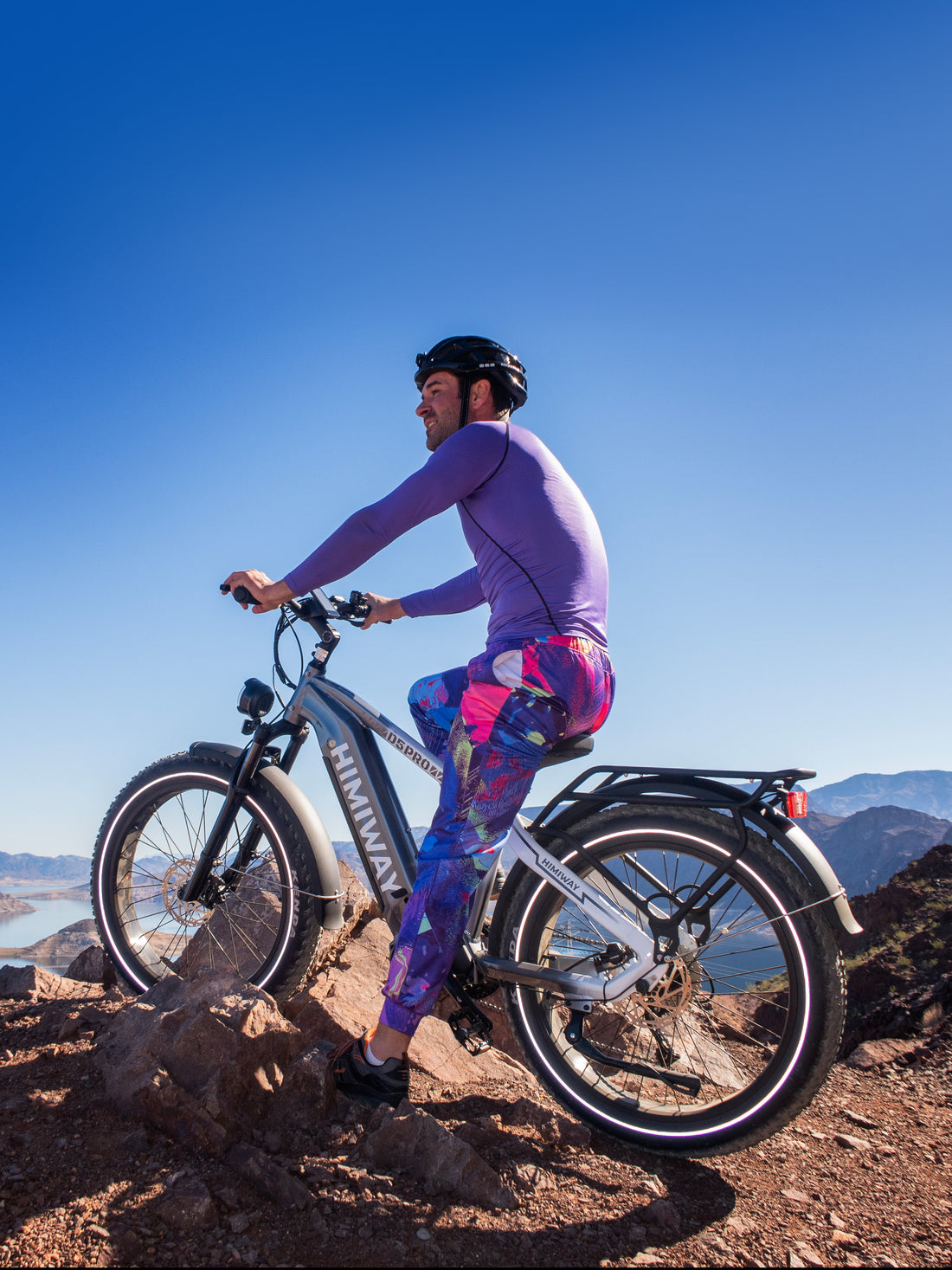
D5 Pro / All-terrain Electric Fat Bike Mid-Drive Power.
-
960 Wh
Samsung/LG Battery
-
80 Miles
Max Range
-
500 W
Mid-Drive Motor
-
20+ Mph
Top Speed
- Featured
- Most relevant
- Best selling
- Alphabetically, A-Z
- Alphabetically, Z-A
- Price, low to high
- Price, high to low
- Date, old to new
- Date, new to old
Best E-Bikes for Parents: Safe, Comfortable Rides for Family Life
As a parent, your priorities aren't speed or thrills—they're safety, comfort, and reliability. Whether you're commuting to work, running errands, or enjoying family rides on weekends, you need an eBike that handles effortlessly, protects you with excellent lighting and brakes, and doesn't aggravate joint pain or fatigue. Our comfort-focused eBikes combine full suspension for smooth rides, intuitive controls for stress-free operation, and robust safety features like hydraulic brakes and bright headlights. These aren't toys—they're dependable transportation designed for adults who value peace of mind and comfortable riding every single day.
Full Suspension: Comfort for Aging Joints
Rough pavement, potholes, and uneven bike paths cause jarring impacts that aggravate back pain, wrist strain, and knee discomfort. Full suspension (front + rear) absorbs these shocks before they reach your body—crucial for parents in their 30s, 40s, and beyond. The A7 features 120mm front and 90mm rear suspension, making even bumpy commutes feel like smooth pavement. You arrive relaxed, not hurting.
Torque Sensors: Natural, Intuitive Riding
Torque sensors measure how hard you pedal and provide proportional motor assist—mimicking the feeling of just having strong legs. This natural response makes riding intuitive, especially for parents new to eBikes or teaching kids to ride alongside you. Cadence sensors (cheaper bikes) feel jerky and unpredictable. Torque sensors provide smooth, confidence-inspiring assistance you can trust when riding in traffic or with family.
Premium Safety: Hydraulic Brakes & Bright Lights
Safety isn't optional—it's everything. Hydraulic disc brakes provide powerful, consistent stopping power in rain or on hills, even when carrying cargo or riding with a child seat. Our bikes include UL-certified batteries, integrated bright headlights (500+ lumens), and auto-illuminating brake lights. These features aren't luxuries—they're the difference between arriving home safely or becoming a tragic statistic. Always wear your helmet and use lights at night.
Easy Handling: Stable & Confidence-Inspiring
Parents don't need extreme performance—you need bikes that feel stable, predictable, and easy to control at low speeds (school zones, parking lots). Our models feature upright riding positions, wide handlebars for leverage, and balanced weight distribution. The D5 2.0 adjustable stem lets you dial in the perfect riding position for your height (5'1" to 6'5"), reducing neck and shoulder strain on longer rides.
Recommended E-Bikes for Parents
Himiway A7
- 5.0/5 rating (39 reviews - perfect score)
- Full suspension (120mm front + 90mm rear)
- Torque sensor for natural feel
- 220mm wide memory foam saddle
- SHIMANO hydraulic disc brake
Himiway D5 2.0
- Full suspension (100mm front + 130mm rear)
- Switchable torque/cadence sensor
- MIK rear rack (child seat compatible)
- 0-60° adjustable stem (custom fit)
- Integrated turn signal taillight
Himiway D5 Zebra
- 960Wh battery (60-80 mile range)
- Torque sensor for smooth riding
- 400 lb payload capacity
- Hydraulic disc brakes (safety)
- Also available in step-through (ST)
Himiway D7 Pro
- Advanced four-bar linkage suspension
- 1000W mid-drive (160Nm torque)
- 960Wh battery (60-80 mile range)
- 4-piston hydraulic brakes (premium safety)
- RockShox rear suspension
Frequently Asked Questions
How to convince parents eBikes are safe?
After tragic accidents, many families understandably fear eBikes. But the truth is: eBikes aren't inherently dangerous—unsafe behavior is. Most serious eBike accidents involve riders without helmets, riding at night without lights, or treating eBikes like toys instead of vehicles.
To address safety concerns: Commit to ALWAYS wearing a helmet—this single action prevents the majority of fatal head injuries. Use bright lights (500+ lumens) at ALL times, even daytime. Our bikes include integrated headlights and brake lights. Ride defensively and predictably—assume cars don't see you. Take a cycling safety class if you're new to riding. Start with low-traffic routes to build skills and confidence.
Show family members that you understand eBikes are vehicles requiring responsibility, not toys. Demonstrate proper safety equipment, explain how you'll avoid risky situations (no night riding in bike lanes without lights, no riding beyond your skill level), and perhaps ride together so they witness your cautious approach. Grief takes time—respect their fear while showing your commitment to safety.
Are eBikes comfortable for parents with joint pain?
Yes—full suspension eBikes are significantly more comfortable than regular bikes or hardtail eBikes for anyone experiencing back pain, wrist strain, knee issues, or general aging-related joint discomfort.
The A7 features both front (120mm) and rear (90mm) four-link suspension that absorbs road vibrations, potholes, and rough pavement before they jar your body. Combined with a 220mm wide memory foam saddle and upright riding position, you experience minimal joint stress even on longer rides.
Motor assistance is also crucial for joint health: you choose how much effort to exert. On days when your knees ache, use higher assist. When feeling good, lower assist for exercise. This flexibility lets you stay active without aggravating injuries—unlike regular bikes where you can't reduce effort without slowing down. Explore our eBikes for seniors for maximum comfort features.
Can I carry my child on eBike?
Yes, but with critical safety considerations. Most eBikes support child seats on rear racks (for ages 1-6, up to 48 lbs). The D5 2.0 includes a MIK-compatible rear rack that works with standard child seats like Thule Yepp or Hamax.
Important safety notes: Always ensure total weight (you + child + bike + gear) stays under the bike's payload capacity (400 lbs for most models). Practice riding WITHOUT your child first—handling changes significantly when carrying a passenger, especially at low speeds and during stops. Use a double-leg kickstand for stability when loading/unloading. Your child MUST wear a properly fitted helmet—no exceptions.
For carrying two children or larger families, consider a dedicated cargo eBike with lower center of gravity and front bucket seating (safer in collisions than rear seats). But understand: cargo bikes are expensive ($3000-5000+), require practice to maneuver, and take significant storage space. Many parents start with a bike trailer pulled behind a regular eBike—this separates child safety from bike handling and costs much less.
What if eBike needs repair or service?
This is a critical consideration many buyers ignore until something breaks. Most local bike shops refuse to work on eBikes they didn't sell, and some won't touch certain online brands at all.
Before buying ANY eBike: Call local bike shops and ask if they service the brand/model you're considering. Ask about typical repair costs and turnaround time. Look for brands with local dealer networks or authorized service centers in your area. Check if the brand offers phone/email support for troubleshooting (not just ticket systems that take days).
For basic maintenance, learn to do simple tasks yourself: checking tire pressure, cleaning the chain, adjusting brakes. These handle 80% of routine upkeep. For electrical issues (motor, battery, display), you'll need professional help. Budget $100-200 annually for tune-ups and wear items (brake pads, tires, chains). Quality eBikes from reputable brands have better parts availability and support—cheap internet bikes often become disposable once a proprietary component fails.
Which eBike for both parents different heights?
Sharing one eBike between two riders of different heights ( example: 5'7" and 6'2") requires adjustable components and a frame that accommodates both.
The D5 2.0 has a rider height range of 5'1" to 6'5", making it ideal for shared use. Its key feature is the 0-60° adjustable stem that tilts the handlebars closer or further from the rider, effectively shortening or lengthening reach without tools. The seat post adjusts with a quick-release lever for instant height changes.
For maximum versatility: Choose a step-through frame (easier for shorter riders to mount) or mid-size frame (compromises between extremes). Test ride together if possible—the taller rider should verify standover clearance and reach, while the shorter rider checks if they can comfortably touch the ground at stops. Some couples buy two different bikes sized appropriately rather than compromising—eBikes are personal transportation, not necessarily shareable like cars.
Torque sensor vs cadence sensor for beginners?
Torque sensors feel more natural and intuitive, especially for parents new to eBikes or those teaching kids to ride alongside them. Torque sensors measure how hard you push the pedals and provide proportional assistance—press harder, get more help; pedal gently, get gentle assist. This mimics the feeling of just having strong legs.
Cadence sensors (cheaper bikes) only detect whether you're pedaling, then deliver fixed power regardless of effort. This creates jerky, unpredictable surges—awkward in traffic, around pedestrians, or when riding slowly with family. You either get full power or none.
For parent riders who value: smooth starts at traffic lights, precise speed control in school zones, confidence-inspiring predictability, or the ability to adjust effort naturally based on terrain—torque sensors are worth the extra cost. The A7 and D5 Zebra both include torque sensors. The D5 2.0 offers switchable torque/cadence modes—try both and use what feels best. Learn more in our torque vs cadence sensor guide.
Should parents buy cargo or regular eBike?
Most parents don't need a cargo bike and will be frustrated by cargo bike ownership realities that YouTube videos never mention. Cargo bikes sound perfect on paper: carry 1-2 kids, haul groceries, replace your car. But the reality: they're heavy (80-100 lbs), difficult to maneuver (especially when loaded), require significant storage space (won't fit standard bike racks/rooms), and are very expensive ($3000-7000).
More critically: 95% of the time, cargo bikes sit unused. You're not hauling kids to school every single day—maybe 30 minutes daily at most. The rest of the time, you're stuck with an oversized, difficult-to-ride bike for solo trips where a regular eBike would be faster, lighter, and more enjoyable.
Smarter approach: Buy a quality regular eBike (lighter, easier to ride, cheaper, fits anywhere) and add a bike trailer ($200-400) for occasional kid-hauling or big grocery runs. The trailer detaches in seconds, letting you ride the bike normally 95% of the time. This setup costs $1800-2500 total vs $4000+ for cargo bikes.
Cargo bikes make sense IF: you live car-free by choice, haul kids/cargo daily (not occasionally), have storage space and physical ability to maneuver heavy bikes, and can afford premium pricing. For most parents, the trailer + regular eBike combination offers far more flexibility and value. Check our cargo capable eBikes with rack systems.
Ride Further Together
Himi Riders
Recognition from knights around the world
5-Star Reviews
The knights give an honest opinion
Professional Review
What the professional media really thinks of us

1000+Shop

2-Year Warranty

15-Day Trial

Free Shipping
Find a Local Himiway Shop Near You
Looking for a hands-on experience?
Find a Himiway electric bike shop near you and schedule a test ride today.
Bikes for Every Ride


