On this page
Rain doesn't have to mean staying home. Fat tire e-bikes are among the most capable all-weather bikes available, and with the right preparation, riding in wet conditions can be safe, comfortable, and even enjoyable. But how well do they actually perform when the skies open up?
Here's an honest, thorough look at fat tire e-bike performance in the rain — what works in their favor, what to watch out for, and how to ride smart when it's wet.
Why Fat Tires Have a Natural Advantage in Wet Conditions
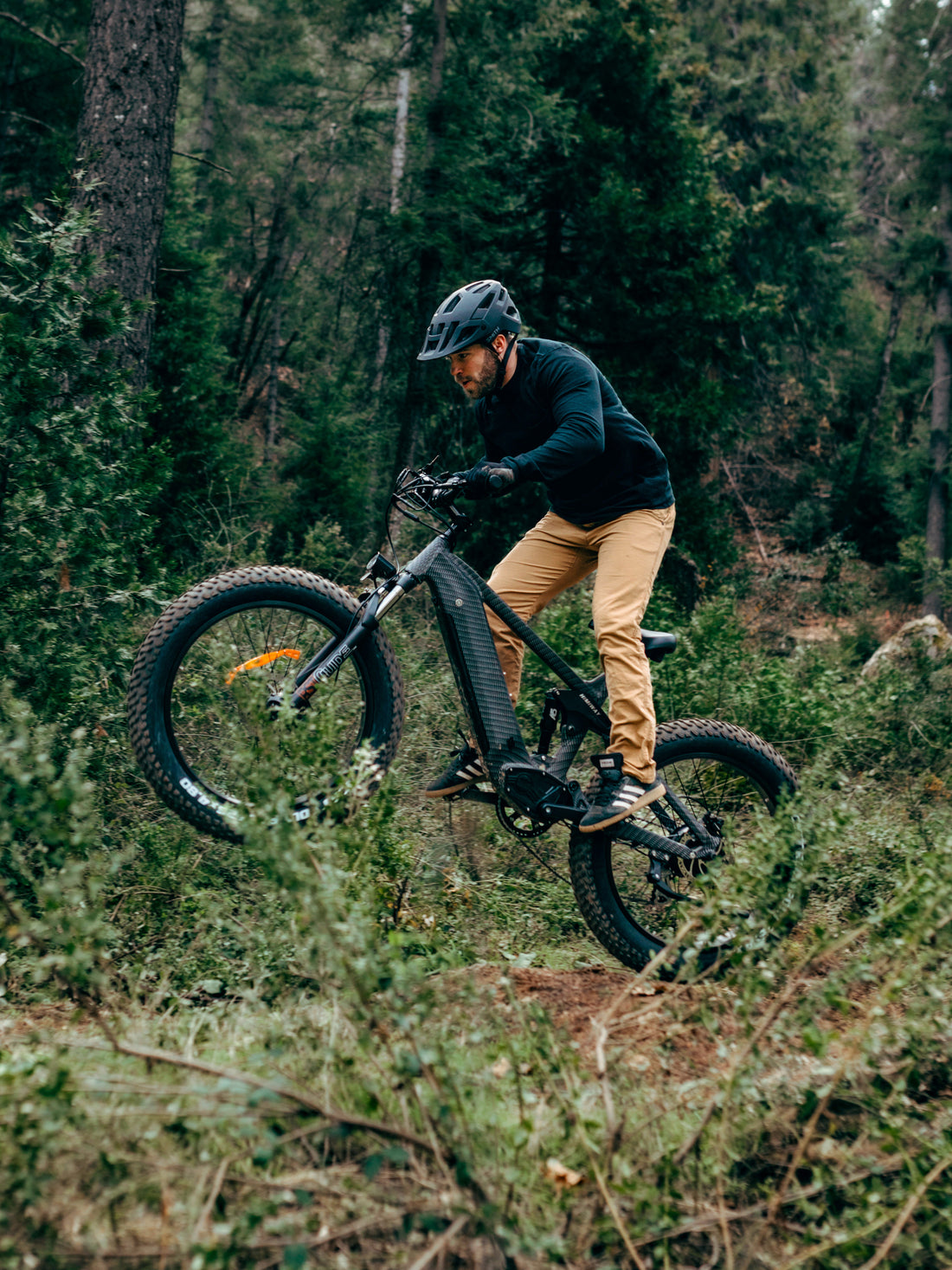
The defining feature of a fat tire e-bike — those wide, high-volume tires — turns out to be a significant asset in the rain. Here's why:
Larger Contact Patch
Fat tires (typically 3.5” to 5” wide) have a much larger contact patch with the ground than standard bike tires. More rubber touching the road means more grip — even on slick, wet surfaces. This translates to better traction when braking, cornering, and accelerating in the rain.
Lower Tire Pressure
Fat tires are typically run at lower pressures (5–15 PSI) compared to road or hybrid bike tires (60–80+ PSI). Lower pressure allows the tire to conform to the surface beneath it, increasing grip on uneven or slippery terrain. On wet pavement, gravel, or packed dirt, this compliance is a real advantage.
Stability and Balance
The wide stance of fat tires provides a more stable platform overall. In wet conditions where sudden slides or loss of traction are more likely, that inherent stability gives riders more confidence and more time to react.
For riders who want even more power and all-terrain capability, a Fat Tire Electric Bike 1000W can be an excellent option. The combination of wide tires and a high-powered motor provides extra support when riding through challenging conditions such as wet roads, muddy trails, steep hills, or loose gravel. While tire design plays the biggest role in maintaining traction, a stronger motor helps riders maintain steady momentum without excessive strain, especially when carrying extra weight or riding on uneven surfaces. As with any e-bike, riders should still reduce speed, brake earlier, and avoid sudden turns in rainy conditions to maximize safety and control.

Are Fat Tire E-Bikes Waterproof?
This is an important distinction: most fat tire e-bikes are water-resistant, not fully waterproof. There's a meaningful difference.
- Water-resistant — The electrical components (motor, battery, display, connectors) are sealed well enough to handle rain, splashes, and light wet-road riding without damage.
- Waterproof — Fully submersible or capable of withstanding sustained heavy water exposure. Very few consumer e-bikes meet this standard.
Most quality fat tire e-bikes carry an IP rating (Ingress Protection) that indicates their level of water resistance. A rating of IP65 or higher means the bike can handle rain and water jets from any direction — more than sufficient for typical wet-weather riding.
Always check your bike's IP rating before riding in heavy rain, and avoid submerging the battery or motor in standing water.

What to Watch Out For in Wet Conditions
Longer Braking Distances
Wet rims and rotors reduce braking efficiency. If your e-bike uses hydraulic disc brakes, you're in good shape — disc brakes perform significantly better than rim brakes in wet conditions. Allow extra stopping distance regardless, and brake earlier and more gradually than you would on dry roads.
Slippery Surfaces
Painted road markings, metal grates, manhole covers, and wet leaves are all significantly more slippery than dry pavement. Cross these surfaces as straight as possible and avoid sharp turns on them.
Reduced Visibility
Rain reduces your visibility and makes you harder for drivers to see. Use front and rear lights even during the day, and consider wearing bright or reflective gear.
Battery Range in Cold Rain
Cold, wet weather can reduce battery performance by 10–20%. Plan your rides accordingly and avoid pushing to the very limit of your range in poor conditions.
Electrical Connector Care
After riding in heavy rain, dry off exposed connectors and the charging port before plugging in. Water in the charging port is one of the most common causes of electrical issues on e-bikes.
For riders looking for a balance of power, traction, and everyday versatility, a Fat Tire Electric Bike 750 Watt is a popular choice for handling wet-weather rides. The 750W motor provides strong acceleration and reliable assistance on slippery roads, while fat tires help maintain stability across rain-soaked pavement, gravel paths, and light off-road terrain. However, more power does not replace safe riding habits — riders should still adjust their speed, use smooth braking inputs, and avoid aggressive maneuvers when conditions are wet. A well-equipped 750W fat tire e-bike with quality brakes, proper lighting, and regular maintenance can provide a safer and more confident riding experience throughout changing weather conditions.

Tips for Riding a Fat Tire E-Bike Safely in the Rain
- Slow down — Reduce your speed, especially on corners and descents. Wet roads require more reaction time.
- Brake early and gently — Apply brakes gradually. Sudden hard braking on wet surfaces can cause skidding even with fat tires.
- Lower your tire pressure slightly — Dropping 1–2 PSI from your normal setting increases the contact patch and improves grip on wet surfaces.
- Use lower pedal assist levels — High assist levels can cause the rear wheel to spin on slick surfaces. PAS 1 or 2 gives you more control.
- Avoid puddles of unknown depth — Puddles can hide potholes, debris, or deep water that could damage your bike or cause a fall.
- Wear waterproof gear — A waterproof jacket, gloves, and shoe covers make a huge difference in comfort and focus on wet rides.
- Dry and inspect your bike after riding — Wipe down the frame, dry connectors, and check brake pads for wear after wet rides.
Post-Ride Maintenance in Wet Weather
Riding in the rain accelerates wear on certain components. After wet rides, make a habit of:
- Lubricating the chain — Water washes away chain lube. Apply a wet-condition chain lubricant after every rainy ride.
- Checking brake pads — Wet and gritty conditions wear brake pads faster. Inspect them regularly.
- Drying the frame and components — Wipe down the bike to prevent rust on any exposed metal parts.
- Inspecting the battery contacts — Ensure no moisture has entered the battery housing or charging port before charging.
Summary
Fat tire e-bikes handle wet conditions better than most other bike types, thanks to their wide tires, low pressure, and stable geometry. With a quality IP-rated e-bike, disc brakes, and sensible riding habits, rain riding is entirely manageable — and for many riders, genuinely fun.
The key is preparation: know your bike's water resistance rating, adjust your riding style for wet conditions, and take care of your bike after the ride. Do that, and a little rain won't slow you down.
Disclaimer: Always ride within your skill level and local traffic laws. Wet conditions increase risk — ride conservatively and prioritize safety over speed.